Stjernhimmeln (the heavenly sky)
2018 - 2025
During the 1850s and 1860s, photography was seen primarily by painters as a new pictorial technique, a trend that gave rise to many professional photographers. Writers such as Émile Zola and Lewis Carroll were also attracted by the potential of the photographic medium. Perhaps one of the most unusual of these early amateur photographers was the Swedish playwright, philosopher, painter, composer and alchemist August Strindberg. From an early age in his creative process, he was interested in the relationship between representation and the objectivity of the photographic medium and approached photography as a “tool for experimentation”. In particular, most of his photographic experiments in the 1890s served to exploit his vast knowledge of optics and chemistry to focus on color photography or light analysis. For this reason, many of his photographs have no specific subject but “traces of natural phenomena”. However, many of them are “hypothetical scientific photographs” influenced by alchemy and the ancient sciences (natural philosophy), in other words, the results of “pseudo-science” without analytical justification. Among the his photographic experiments produced during this period, the most enigmatic, raising fundamental questions that are still relevant today, such as “what is truth or faux in science?’’ and “what is photography?”, is that of the “Celestographs”, the subject of this art project “Stjernhimmeln (the heavenly sky)”.
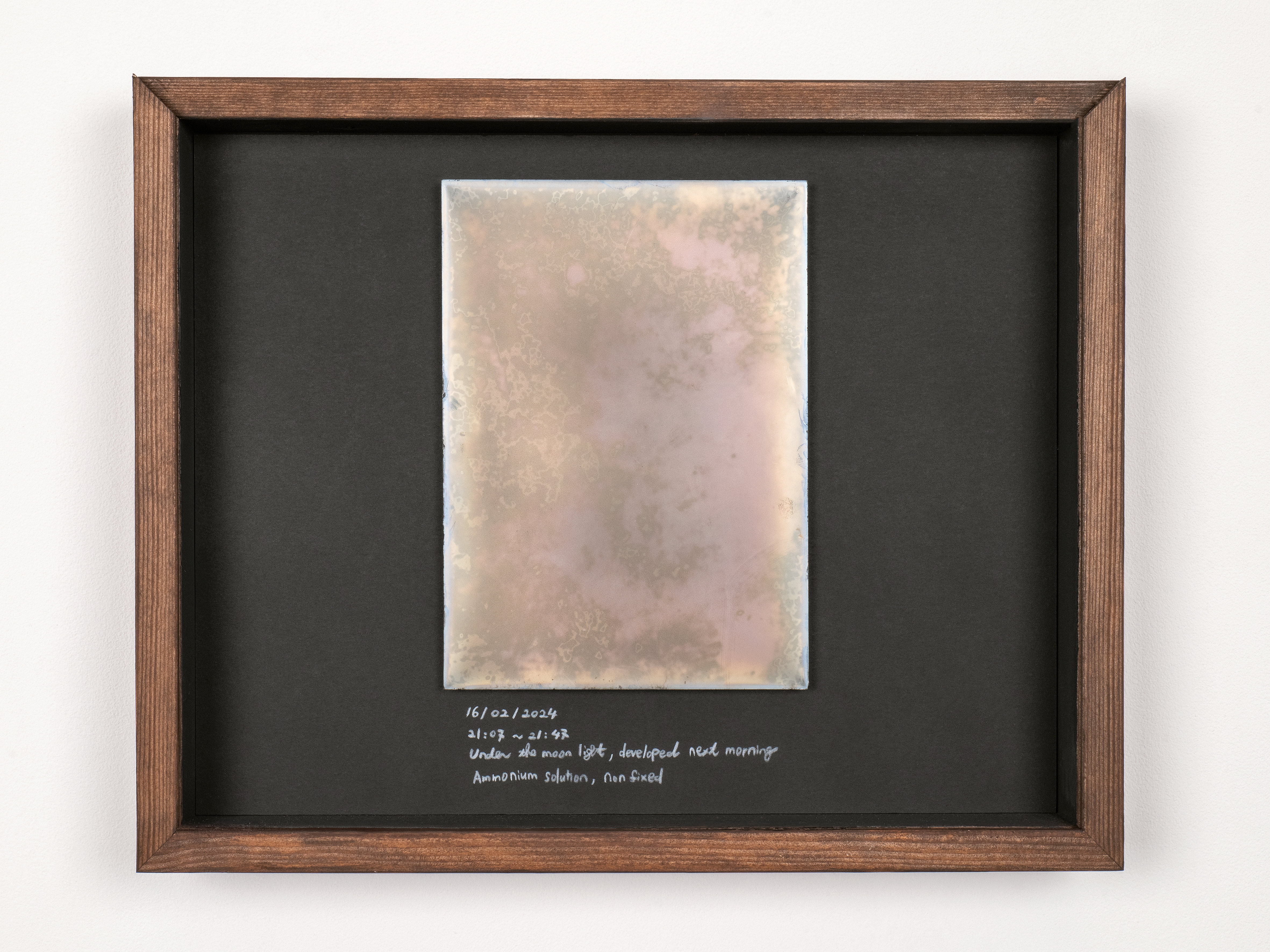
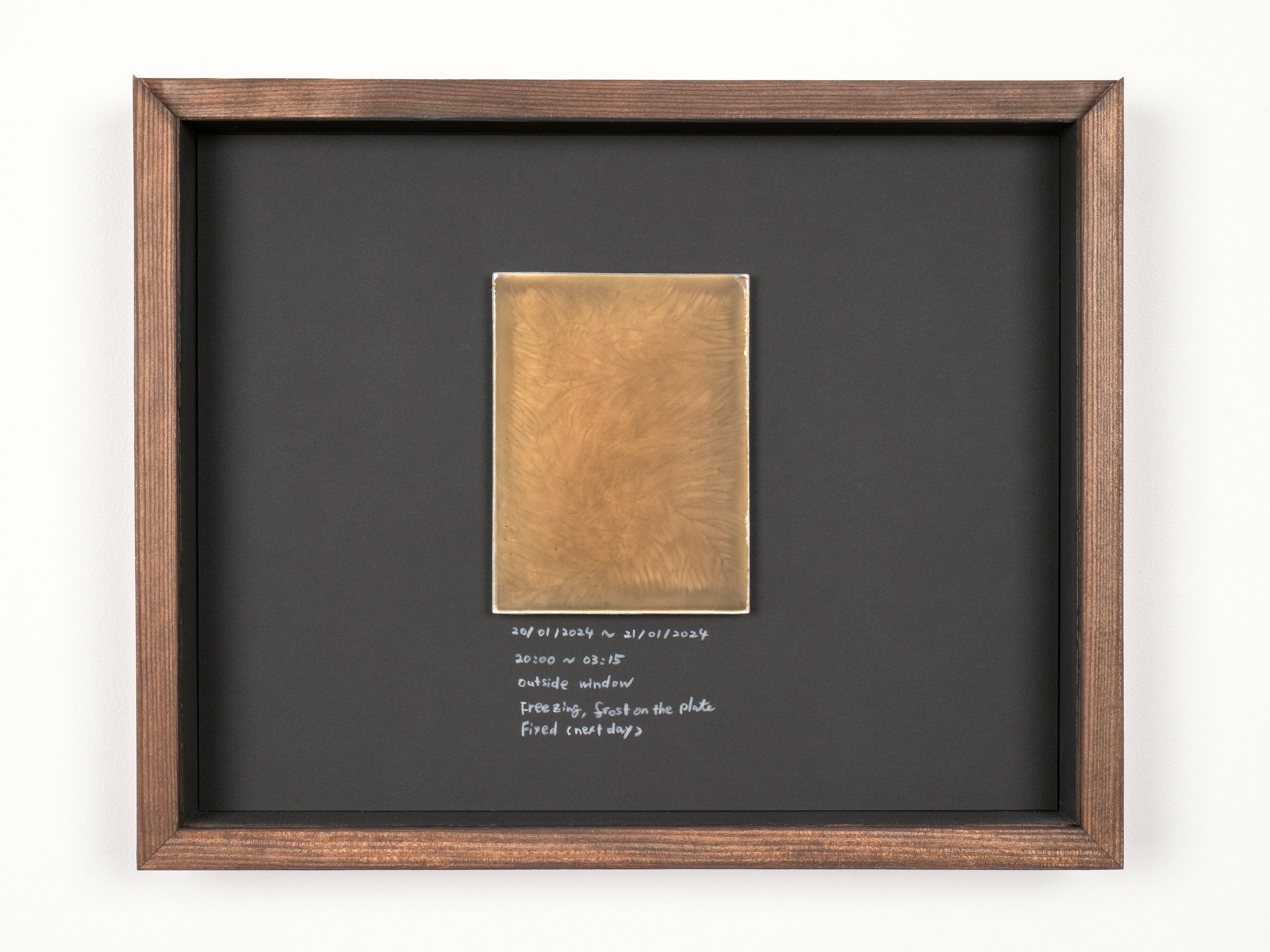
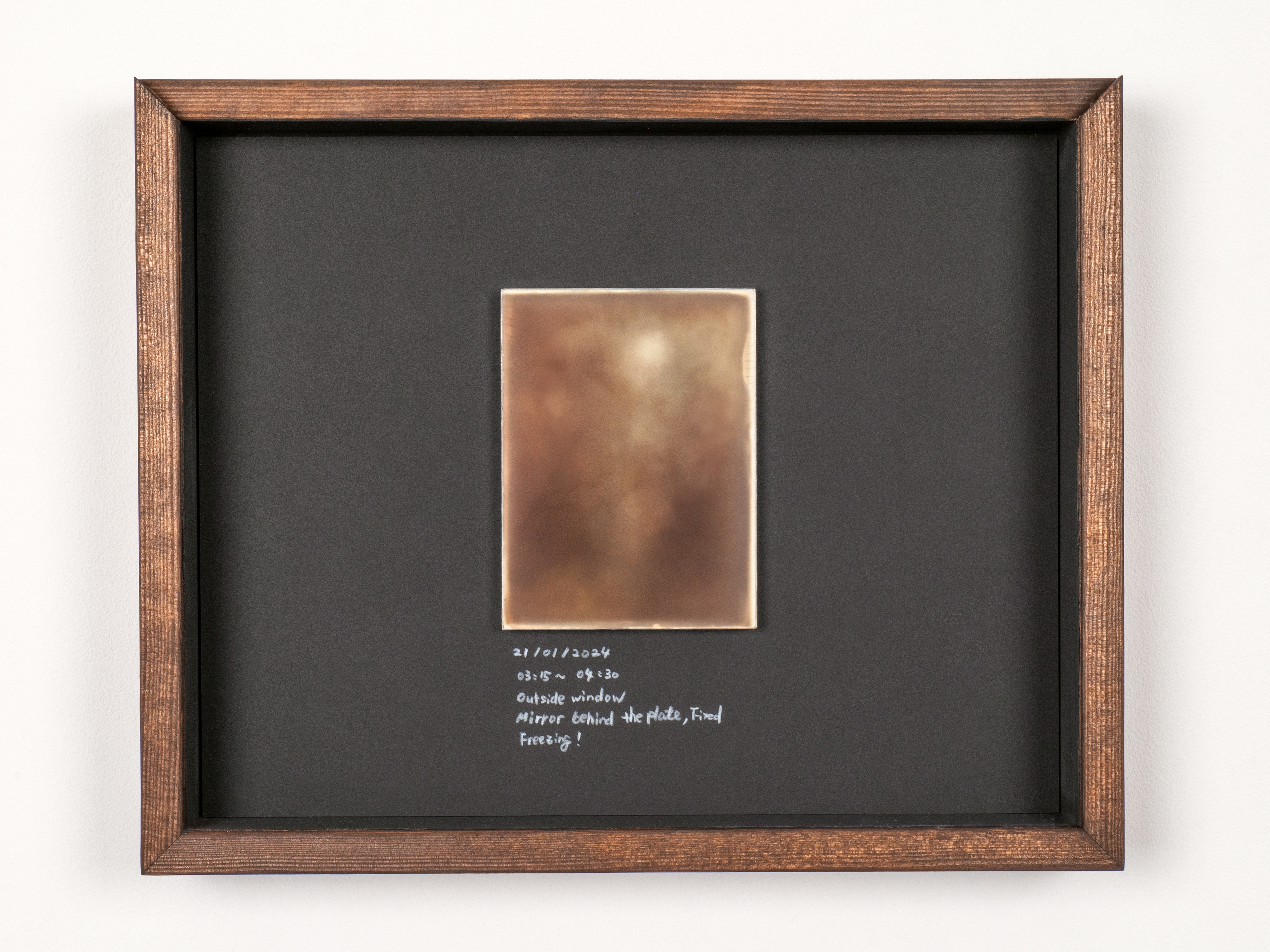
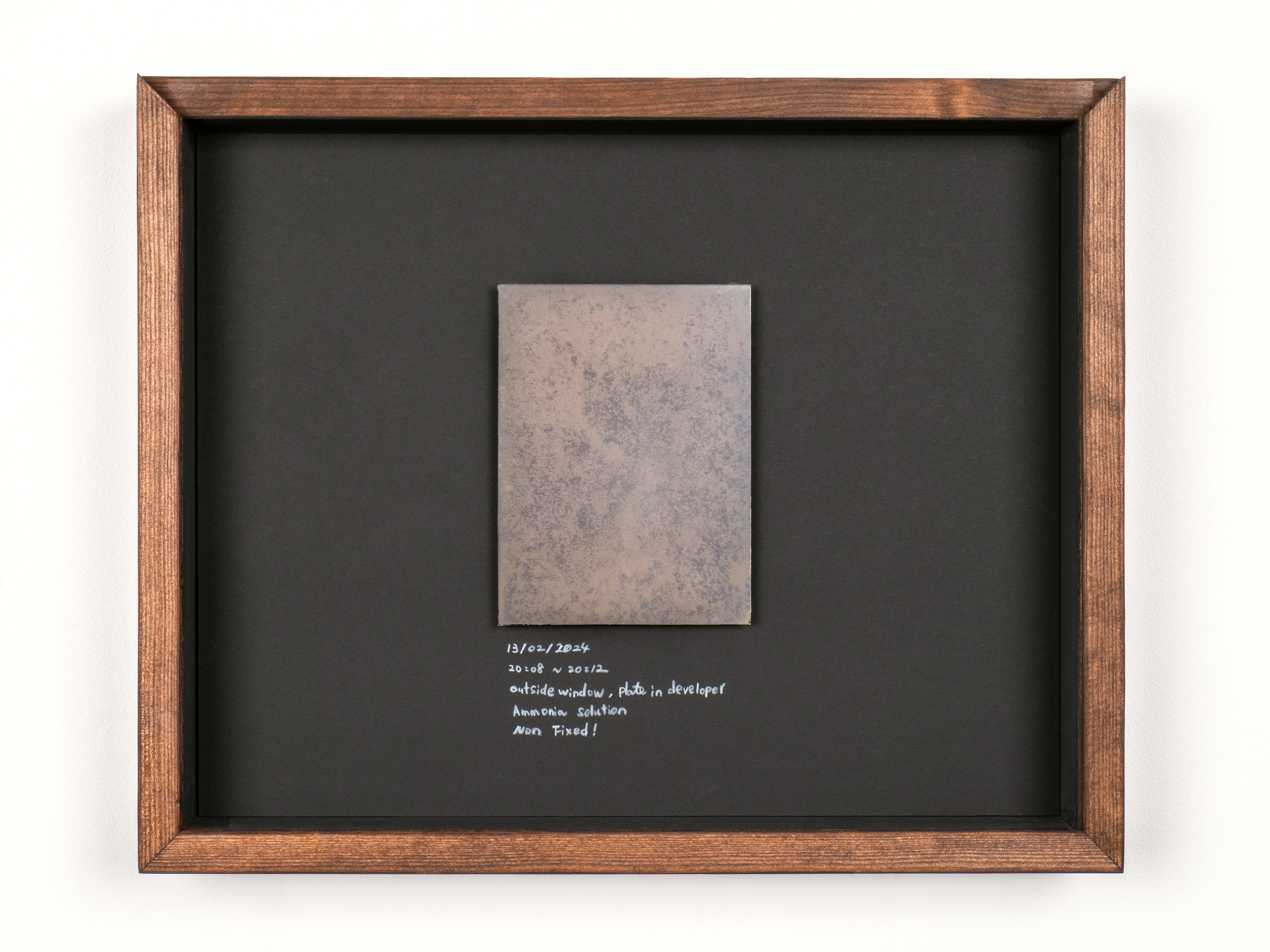
The Celestographs by Swedish playwright August Strindberg, the result of a philosophical influence from Arthur Schopenhauer and Friedrich Nietzsche and a fusion of natural science and occultism, were produced at Dornach Castle, Upper Austria in December 1893 – probably March 1894 at the dawn of the 20th century, a period of industrialization and modernization. One of the essential features of Celestographs is the absence of a camera and optics. To demonstrate that our perception of the world is an illusion limited by our eye and its construction, Strindberg exposed photographic plates directly to the moon, sun and stars, capturing their shape without distortion from our eyes. The result was an irregular pattern of tiny dots, like a trace of light, which he believed had captured the true appearance of the constellated sky. As a way to develop the image as efficiently as possible, he also exposed the photographic plate by leaving it in the developing solution, which resulted in more chemical effects, revealing a pronounced “heavenly sky” effect. Therefore, he sent several Celestographs along with a 13-page letter “Le monde pour soi et le monde pour nous (the world for itself and the world for us)” to French astronomer Camille Flammarion to prove that using a telescope limits the light of the celestial body and distorts its true appearance. We don’t know why Flammarion became interested in Celestographs, but his book “Les caprices de la foudre (the unpredictability of lightning)”, published in 1905, suggests that he was interested in “traces of nature established by coincidence”: “Lightning photographs (…) the images it produces are reproductions, the skin of those touched serves as a photographic plate in the natural process of image production”. It’s also possible that he believed unknown natural phenomena had been captured accidentally on Celestographs, as evidenced by the fact that when Flammarion and Strindberg later met in Paris, he asked him to reproduce the experiment at the Société Astronomique de France (X-rays were discovered in 1895). His research was presented at a monthly meeting of the Société Astronomique de France on May 2, 1894, but no one took his research seriously once they realized that these photos had been taken without a camera or lens. Strindberg’s refusal to reproduce his experiments at a monthly meeting meant that his research was never pursued, but he never changed his ideas until the end of his life.
In fact, we know that the information captured on these plates is not starlight. On the other hand, these images of “the heavenly sky” remind us of the invisible link between light-sensitive material and the subject, because the relationship with the night sky is not direct but implicit. Just as naturalist philosophers and mystics have sometimes used photography to decode observed phenomena, seeking to capture their hidden nature, so the alchemist in Strindberg also appreciated the poetry and supernaturalism of the image appearing during chemical reactions, the “inner nature” of the photographic medium, a chaotic beginning where everything is still boundless and vague, “everything exists in everything !”. That’s why some Celestographs are unfixed, to return the photographed image even to nature, as Strindberg says; “something made by nature as well as a piece of nature”. The positive images of 16 Celestographs are preserved in the Royal Library of Sweden, but all the original glass plates have disappeared. Moreover, due to their extreme fragility, the originals are never exhibited, but kept in a separate room to prevent deterioration, and are rarely seen. In other words, the photographic image that existed to be seen is not seen to preserve its appearance, like the first photographic image that no longer exists by Thomas Wedgwood and Humphry Davy. In thinking about lost images, we begin to face a paradox of being seen and seeing that is caused by technical errors, misconceptions and disappearance (Schrödinger’s cat).
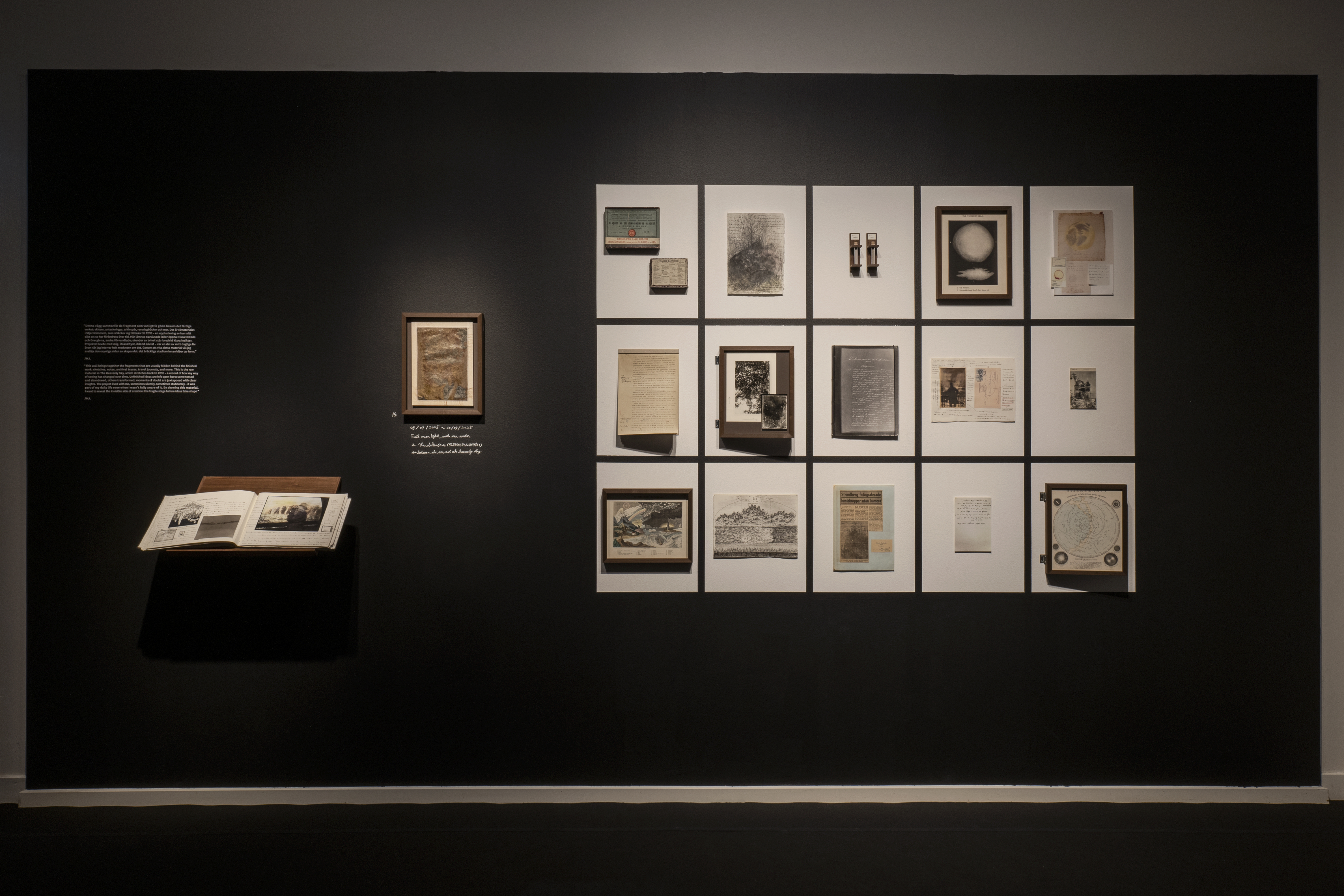
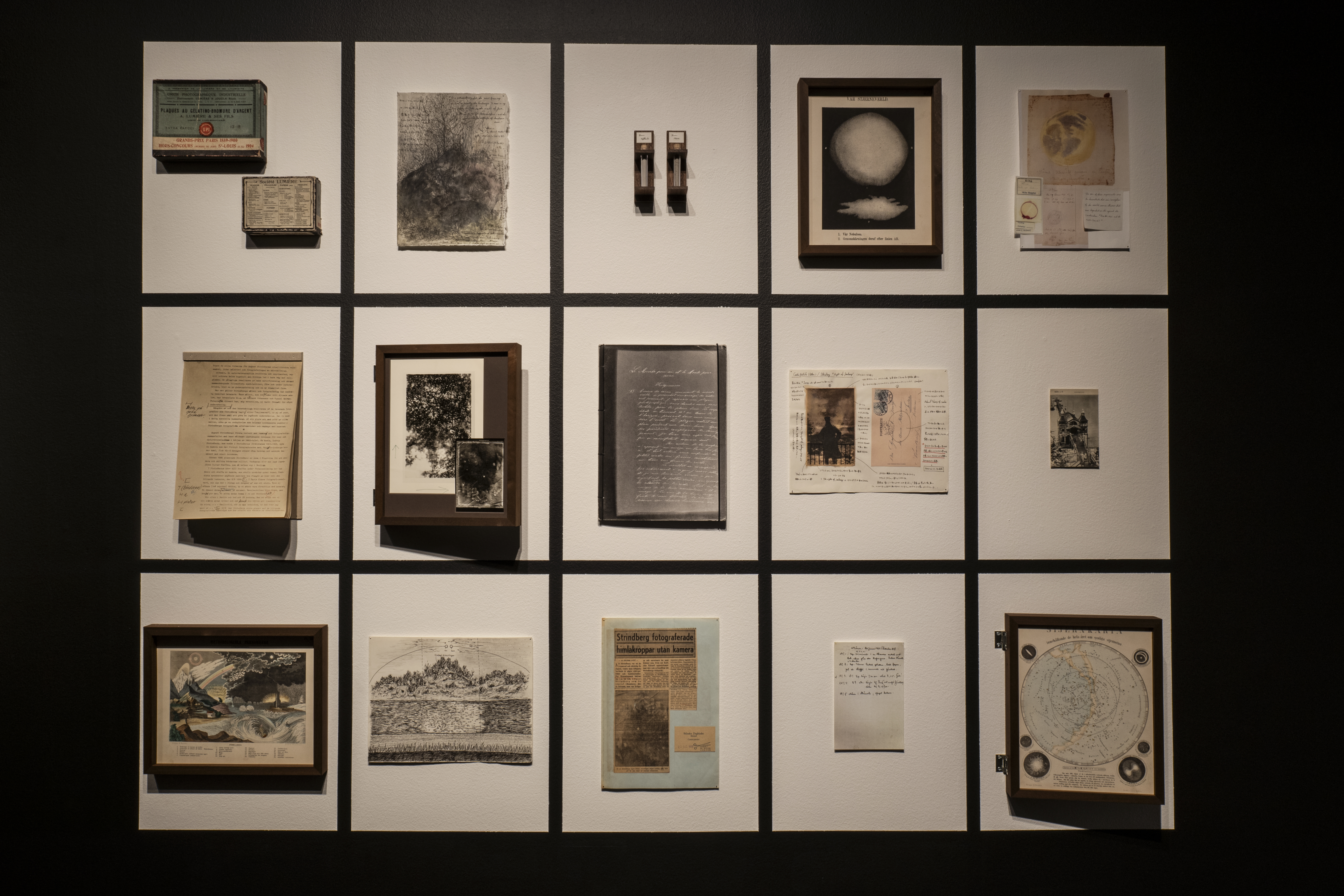
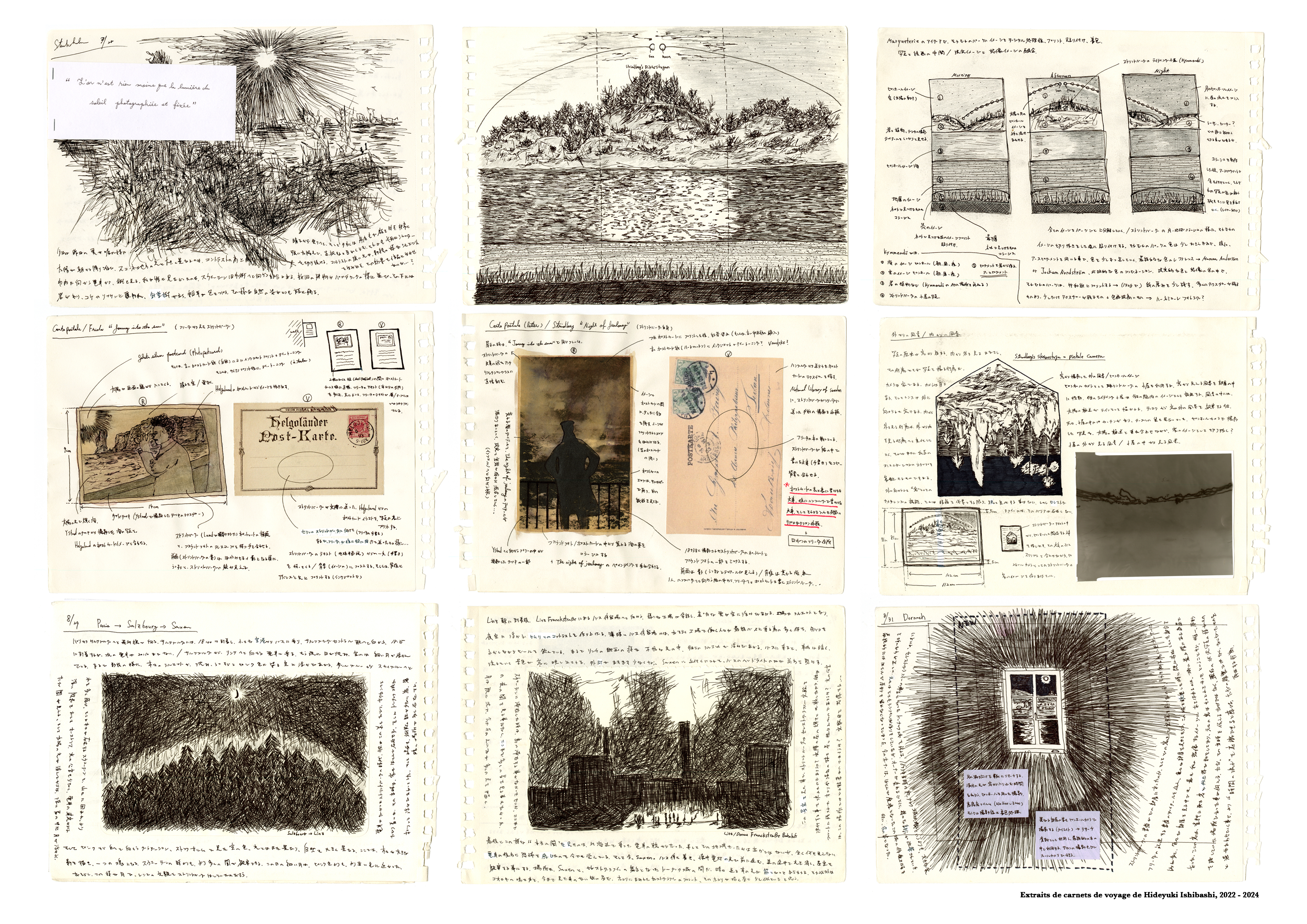
As I have decoded his thousands of research notes, astronomical observation notebooks, clippings and writings from various scientific journals in the archive of the Royal Library of Sweden since 2018, I have begun to understand that the preposterous ideas of the Celestographs were not false conceptions without any basis, but a “philosophy” born of personal reflection and the tendency of the times during which photography became in many ways “the retina of the scientist”, as the French astronomer Jules Janssen said. I also notice that some of his ideas are closely linked to the birth of photography, when the photographic medium was still “ideas and traces”. Now that I’ve been confronted for years with these different fragments of the creative process, I think I can say that his ideas are “false” research results that have no value from the point of view of modern science but are “true” research results from the point of view of the ancient science that seeks the truth of nature in philosophy and contemplation. And just as the history of photography was not made only by the history of photography taught in school, but the various research and traces of proto photographers that existed around the history of photography shaped the “non edited” history of photography, it is misconceptions and chance that have formed the science we know today. That’s why I’m interested in photographic imprints that have disappeared without being established, photographic ideas described in ancient literature or the thought process of the birth of photography. For me, borrowing a phrase from Walter Benjamin’s “A Short History of Photography”, “The fog that covers the beginnings of photography” seems to illuminate the tenuous boundaries between what has been established as history and what has not.
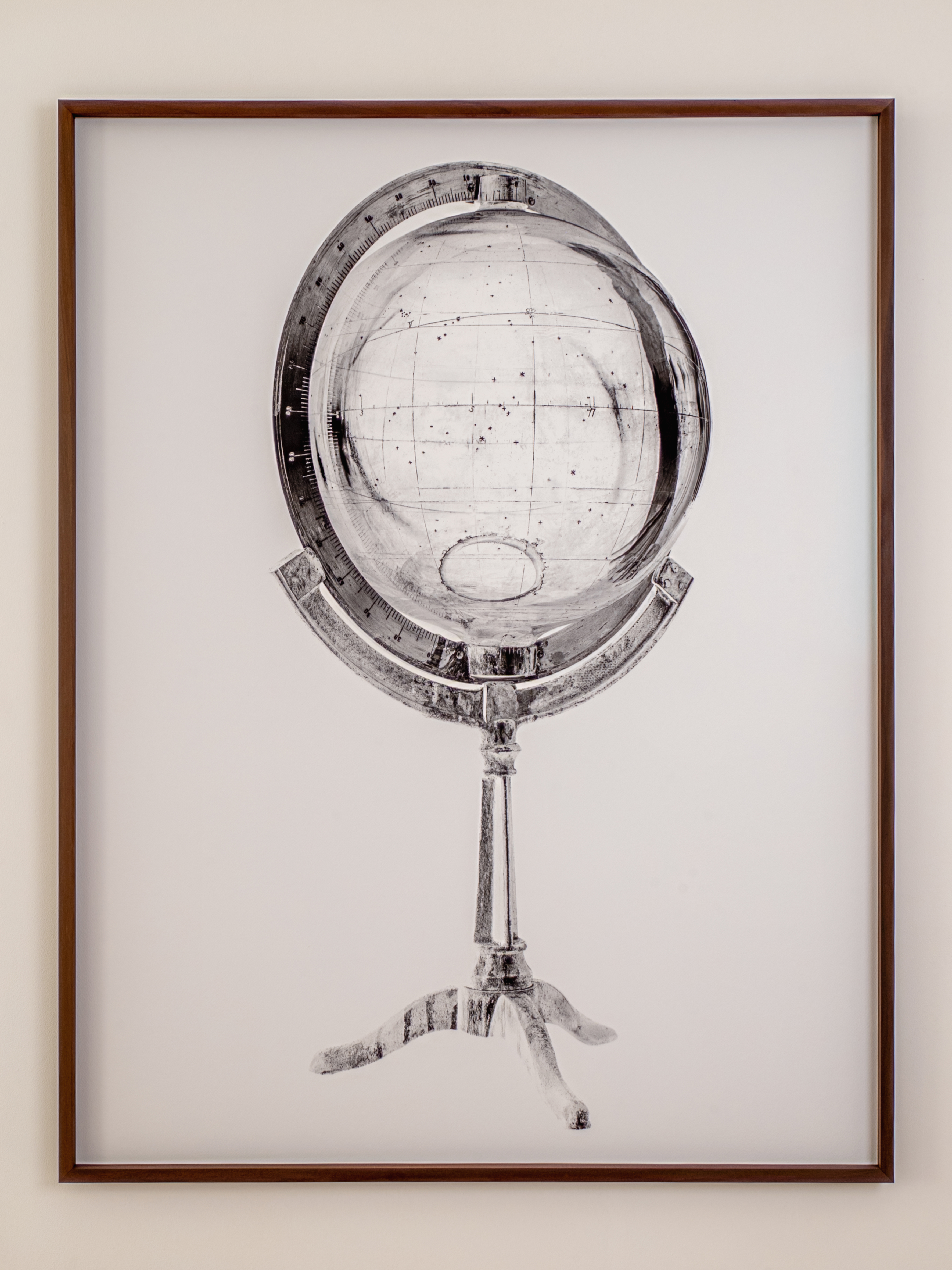
Reflecting these ideas, “Stjernhimmeln (the heavenly sky)” consists of 5 chapters. Each chapter tells a different chronology and reality (alternative facts) around the Celestographs and oscillates between past and present, truth and implausibility, reflecting the historical context in which they were created (the transition from natural science to modern science). Most of the images are camera-less photographs, such as computer-generated images using astronomical software, collages, photograms made from dust and chemical reactions. Each work or fake archive reflects Strindberg’s ideas, translated by my ideas and imagination, from scientific treatises of the time, from Strindberg’s wife Frida Uhl, or from her grandparents Cornelius and Marie Reischl (different perspectives on Celestographs). By combining these “traces of thought” with actual scientific and astronomical photographs, the aim of this project is to construct a “mind map” space and question the notion of representing the “unknown/invisible” in the photographic image. I believe that the questions raised by this project lead viewers to look at photographic images from a new perspective, especially in this age when modified information reaches us on a daily basis due to the popularization of AI-based image processing technologies and social media, which have become a tool for gathering information especially among the younger generations. What can we learn from these “unfixed” images after 131 years?
Production supports :
France
La Capsule – Résidence création photos, Bourget
La Cité internationale des Arts, Paris
La Pouponnière, Lille
Sweden
Landskrona Museum, Landskrona
Landskrona Foto, Landskrona
National Library of Sweden, Stockholm
Strindberg Museum, Stockholm
Nordiska Museet, Stockholm
Lund University, Lund
Austria
Museum der Moderne, Salzburg
Strindberg Museum, Saxen
Dornach Castle, Dornach
Subvention :
Drac Hauts-de-France (aide individuelle à la création 2024)
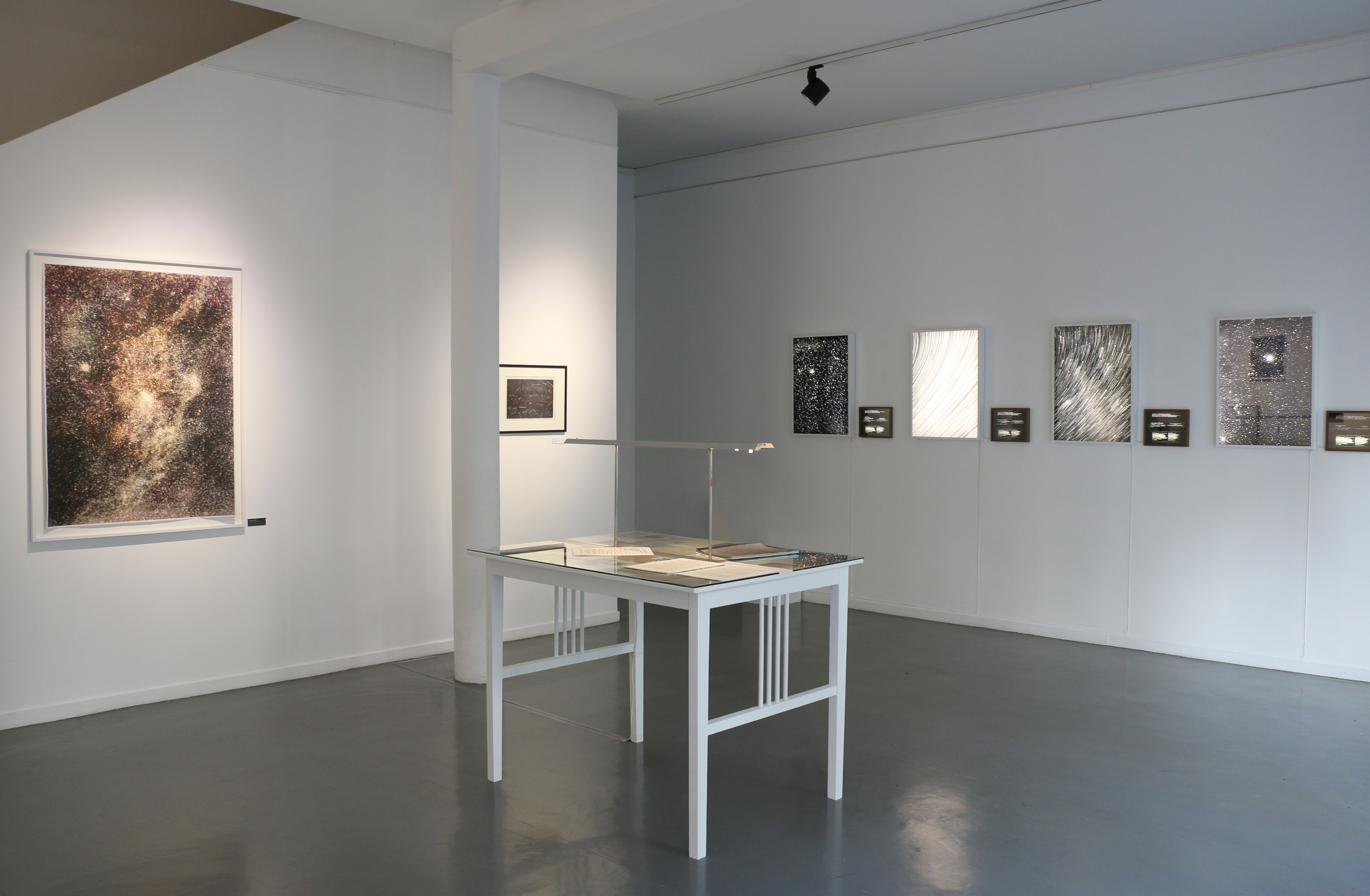
Exhibition view :
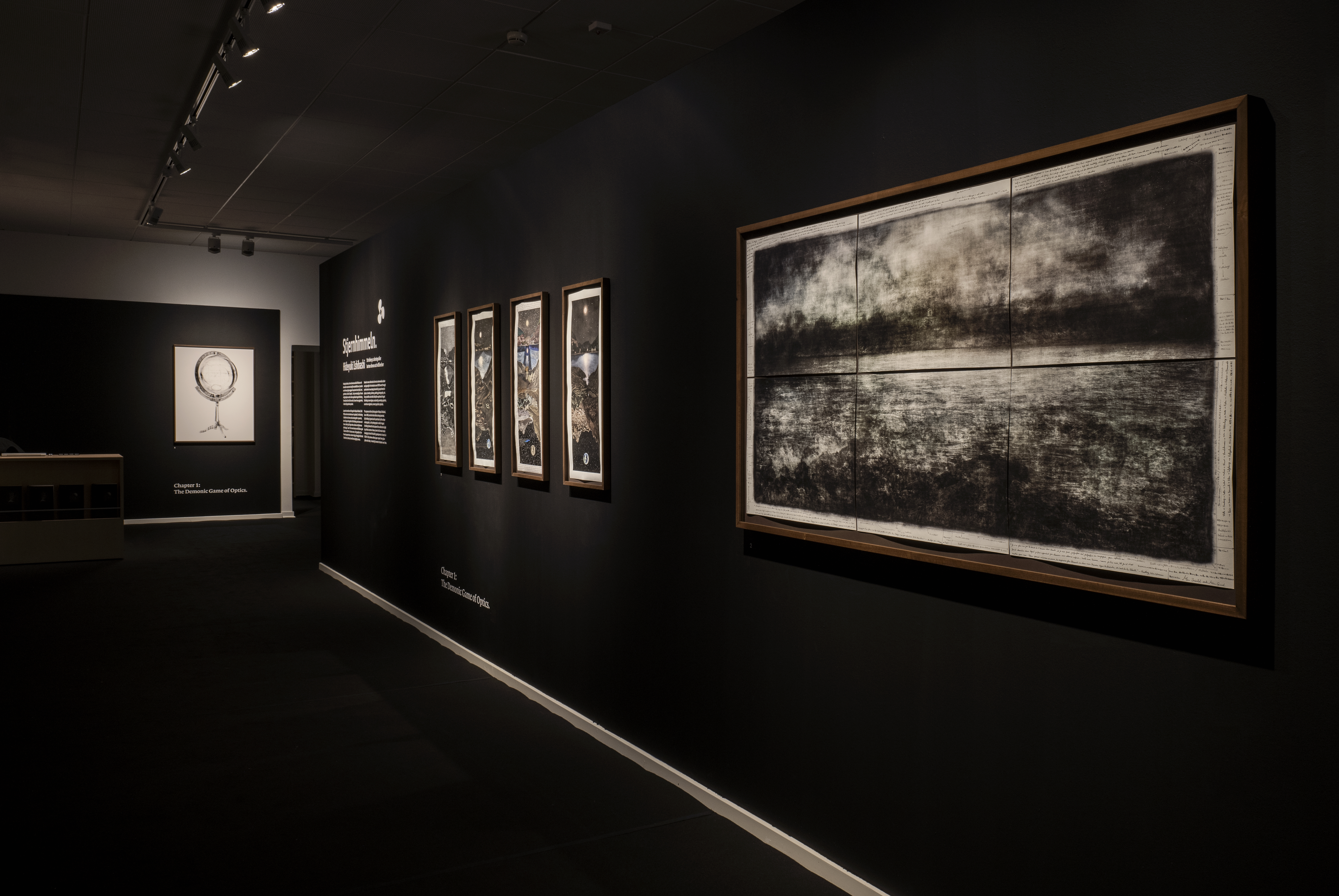
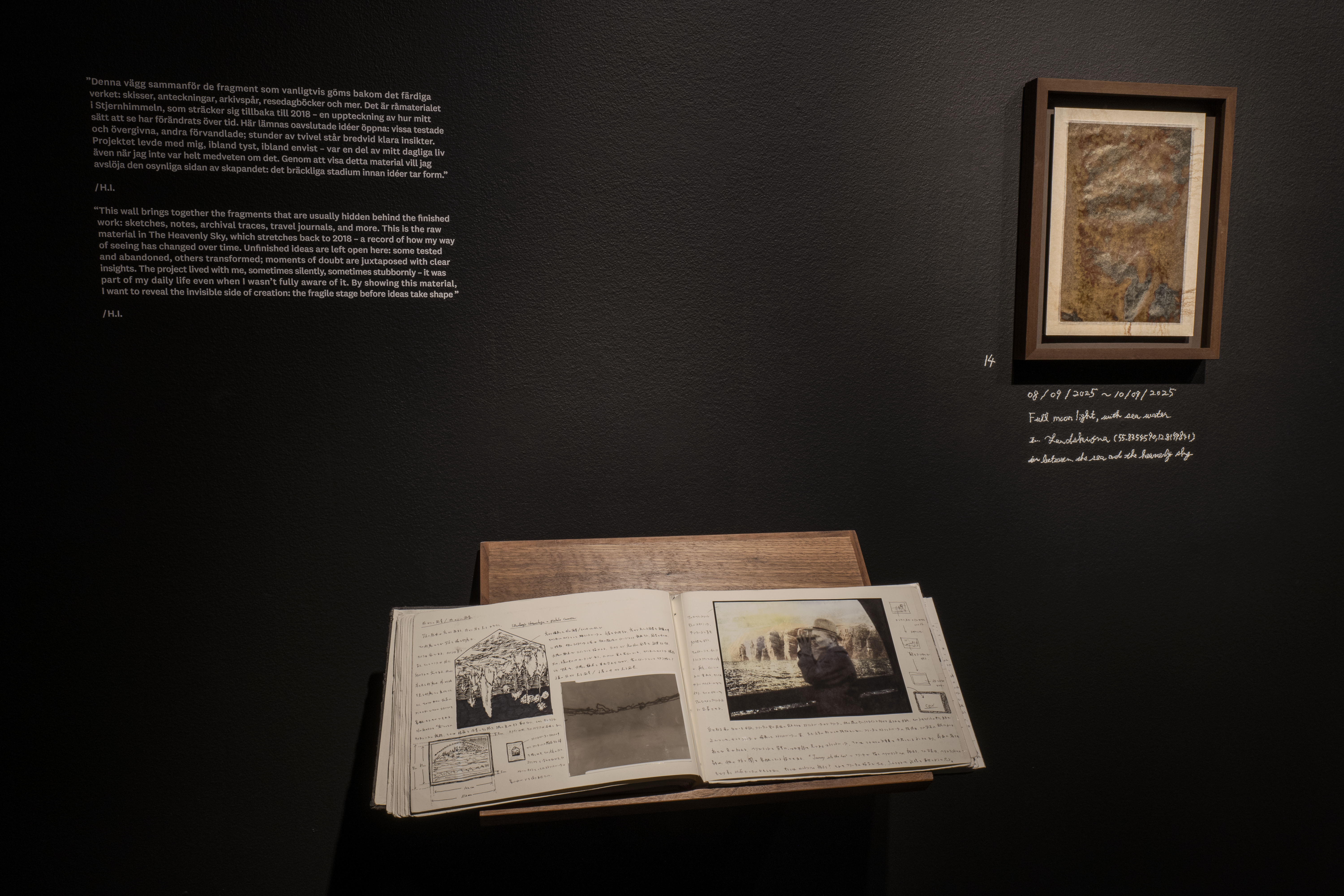
Landskrona Foto, Sweden in 2025
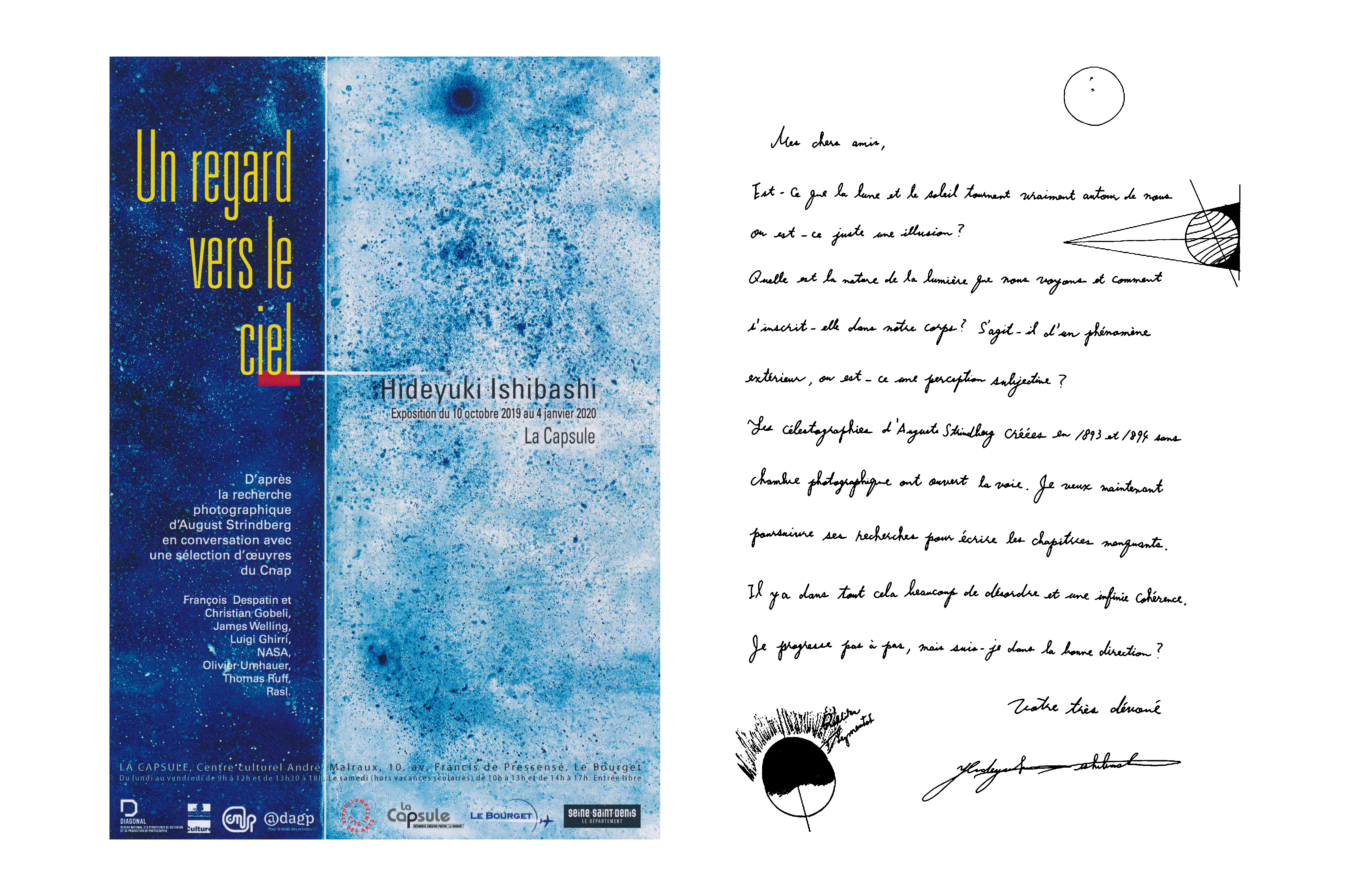
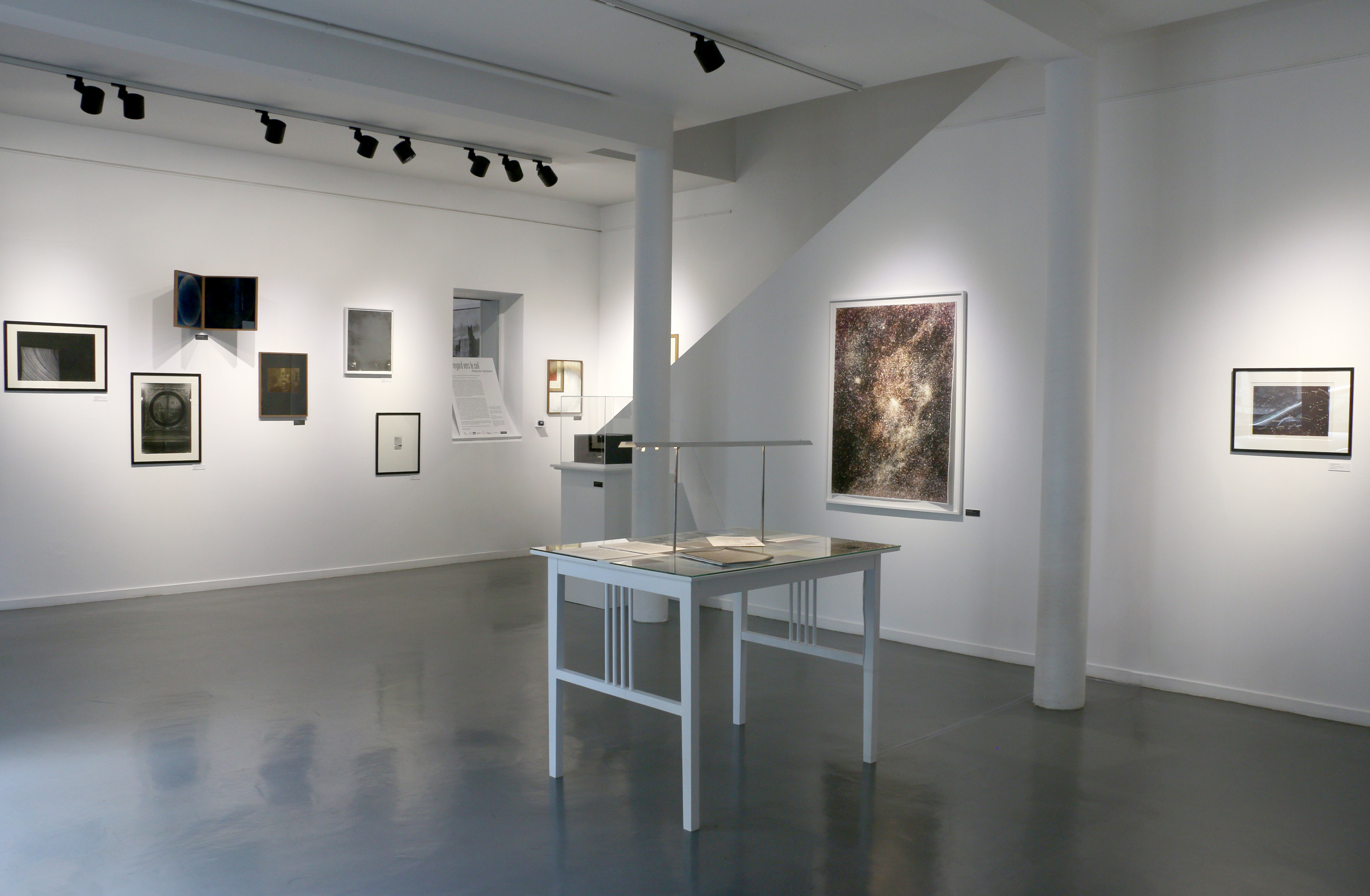
La Capsule – Résidence création photos, Bourget, France in 2019
Publication :
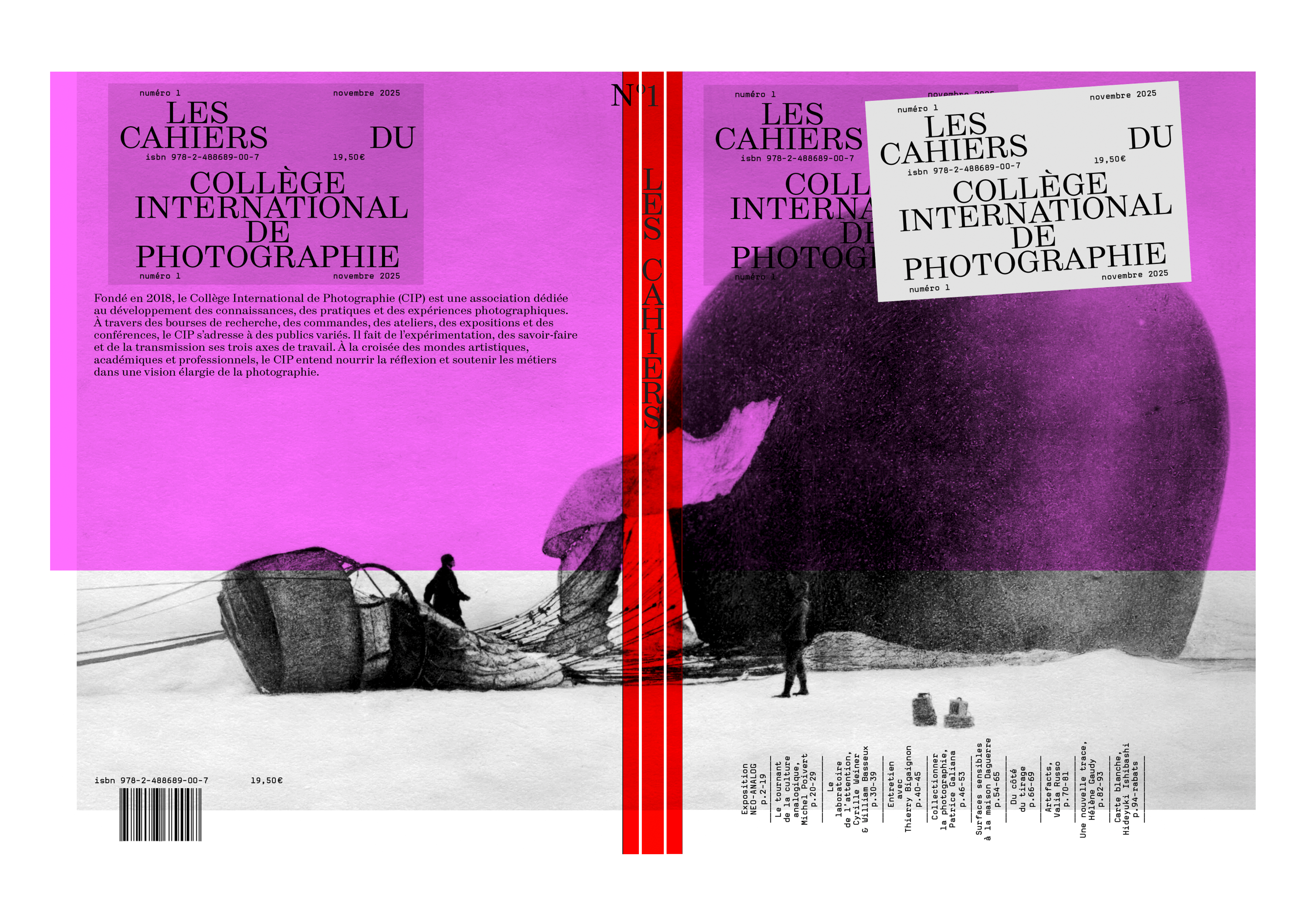
Les Cahiers du Collège International de Photographie n° 01, les presses du réel, France
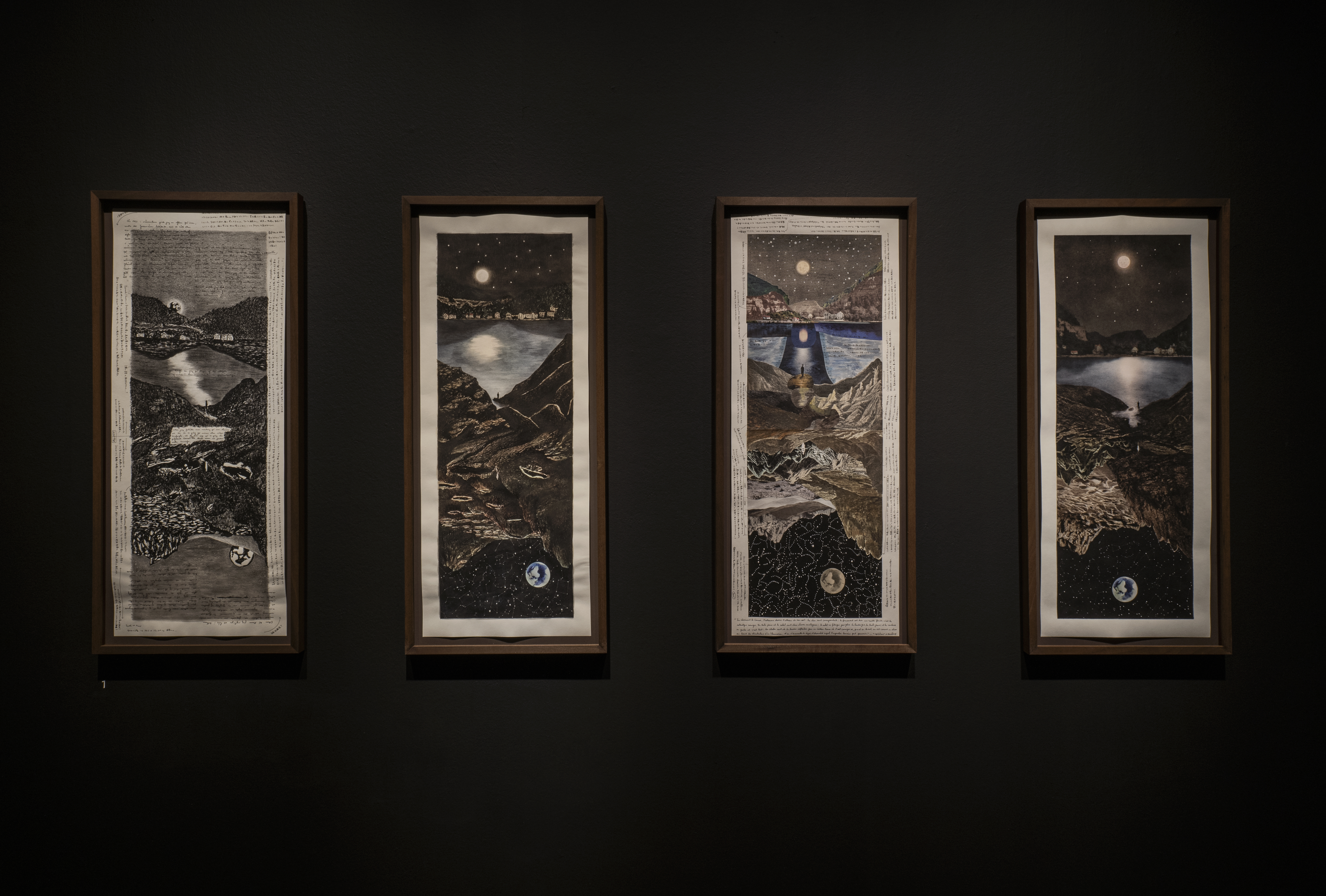
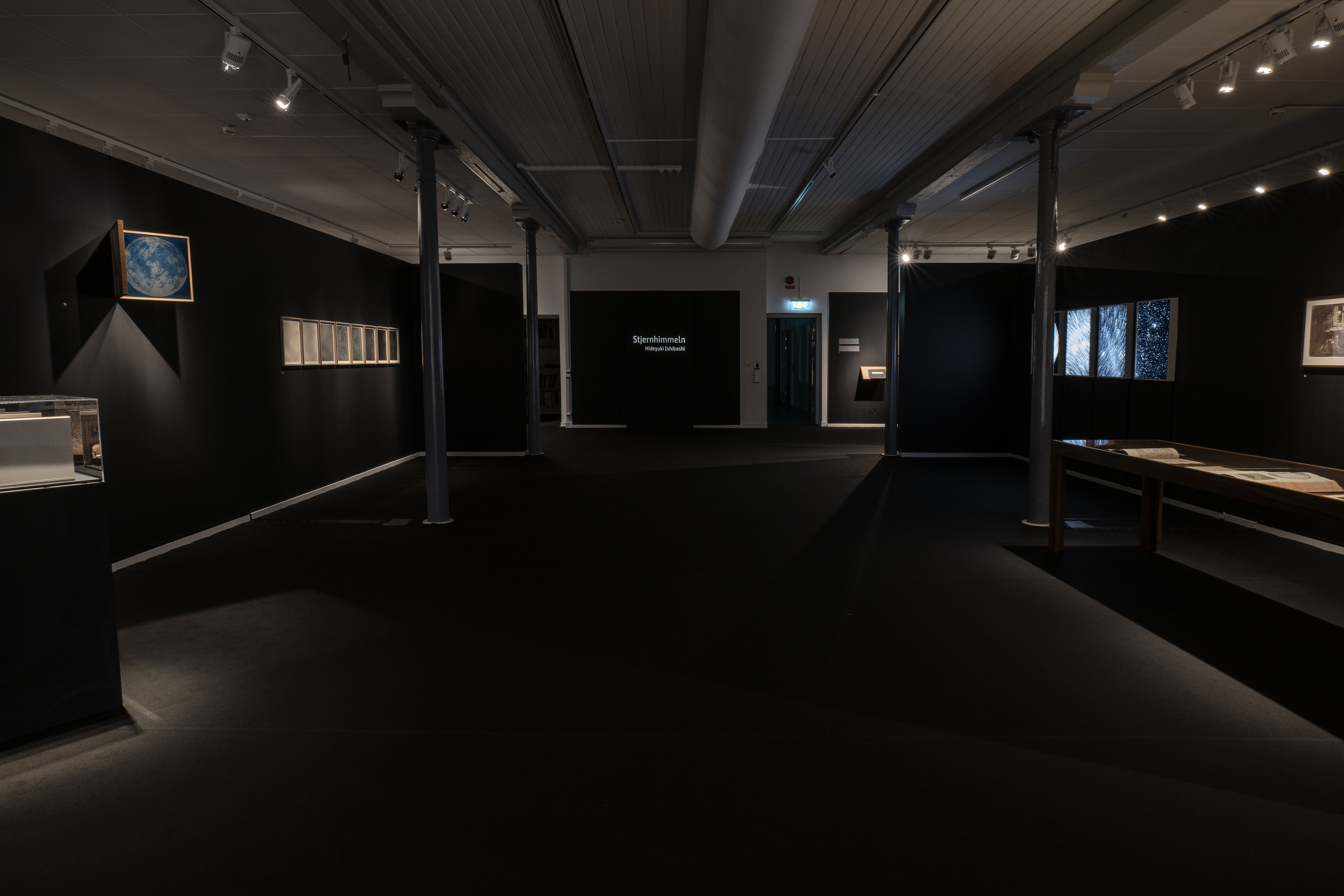
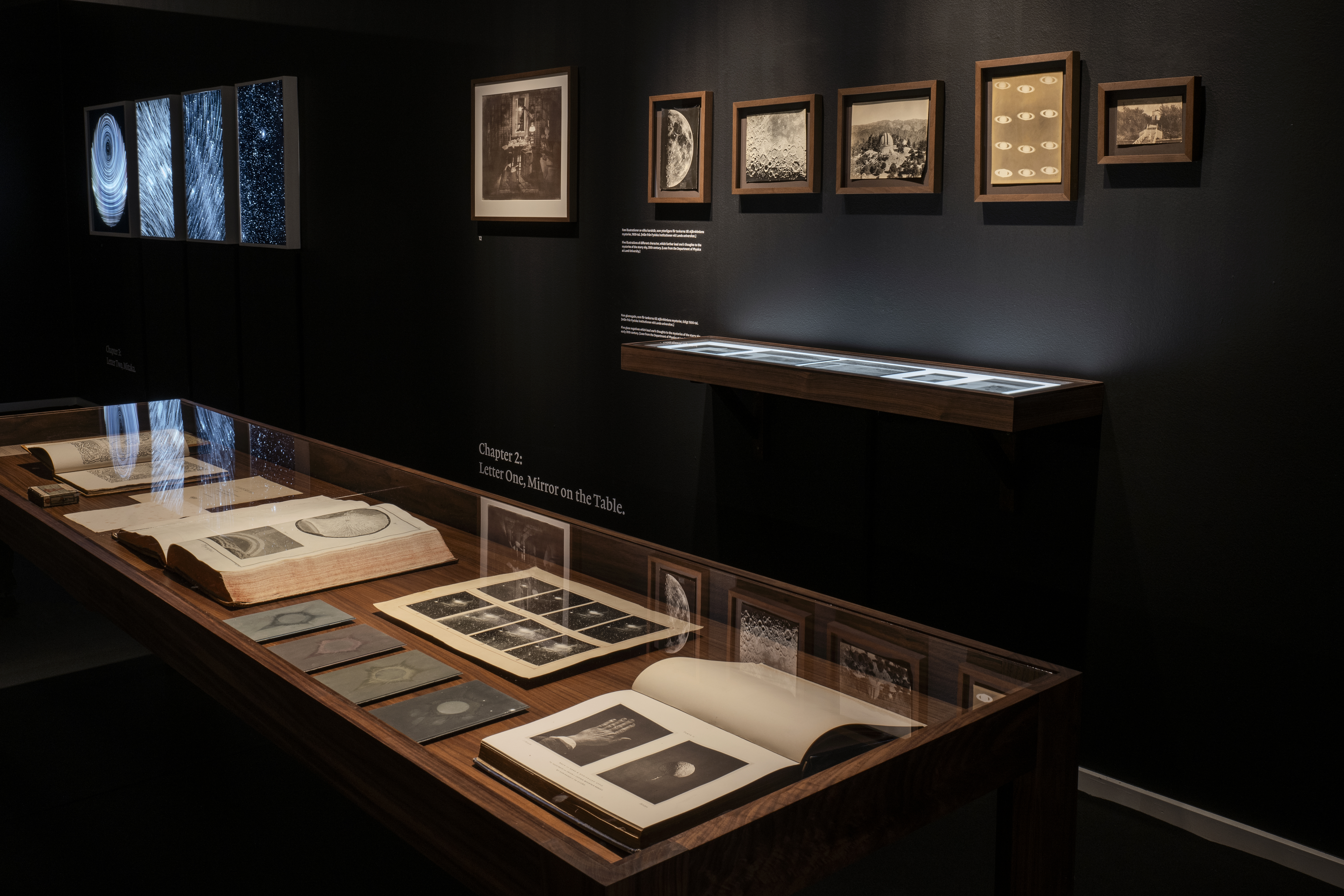



1st Letter: The Demonic Game of Optics
After the publication of his novel By the Open Sea in 1890, influenced by Schopenhauer and Nietzsche, August Strindberg experienced a severe creative block. In 1891, his divorce from his first wife, Siri von Essen, as well as his separation from his children, deeply affected his mental state. His interest then turned toward science, which had already attracted him previously, serving both as a response to his financial insecurity and the solitude of that period. The ideas of Schopenhauer and Nietzsche, already present in his literary work, now began to shape his experiments in chemistry and photography.
In 1892, he left Sweden to settle in Berlin, where he immersed himself in chemistry, astronomy, and photography, while associating with artists and writers such as Edvard Munch and Stanisław Przybyszewski. At the same time, he became interested in marginal theories such as the flat Earth and in occultism, even attempting to prove their validity in a literal manner, which led to his arrest.
In April 1893, he married his second wife, Frida Uhl, and traveled with her to England. However, their hopes for recognition, particularly for his plays, did not materialize. Faced with financial difficulties, a growing sense of humiliation, and tensions with Frida, he left England alone at the end of June and traveled to Rügen, Germany.
In Rügen, he conducted a series of optical experiments that would lay the foundations for his photographic research, particularly the Celestographs. At the same time, he devoted himself intensely to chemical experimentation, working day and night in a space saturated with the smell of sulfur, surrounded by bottles, microscopes, mercury, and magnifying glasses. He also drafted two versions of a work entitled Antibarbarus (published in 1894), which synthesized his philosophical and scientific thought. Intended to assert his legitimacy as a scientist, the book instead contributed to weakening his position and fueling doubts about his mental health.
His experiments continued until August 11, when he returned to Berlin and reunited with Frida. His optical experiments and his observations of celestial bodies using optical instruments were recorded in a manuscript entitled In the Light of Astronomy, and later in the fifth letter of Antibarbarus, as well as in other writings such as The World for Itself and the World for Us, though these texts were never published.
Despite criticism, Strindberg never renounced his convictions and continued his observations until the end of his life. The moon, in particular, remained central to his research. In The Blue Book (1907–1912), he revisited his stays in Rügen and referred to these experiments as “The Demonic Game of Optics.”
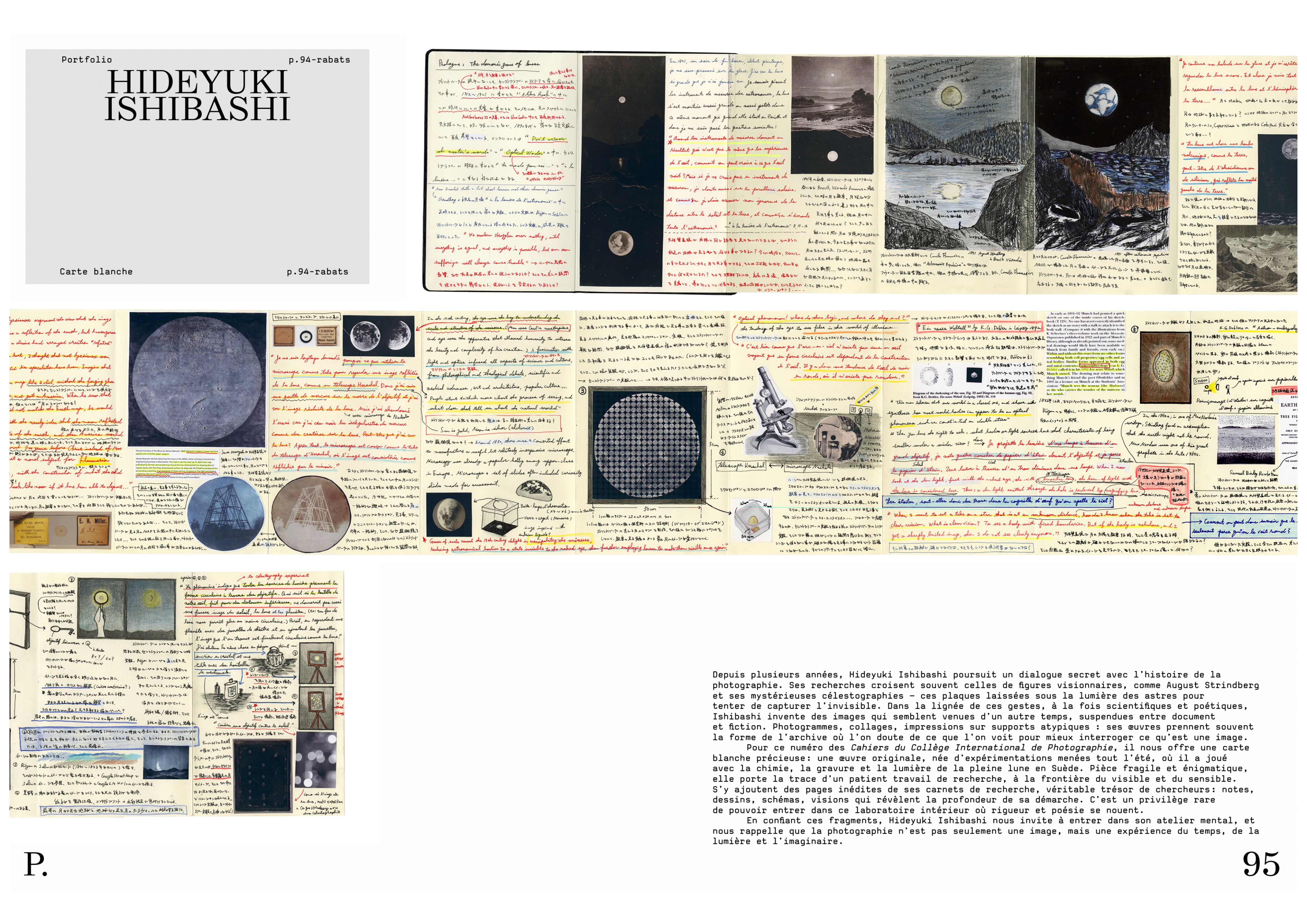
In this prologue, in reference to that text, I focus on the unpublished manuscript and drafts In the Light of Astronomy, dated July 18, 1893, at 10:30 p.m., in Sellin, on the island of Rügen. This chapter seeks to give form to the process through which the celestographs emerged, through intersecting perspectives and temporalities between Strindberg and myself. This involves reproducing his optical experiments in situ, as well as attempting to visualize the imaginary world he described in words — a kind of cartography of his mental process, echoing the scientific photography of the period.
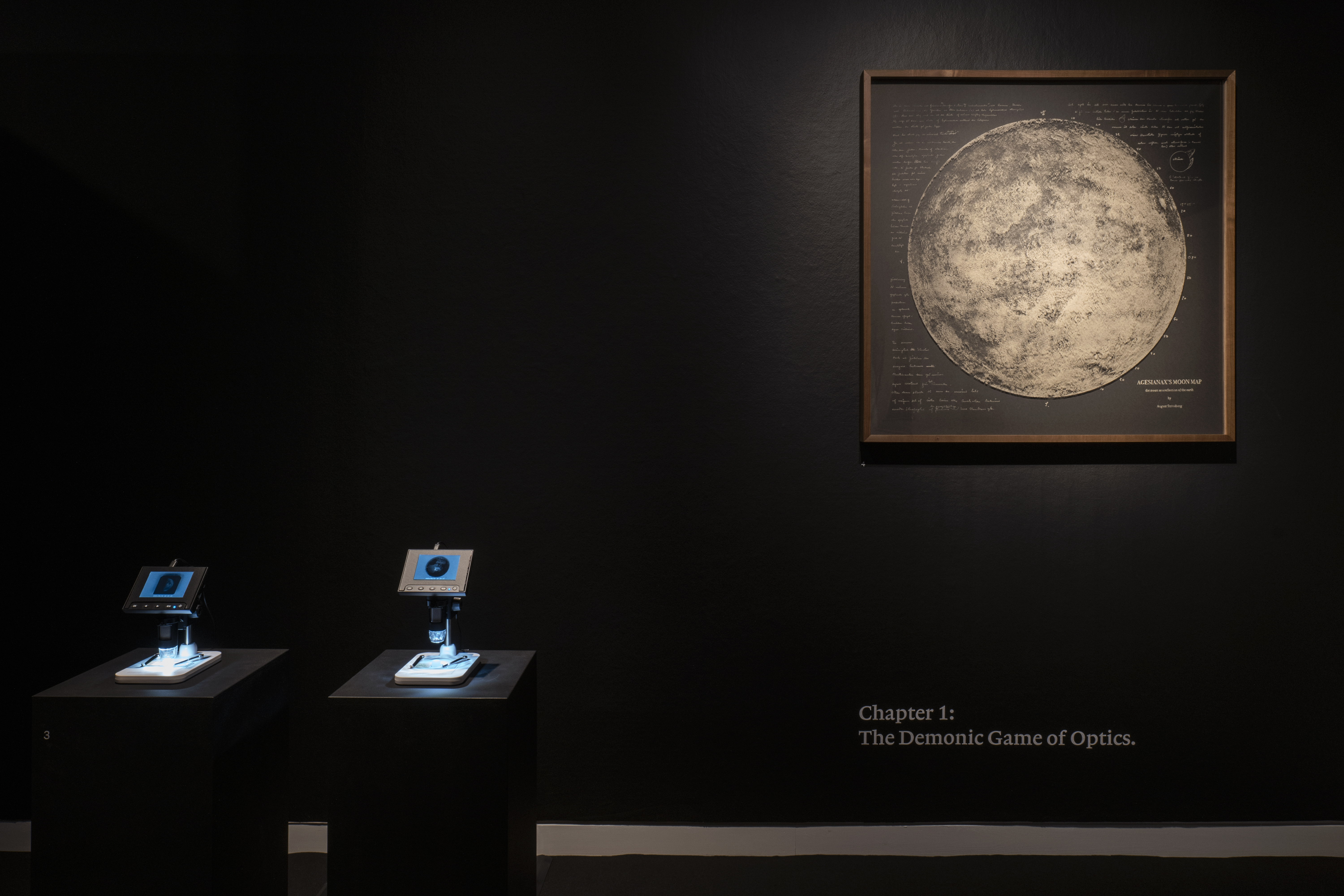
1. Moon on Mercury
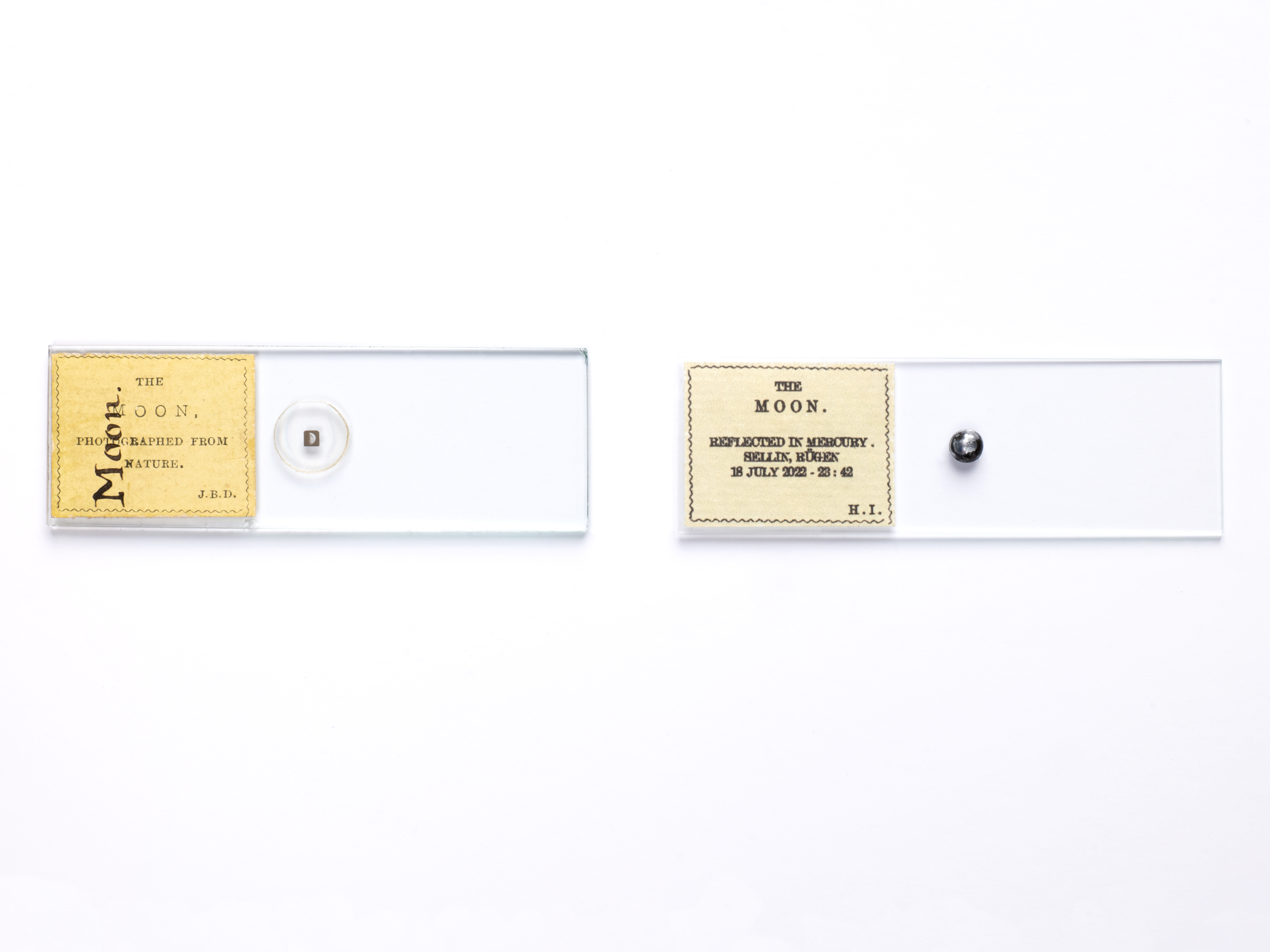
In 1893, August Strindberg observed the moon in Sellin, on the island of Rügen. In his manuscript In the Light of Astronomy (18 July 1893, 10:30 p.m.), he described what he saw through a watchmaker’s loupe, illuminated by the oil lamp of a neighboring window. The distortions produced by this simple optical device led him to what he later called the “demonic game of optics.”
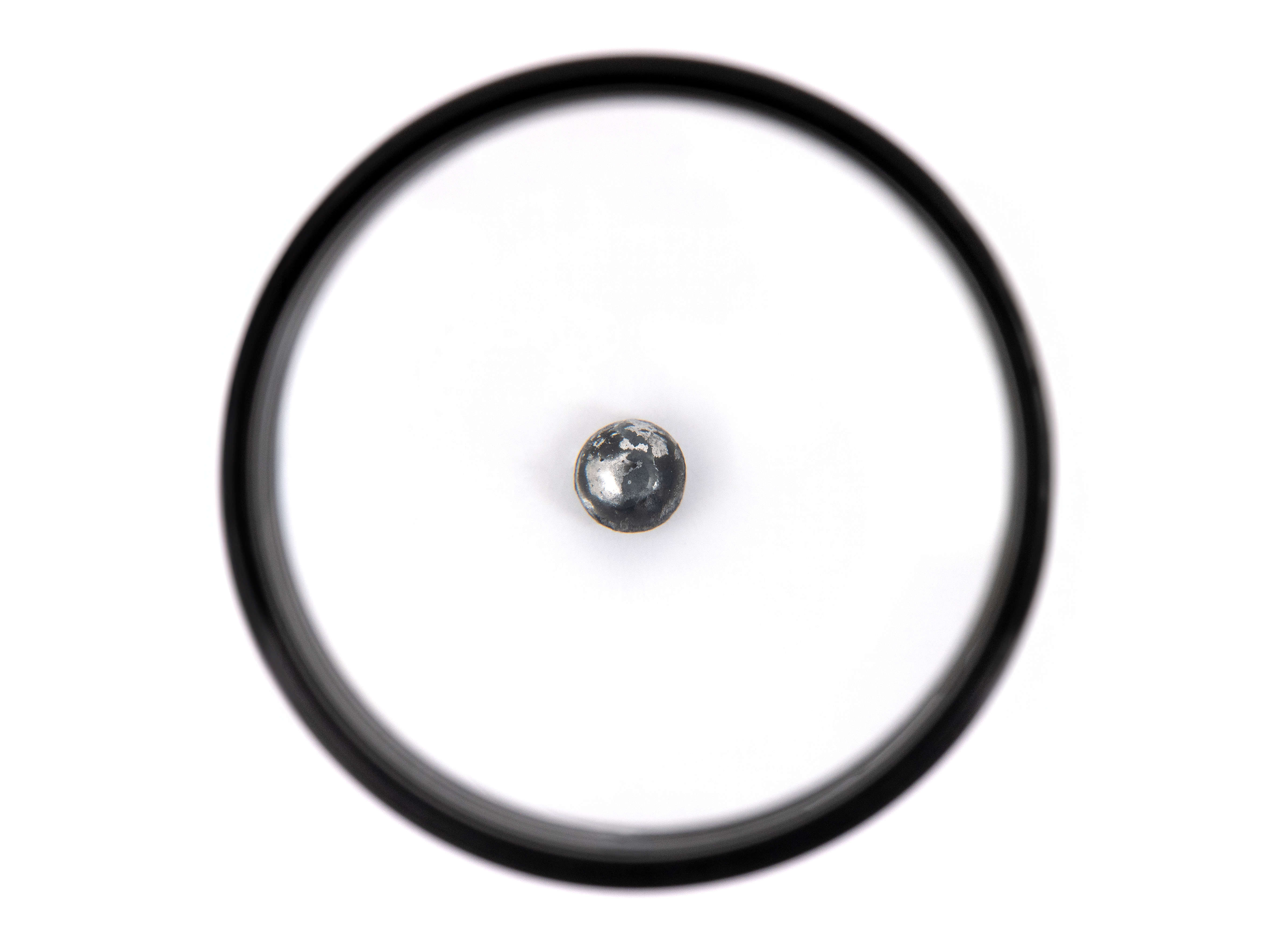
In the same text, Strindberg imagined an alternative method: placing a drop of mercury under a microscope to observe the reflected image of the moon. Confronted with the irregularities of the mercury surface — resembling mountains and craters — he began to doubt what he was seeing. Was it the moon, or the surface itself?
This gesture also resonates with alchemical thought. In alchemical traditions, the moon is associated with silver and the sun with gold, while mercury occupies a singular place: not only as a substance, but as one of the fundamental principles structuring processes of transformation. Observing the moon through mercury is therefore not only an optical experiment, but also a symbolic operation.
More than a century later, on the same date and in the same place, I retraced his gesture and repeated the observation, engaging with his way of seeing.
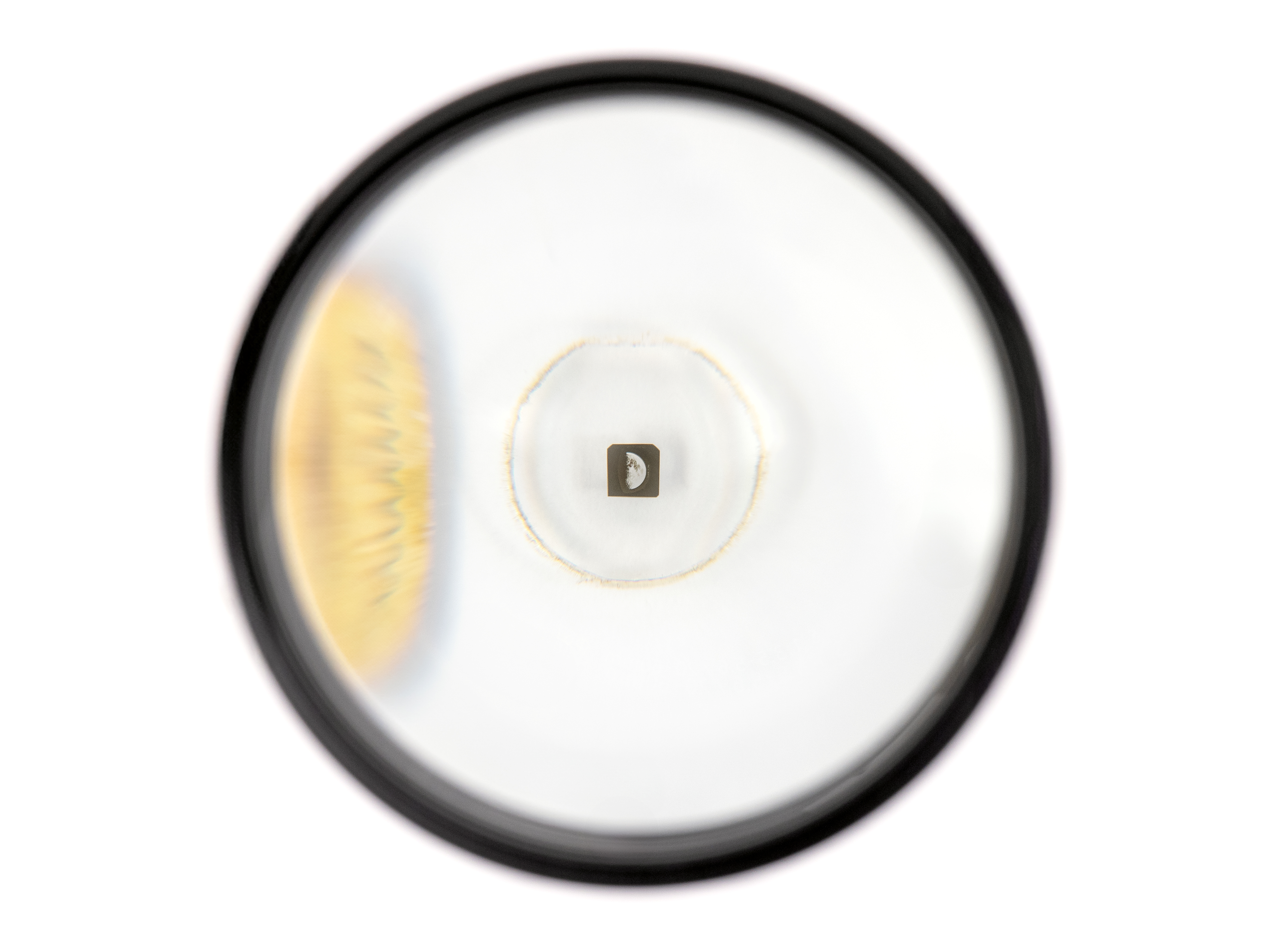
The image perceived through the loupe was then translated onto a microscopic scale. Using photographic emulsion, I printed the image of the moon — photographed in Sellin — onto a grain of glass coated with silver leaf. Observed through an electron microscope, the image reappears both as a celestial body and as a textured surface.
This process resonates with nineteenth-century microphotography, a popular form of domestic observation in Victorian Europe, where astronomical images were miniaturized and viewed through microscopes, collapsing vast cosmic distances into intimate visual experiences.
The work is presented alongside an original Victorian microphotographic slide of the moon, acquired from an antique market. These two slides, separated by more than a century, enter into dialogue.
Rather than representing the moon, the work reflects on the act of seeing itself: how scale, surface, and belief shape what becomes visible.
2. Correspondances
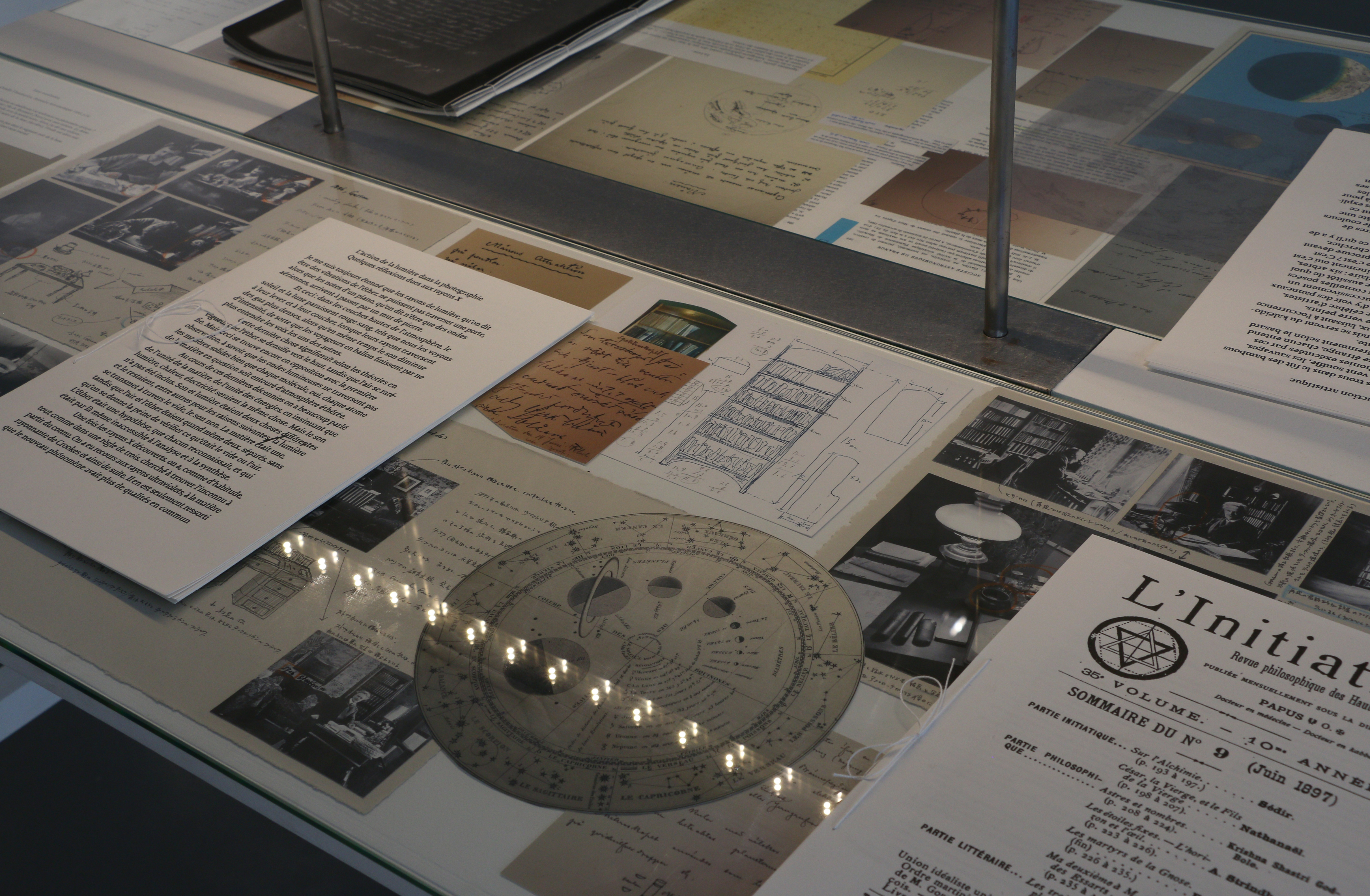
Many astronomical documents are preserved at the National Library of Sweden, alongside the notes and calculations of August Strindberg, as well as numerous excerpts and quotations from Camille Flammarion. Unlike many of his contemporaries, Flammarion combined scientific research with an attention to the unknown, opening a space in which the visible and the invisible resonate with one another.
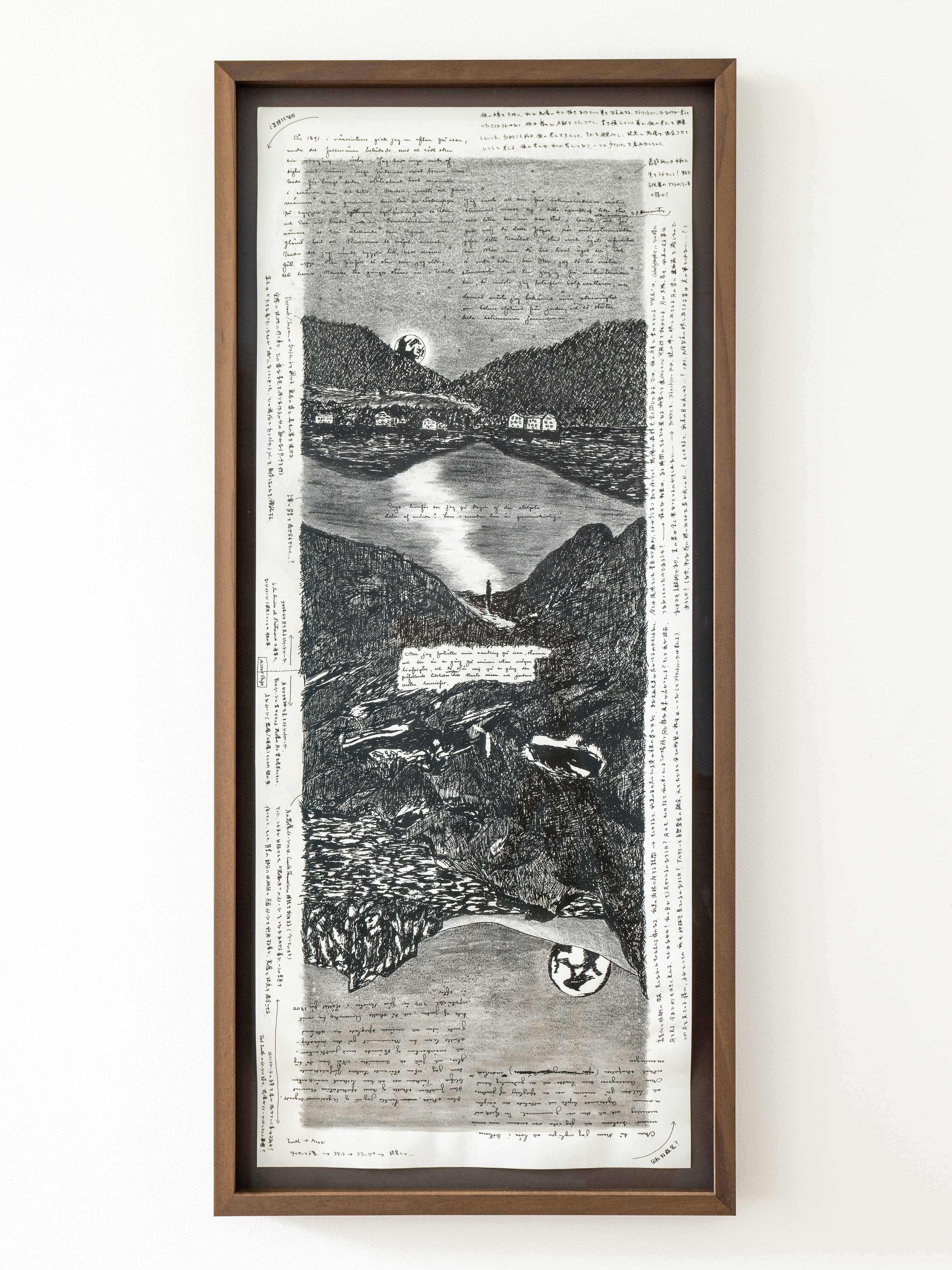
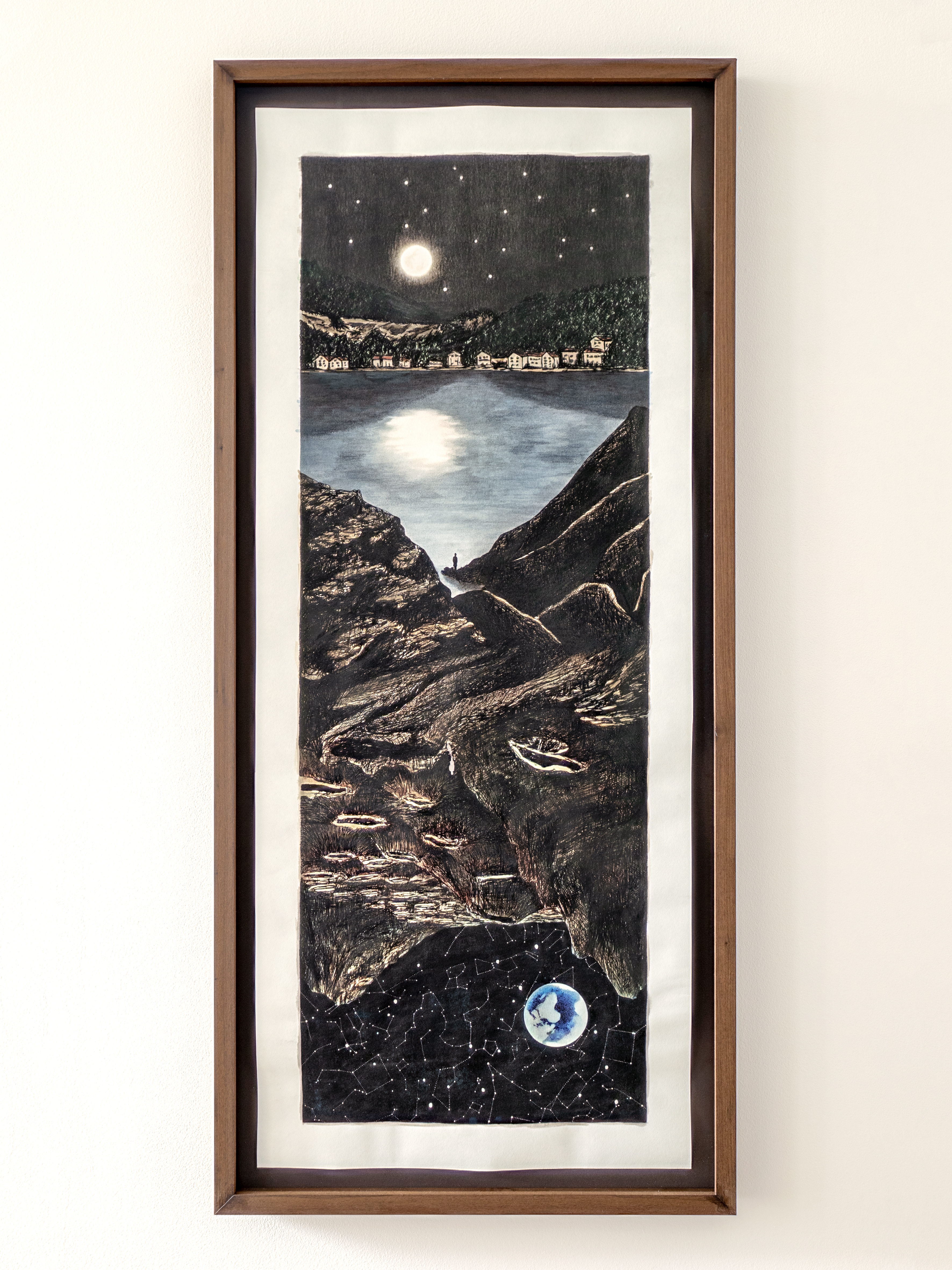
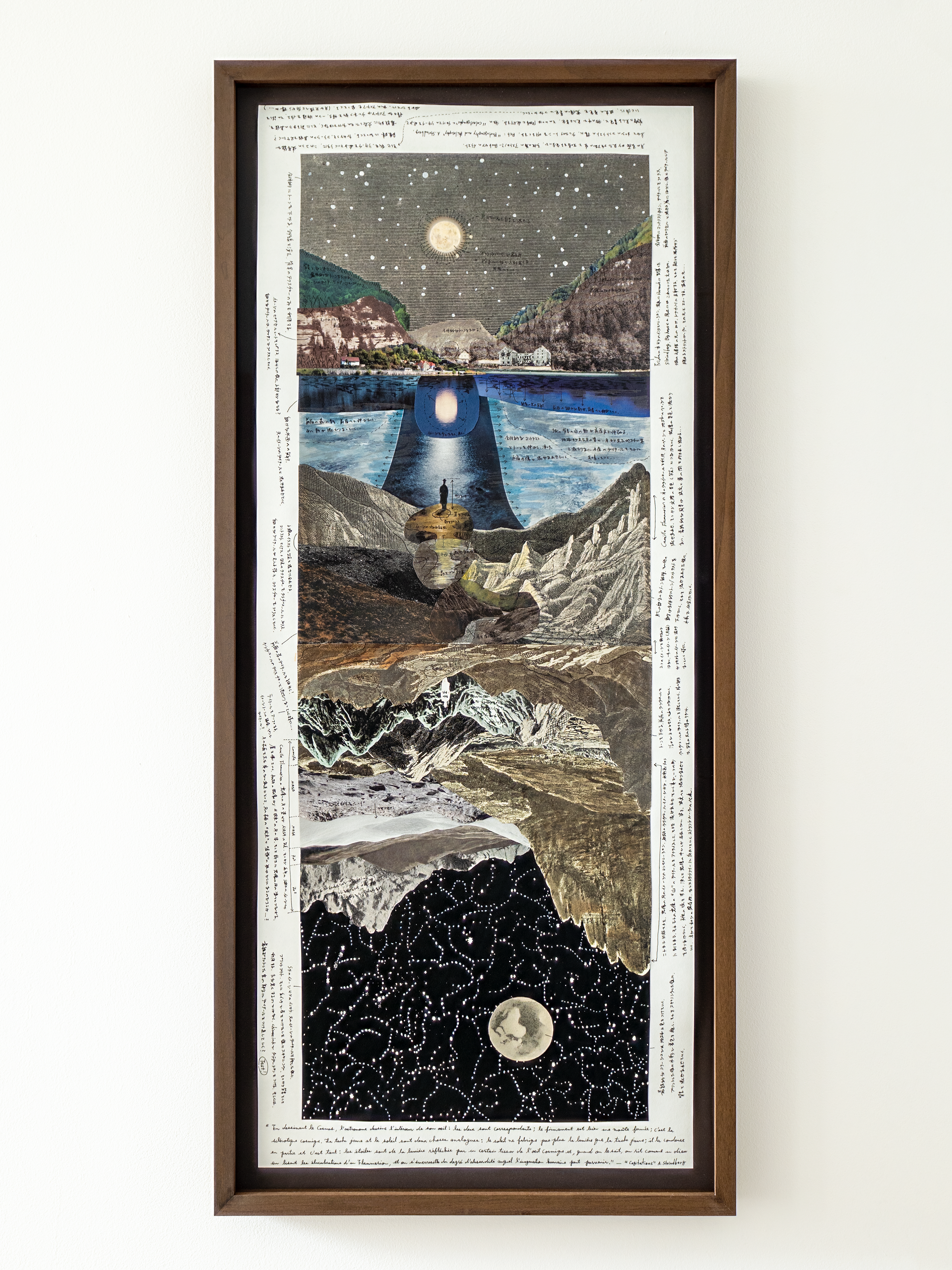
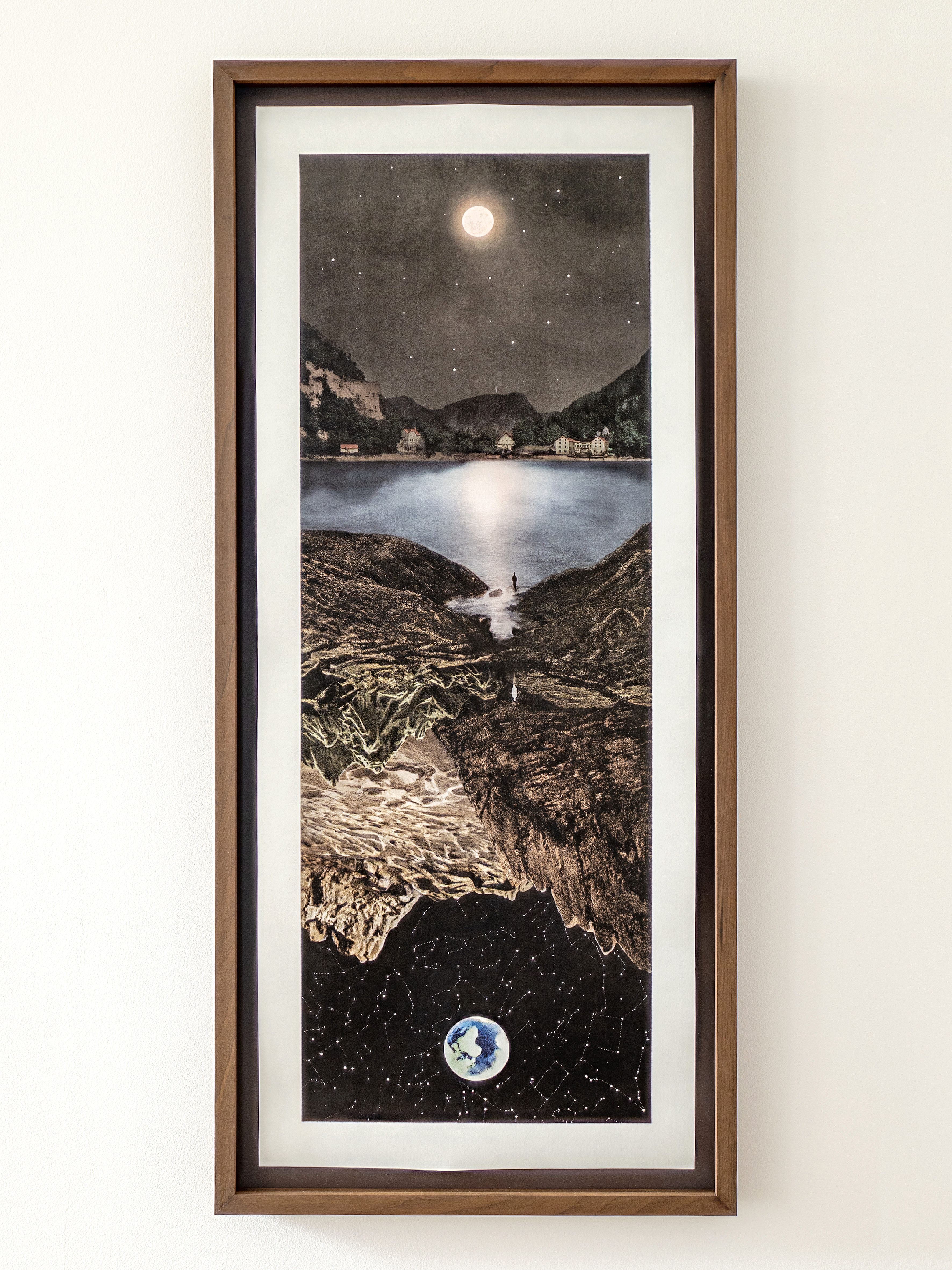
During a winter walk along a frozen river, Strindberg began to perceive the moon as a reflection of the Earth. Observing its surface, he noted a striking resemblance to terrestrial geography, going so far as to consider the moon as a reflective surface. This experience became the starting point for Reflective Images.
The work unfolds as a series of drawings and collages, attempting to translate into images what Strindberg articulated through language. It develops a reciprocal vision: the moon as seen from the Earth, and the Earth as it might appear from the moon.
The collages combine “imaginary” representations of the lunar surface drawn from nineteenth-century astronomical publications — particularly those of Flammarion — with contemporary photographs produced by NASA. Through layering and reworking these different sources, the images blur the boundary between the imagined and the documented, between the moon as a projected image and the moon as scientific data.
Through the progression from drawing to collage, the work traces a movement of thought, where Strindberg’s and Flammarion’s imaginaries intersect with my own.
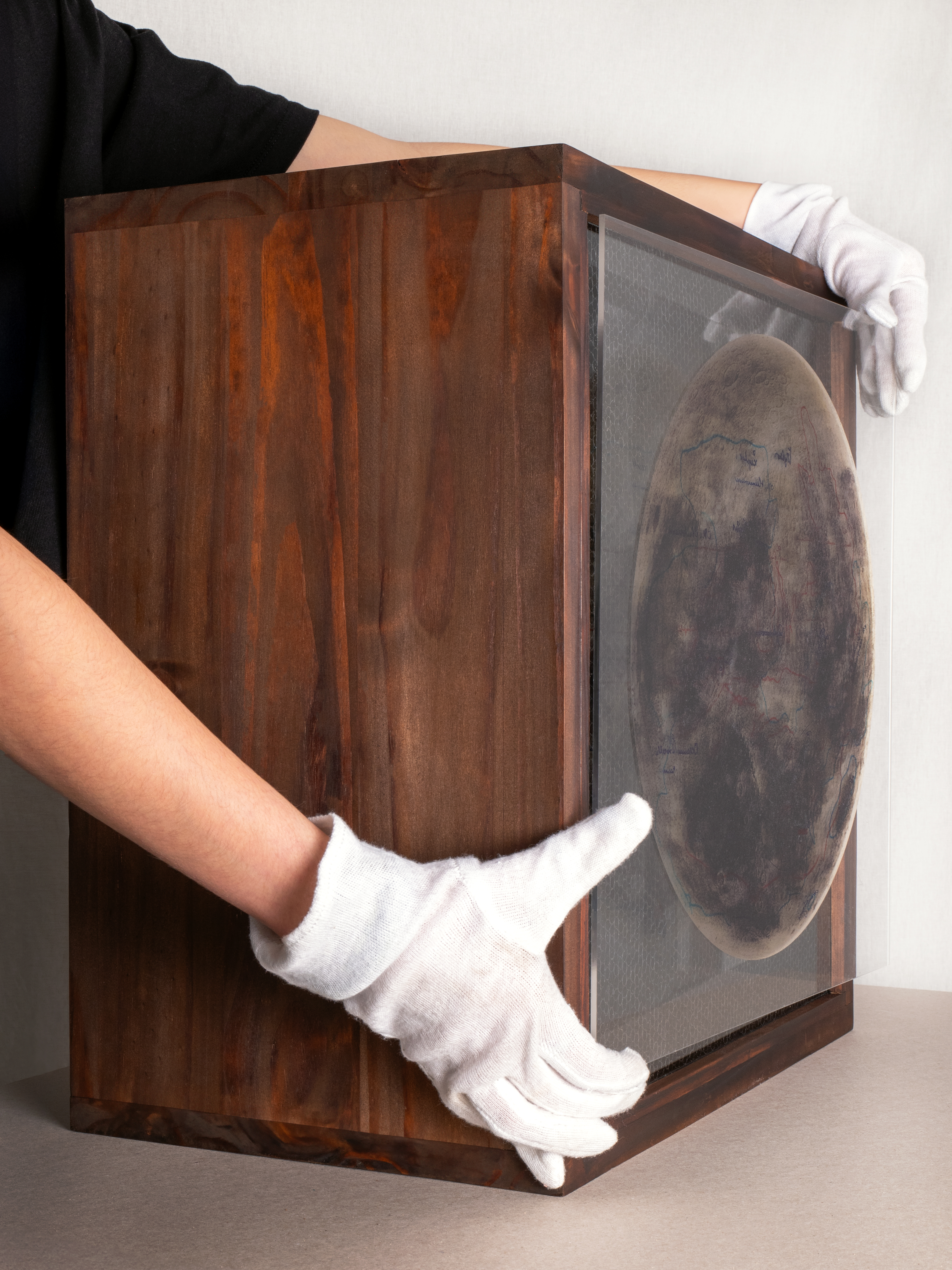
3. Agesianax’s Lunar Map
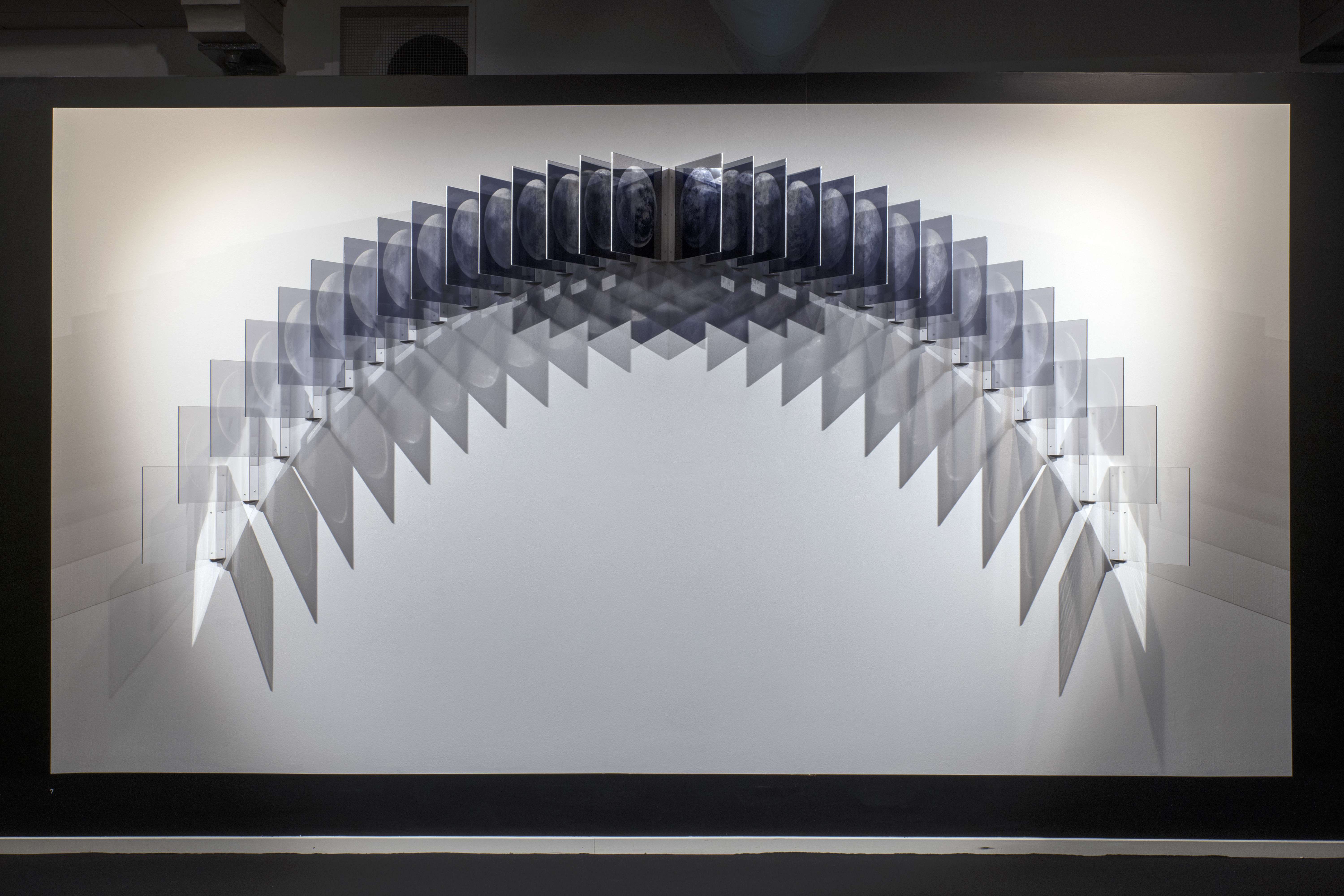
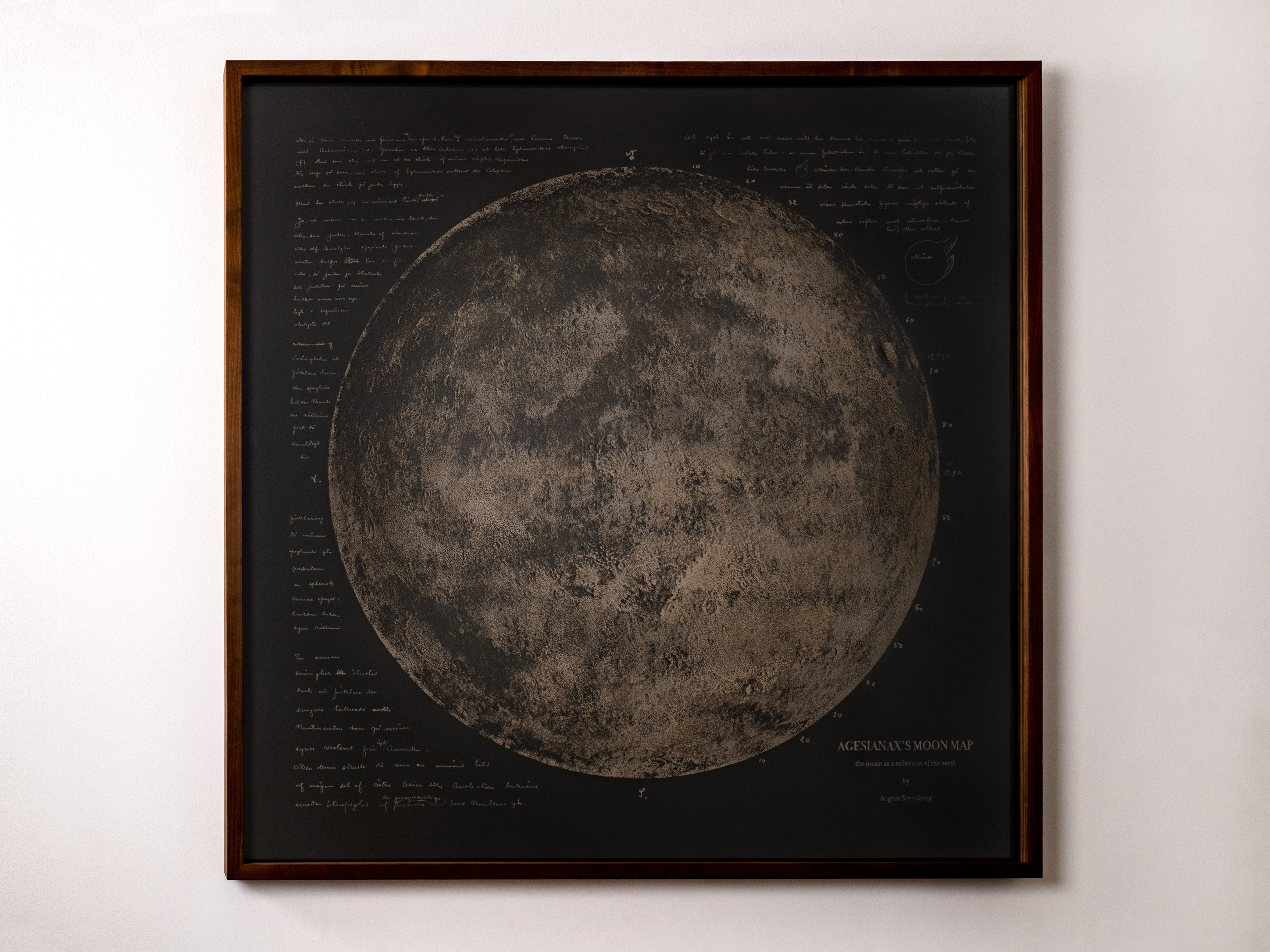
This work brings together two lunar maps based on August Strindberg’s idea of the “transparent moon” as a reflective image of the Earth.
The first map corresponds to the near side of the moon, composed from three of Strindberg’s drawings preserved in archival collections. These drawings were photographed, reworked, and superimposed to form a single composite surface.
The second map represents the far side, a region that remained inaccessible to observation for a long time. It is constructed from Strindberg’s speculative descriptions, reinterpreted through drawing, and combined with contemporary images of the lunar far side produced by recent space missions.
A final layer, printed on black paper, incorporates fragments of Strindberg’s handwritten manuscript describing the idea of a transparent moon.
These three layers are silkscreen-printed onto transparent acrylic plate using pigments made from lunar dust simulant, a material developed for space research based on Apollo-era samples. Although it reproduces the composition of lunar soil, it does not originate from the moon itself. This gap between simulation and origin remains central to this work.
The work enters into dialogue with the nineteenth-century lunar map by James Nasmyth, whose observations were based on repeated telescopic study. Yet even in this attempt at accuracy, representation remains shaped by interpretation and by the limits of perception.
The title refers to Agesianax, a Hellenistic Greek poet known only through fragments preserved by Plutarch. In On the Face in the Moon, he evokes the idea of the moon as a mirror of the Earth:
“Or swell of ocean surging opposite
Be mirrored in a looking-glass of flame.”
Through the interplay of historical imagination, artistic reconstruction, and scientific data, the work unfolds as a question:
How do we produce images of what remains unknown to us, of what we have never directly seen? And where, within these representations, does the boundary lie between projection and reality?
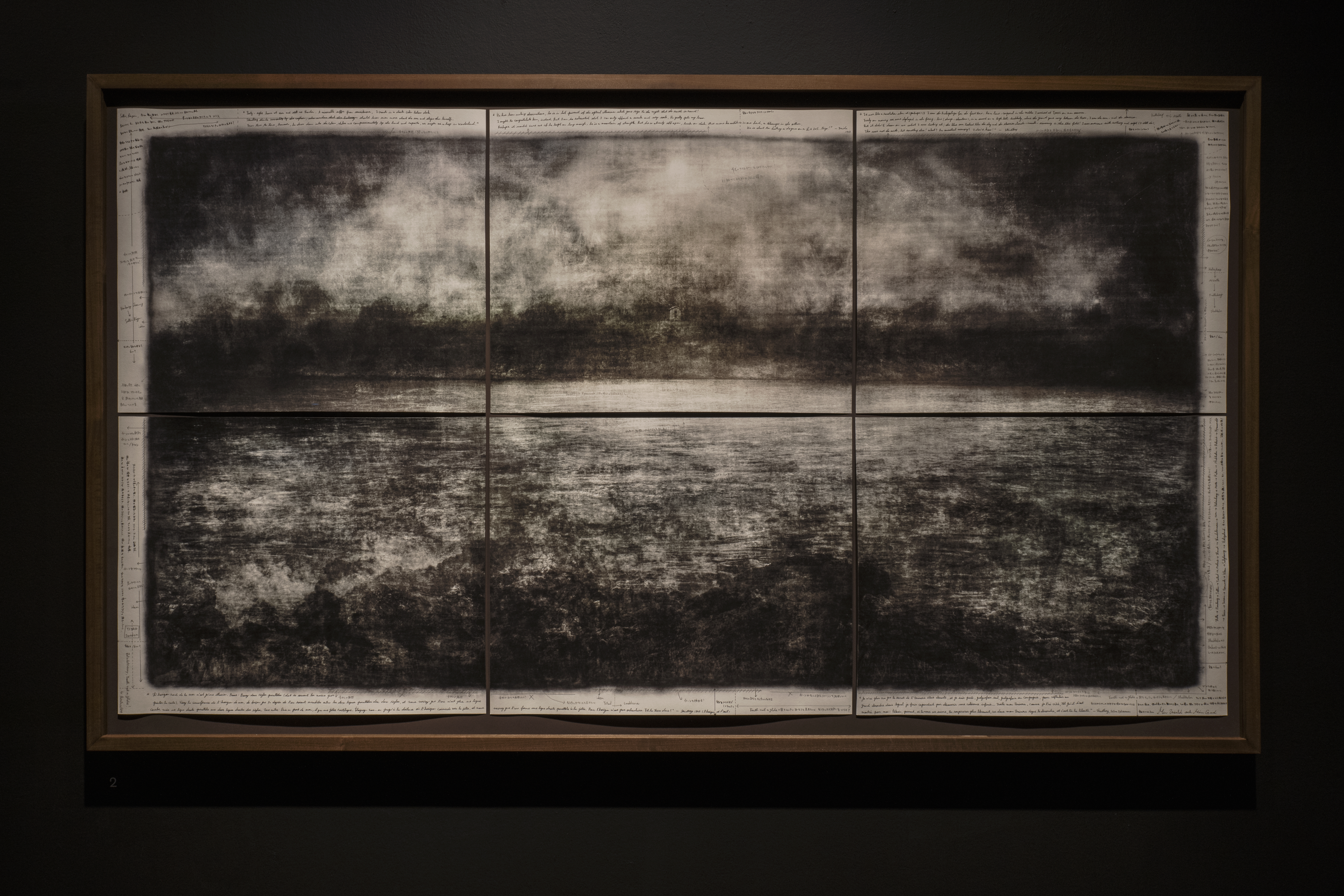
4. Horizon (My World and My God)
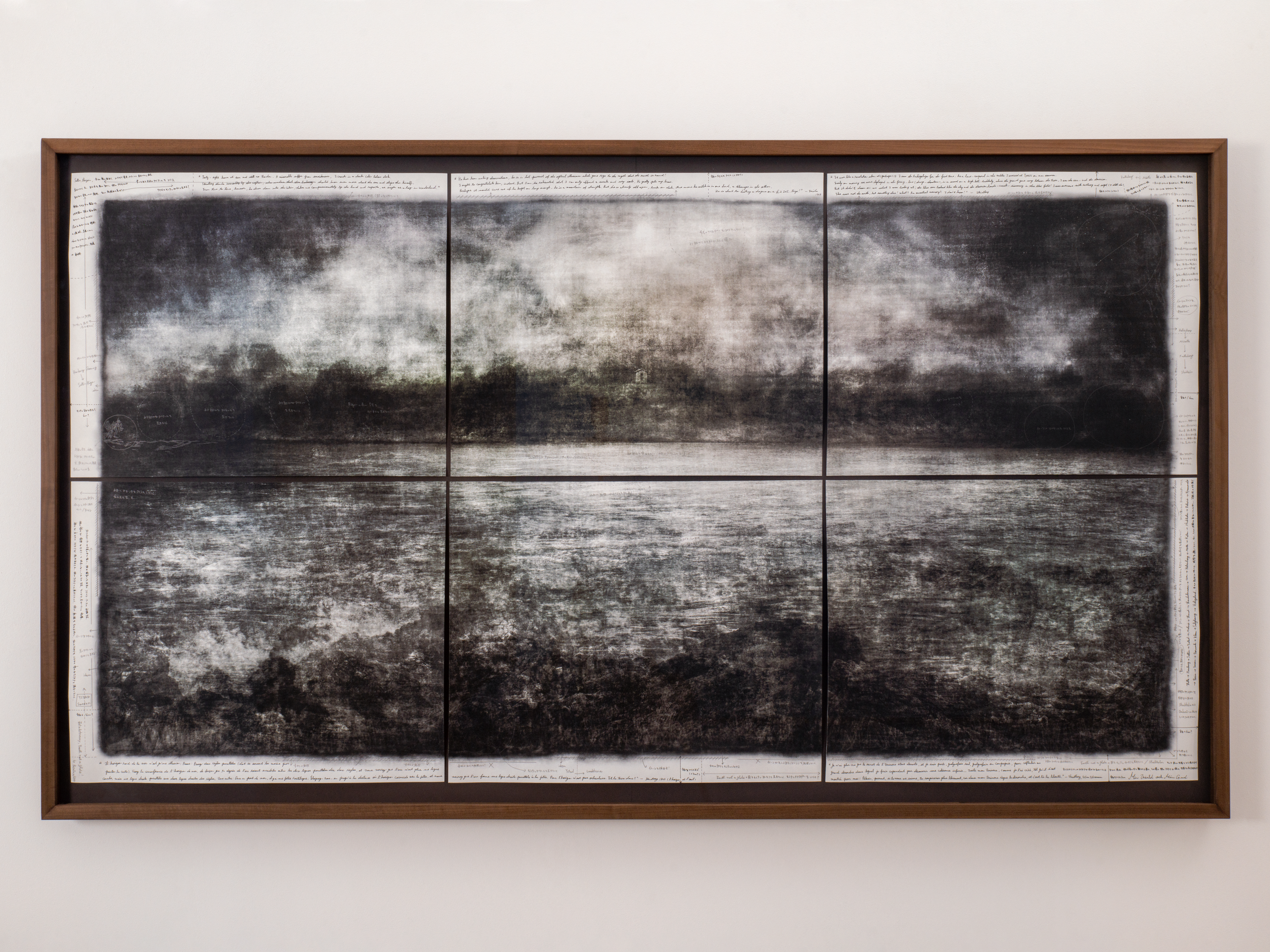
In the 1880s, August Strindberg encountered The Conventional Lies of Society (1883) by Max Nordau, a text that led him to question the idea of a spherical Earth. During his travels, he sought to verify this hypothesis through direct observation, studying the horizon with compasses and binoculars from the decks of ships, as described in the autobiography of his wife, Frida Uhl, Marriage with Genius.
These investigations echo, knowingly or not, the experiments of Samuel Birley Rowbotham, whose book Zetetic Astronomy: Earth Not a Globe (1865) proposed a method based on direct visual observation rather than mathematical reasoning. Both approaches share a mistrust of established science and a fascination with perception, where the horizon becomes both proof and illusion.
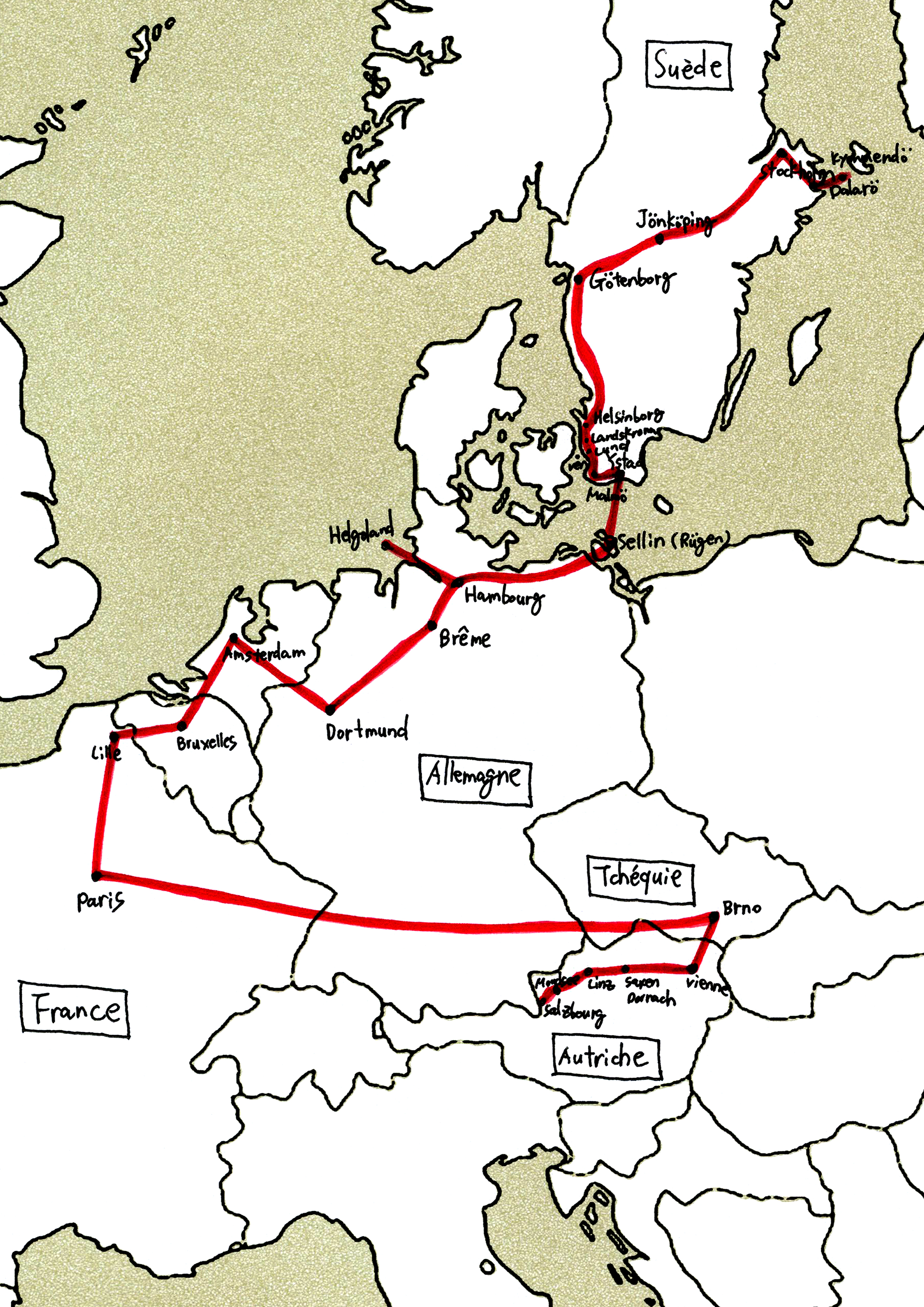
Inspired by these studies, this work is constructed from the superimposition of approximately 600 horizon photographs taken during my research travels in 2022, across a trajectory from Lille to the Baltic Sea and beyond. Captured from ferries, buses, and trains, these images are combined with fragments of Strindberg’s writings, personal notes, and drawings based on Rowbotham’s experiments.
The work attempts to reconstruct the photograph of the horizon that Strindberg claimed to have produced, but which never existed. Rather than forming a single, fixed image, the result takes the form of a palimpsest, where traces of travel, thought, and vision accumulate and shift.
The horizon no longer appears as a stable line, but as something in continuous motion. Words become drawings, drawings become images, and images dissolve into something more elusive: a horizon that cannot be fixed, yet persists as an experience shaped by memory and belief.
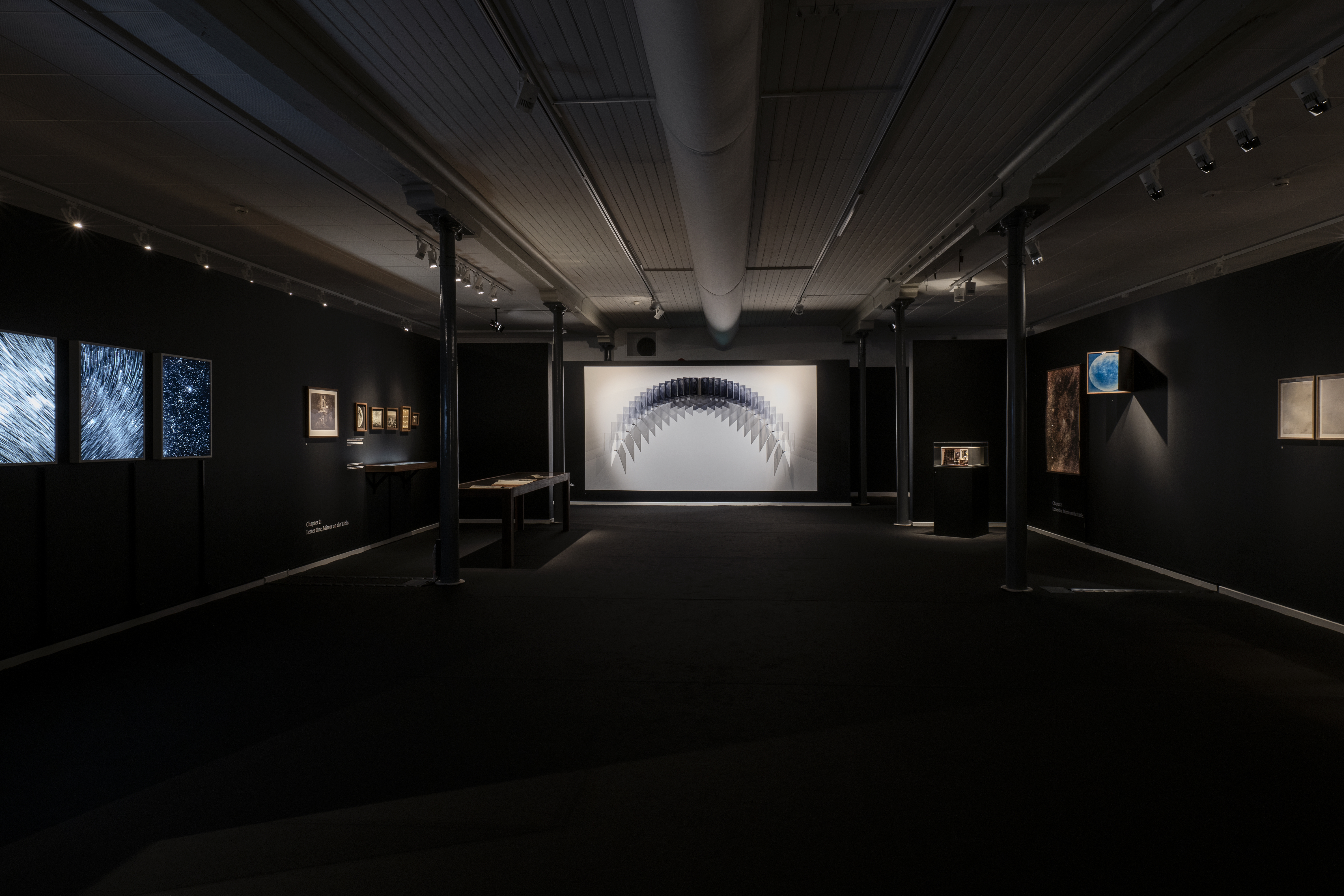
5. Bee-eye Camera
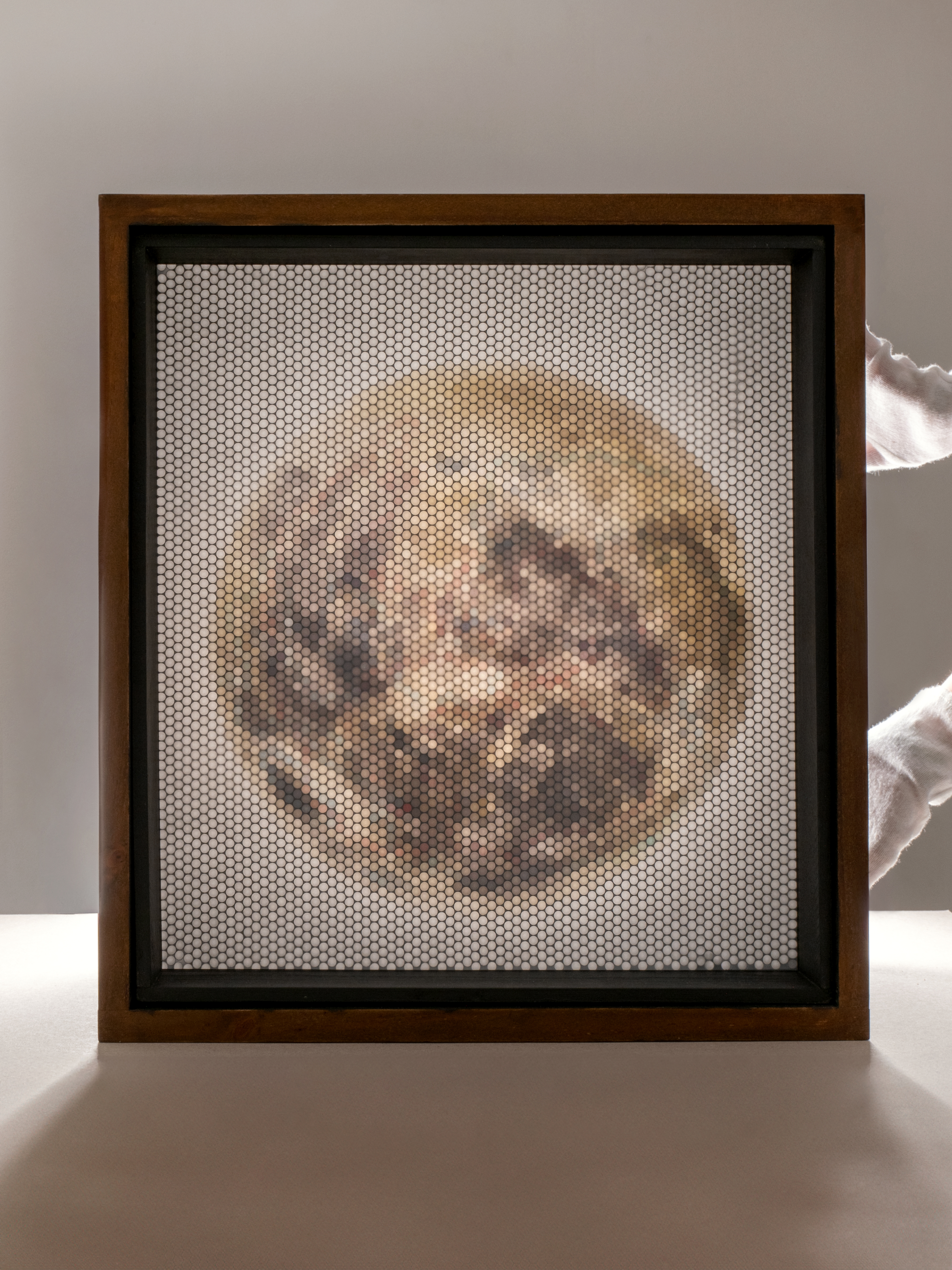
Among the many ideas explored by August Strindberg was the concept of a “bee-eye camera.” Fascinated by insect vision, particularly that of bees, he attempted to construct an optical device capable of mimicking their compound eye. His approach was simple: placing a mesh textile over a photographic lens. The experiment failed due to the presence of the lens behind the mesh, yet the intuition remained striking. He even sent the resulting image, along with his Celestographs, to Camille Flammarion.
More than a century later, scientists have developed imaging systems inspired by the compound eyes of insects, confirming that Strindberg’s intuition was fundamentally correct, even if his method was not. Rather than filtering a single lens, such systems rely on structures composed of thousands of individual apertures, each capturing a fragment of the visual field.
In this work, I revisit this concept.
The camera is built from 5,000 drinking straws, each functioning as a miniature pinhole. Together, they form a visual field composed of thousands of discrete points, approximating the compound vision of a bee. Through this device, I observed the moon.
The work exists between reconstruction and speculation. It approaches what Strindberg imagined, while grounding that vision in an optical reality that only became possible much later. In this sense, the camera, and its very process, becomes both homage and reinterpretation.
2nd Letter: Mirror on the Table
After a brief stay in Rügen, Germany, in July 1893, followed by periods in Berlin, Lund in Sweden, and Brno in the Czech Republic, financial difficulties left Strindberg and his second wife, Frida Uhl, with no choice but to move to Dornach, Austria, where Frida’s grandparents lived, at the end of November 1893.
During the early days of his experiments, Frida collaborated closely with his work: she helped translate his manuscripts into German and assisted in the search for a publisher. A writer herself, she supported his approach. But gradually, as their economic situation deteriorated and family pressure increased, she began to question the new photographic experiment of the Celestographs. The attitude of Frida’s grandparents also shifted, moving from respect to skepticism toward this strange attempt to capture the “true form” of the celestial vault without optics or a photographic camera.
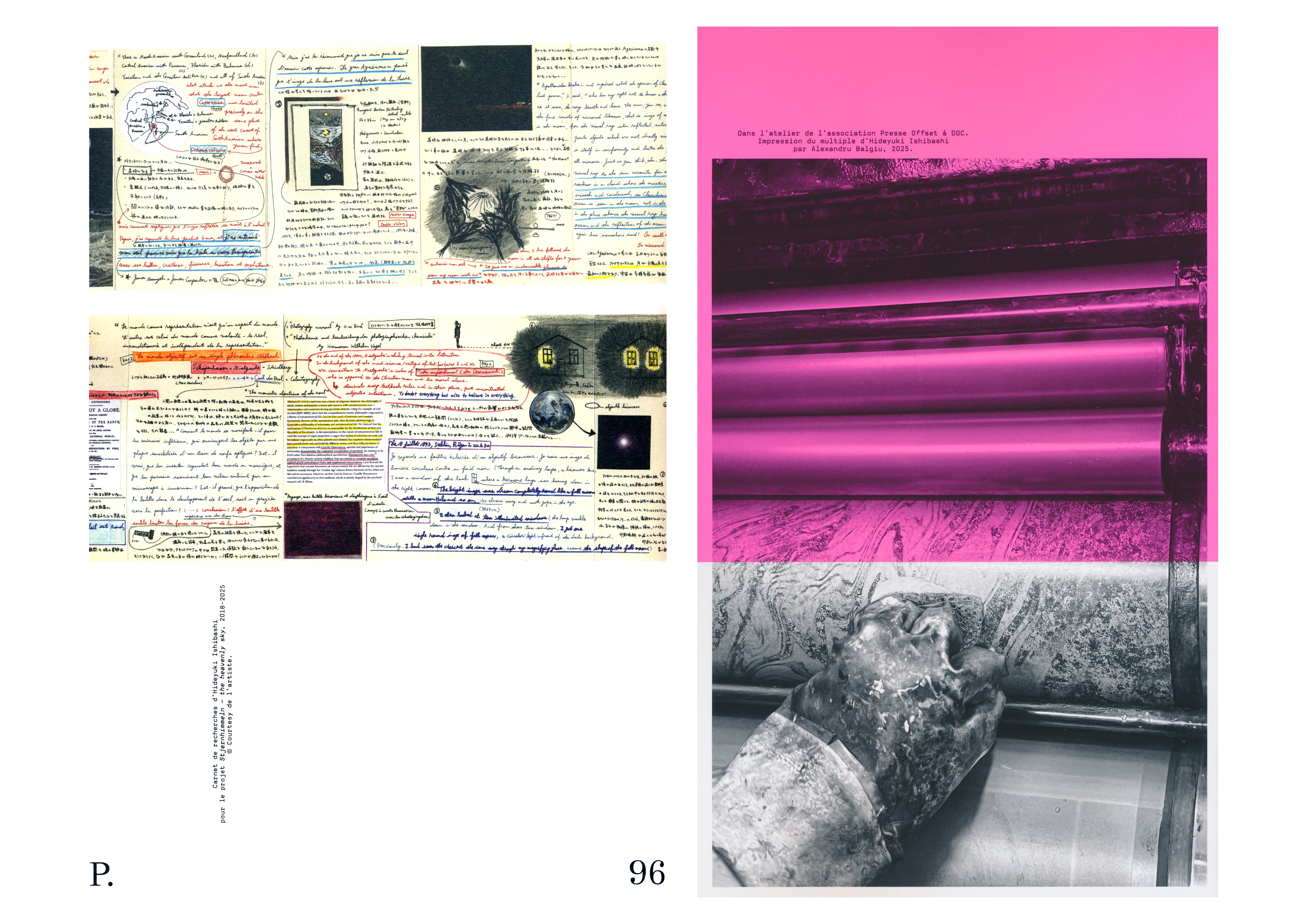
Within this context, marked by a growing sense of isolation and incomprehension, Strindberg addressed a thirteen-page letter to the French astronomer Camille Flammarion entitled The World for Itself and the World for Us, influenced by the philosophy of Arthur Schopenhauer. In it, he defended the value of his research — perhaps as much for Flammarion as for those closest to him.
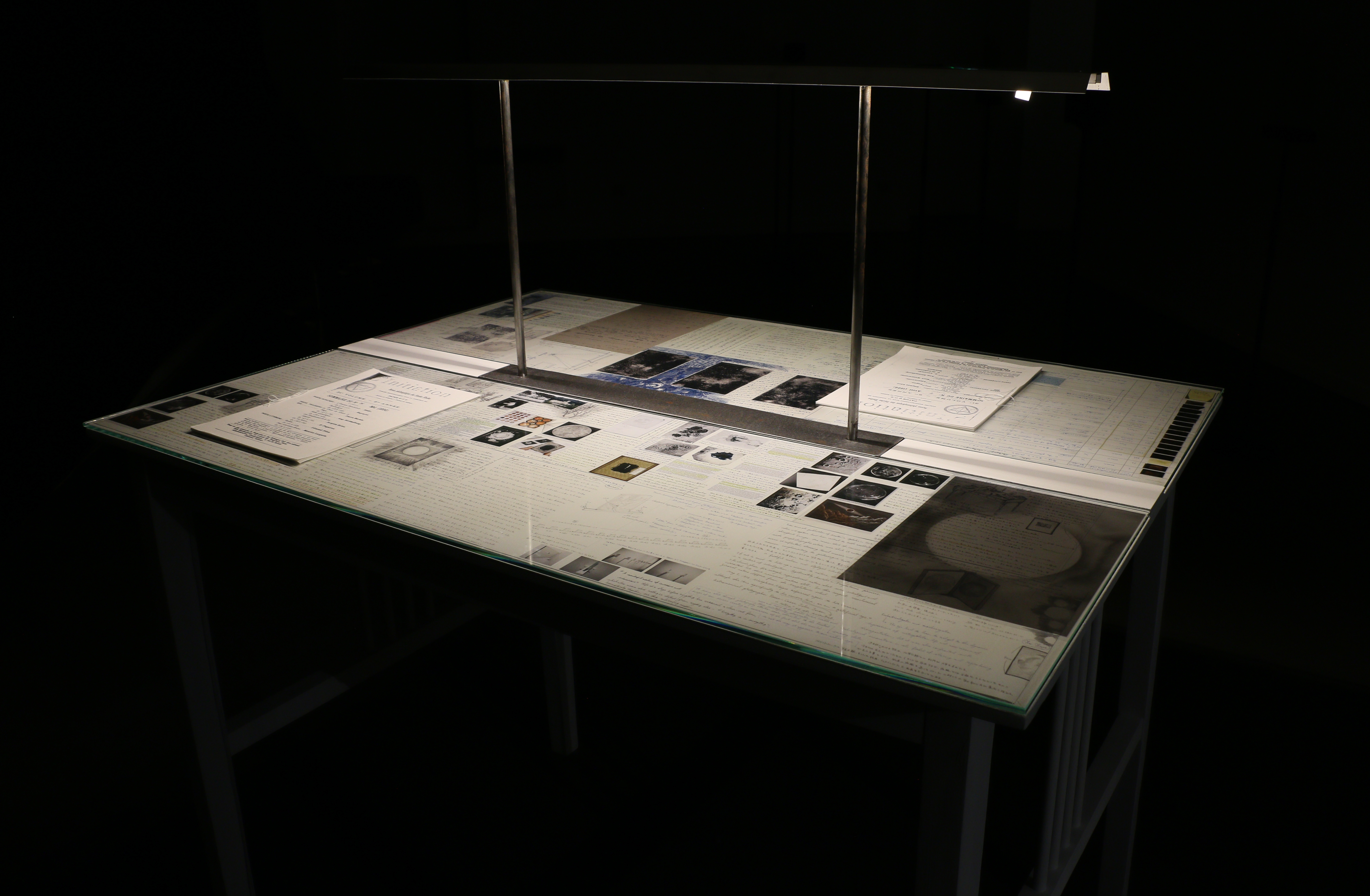
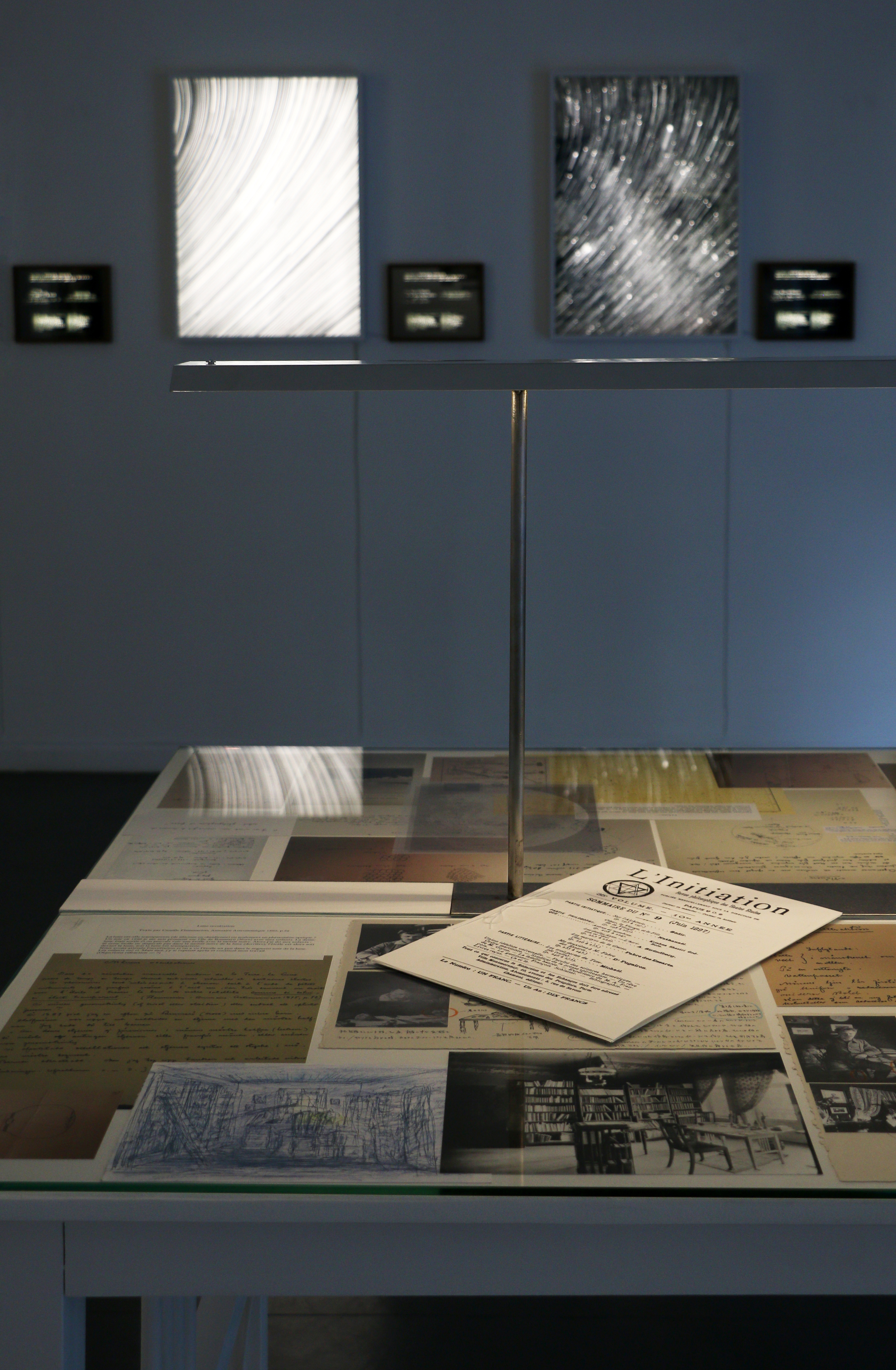
In this chapter, based on this letter as well as on a manuscript written during the same period, I focus on Strindberg’s experiments and hallucinations between the end of December 1893 and March 1894, a period during which the Celestographs were produced within an increasingly unstable mental state. Dozens of detailed observational documents of the moon and the sun, excerpts from various astronomy books, calculation formulas, and all his hopes of discovering the unknown form of the sun, moon, and stars…
What did Strindberg hope to achieve through the Celestograph experiment in a world where reality and illusion intersected? And what did Frida and her grandparents see when confronted with these images?
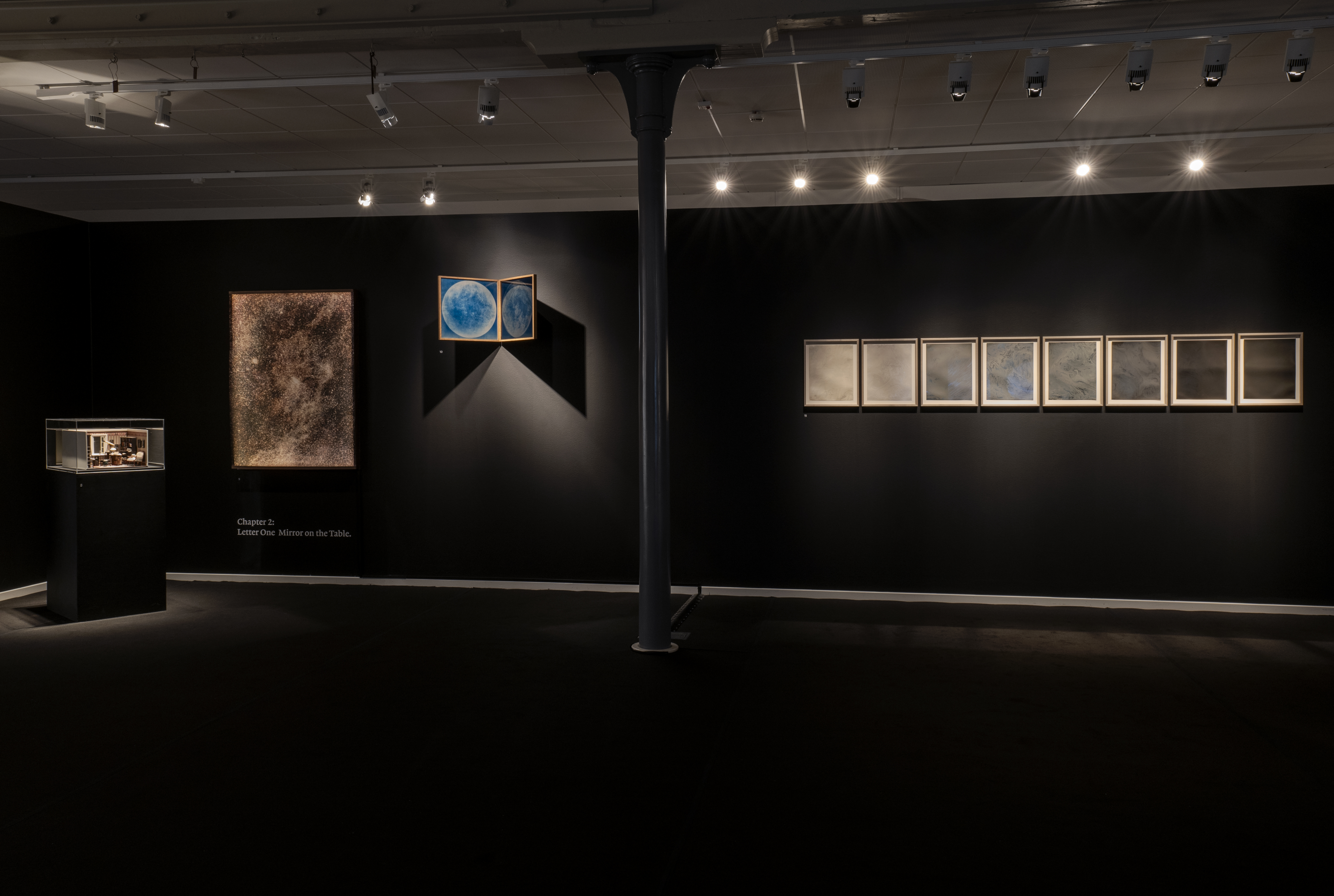
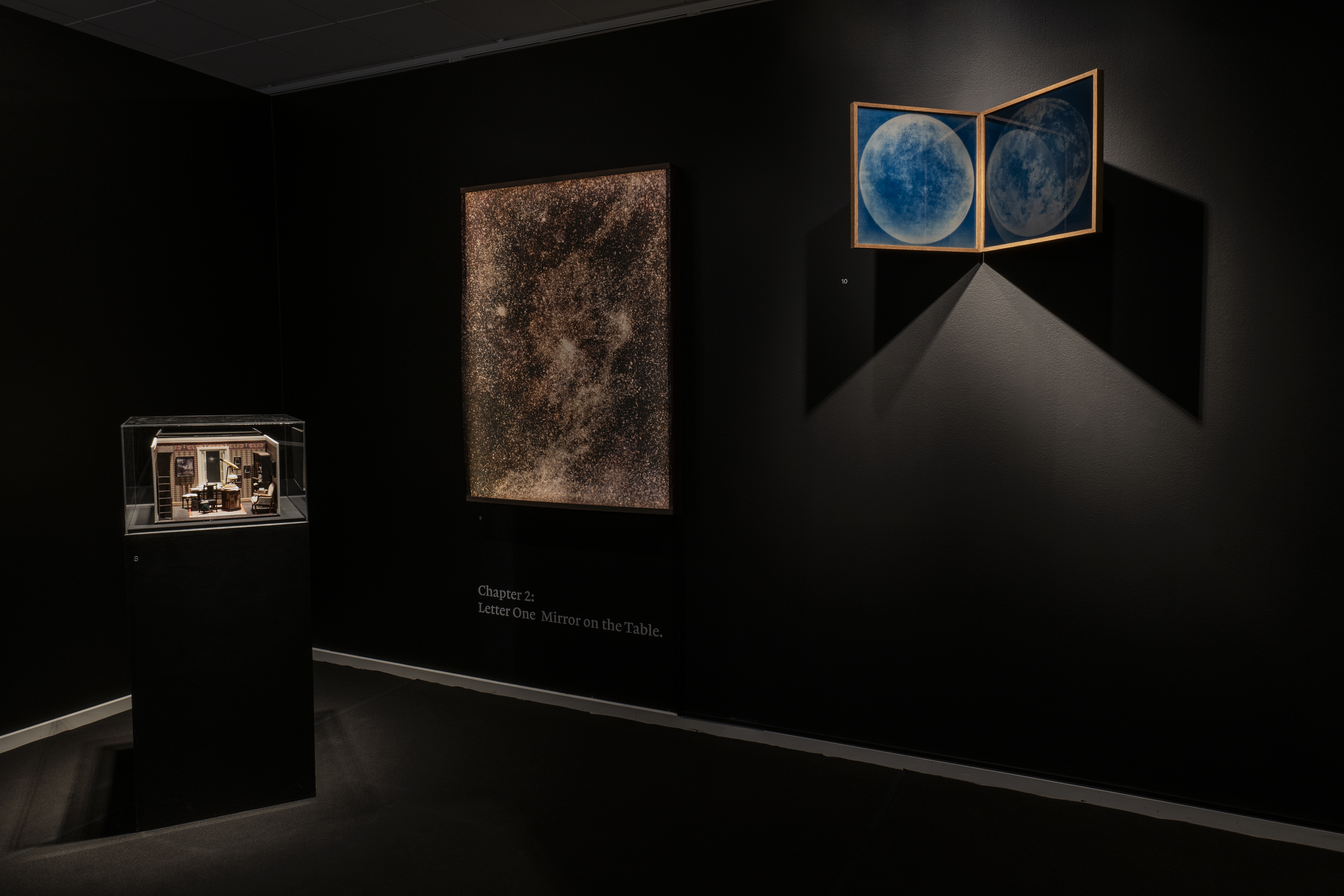
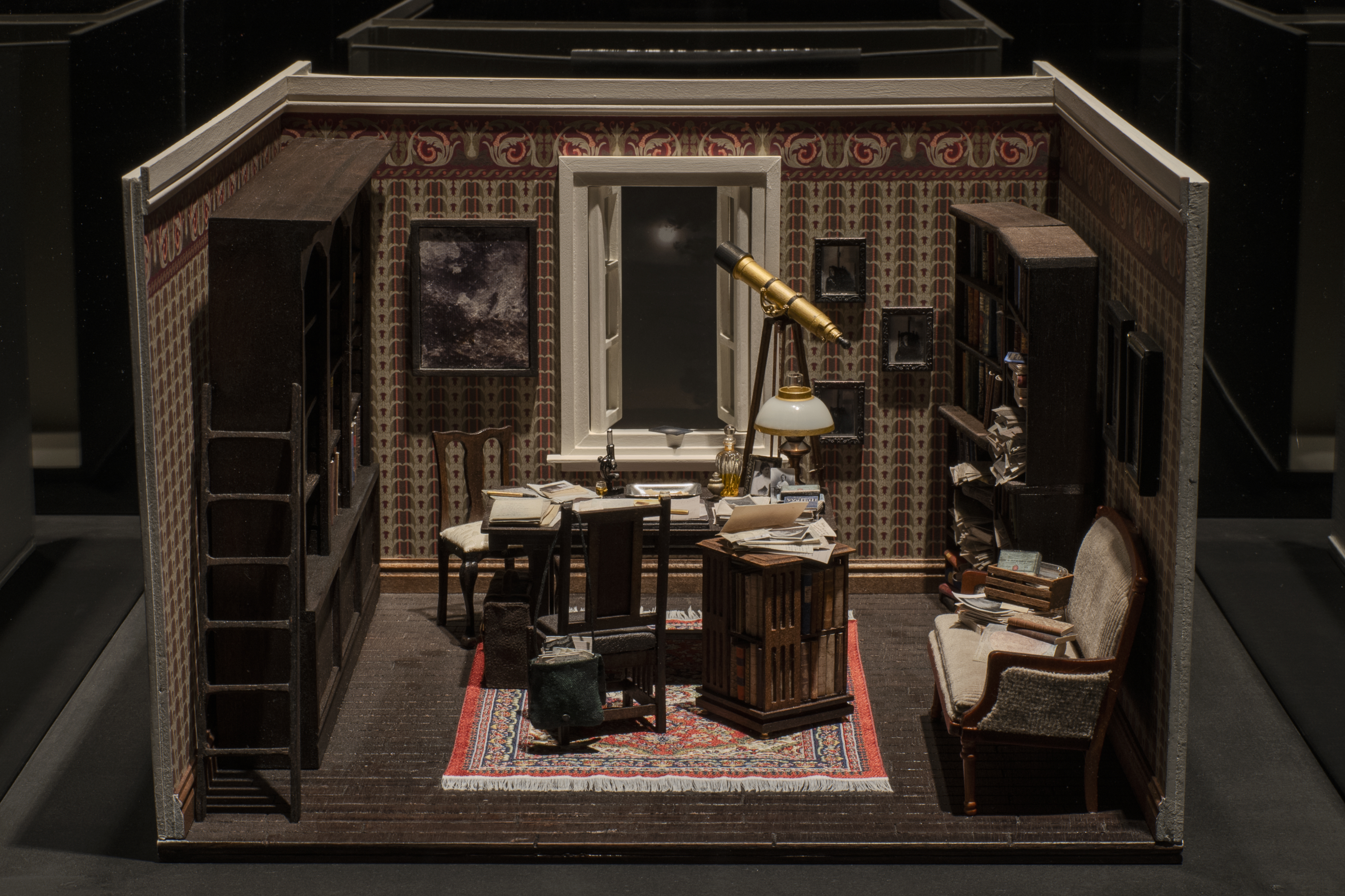
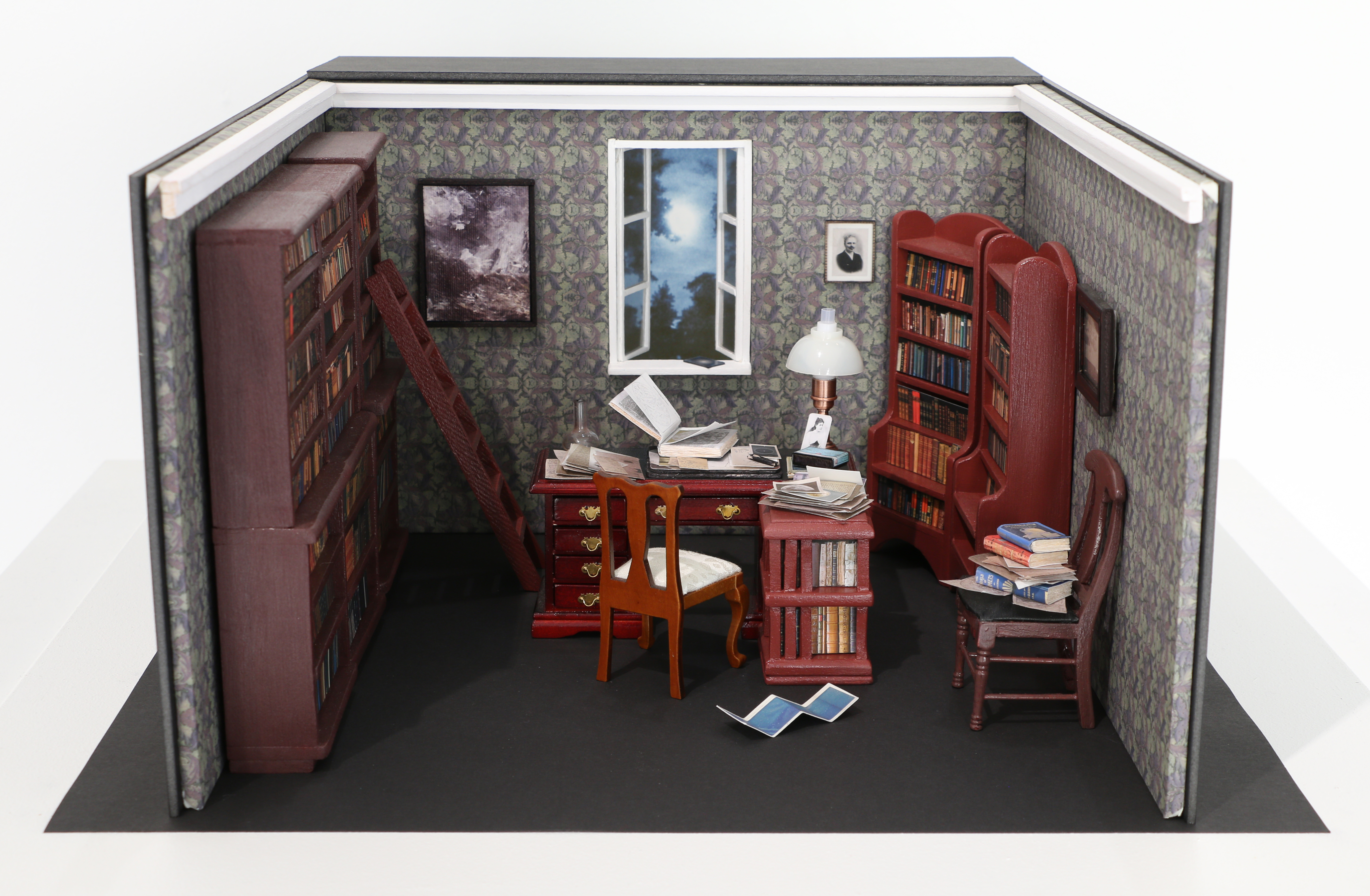
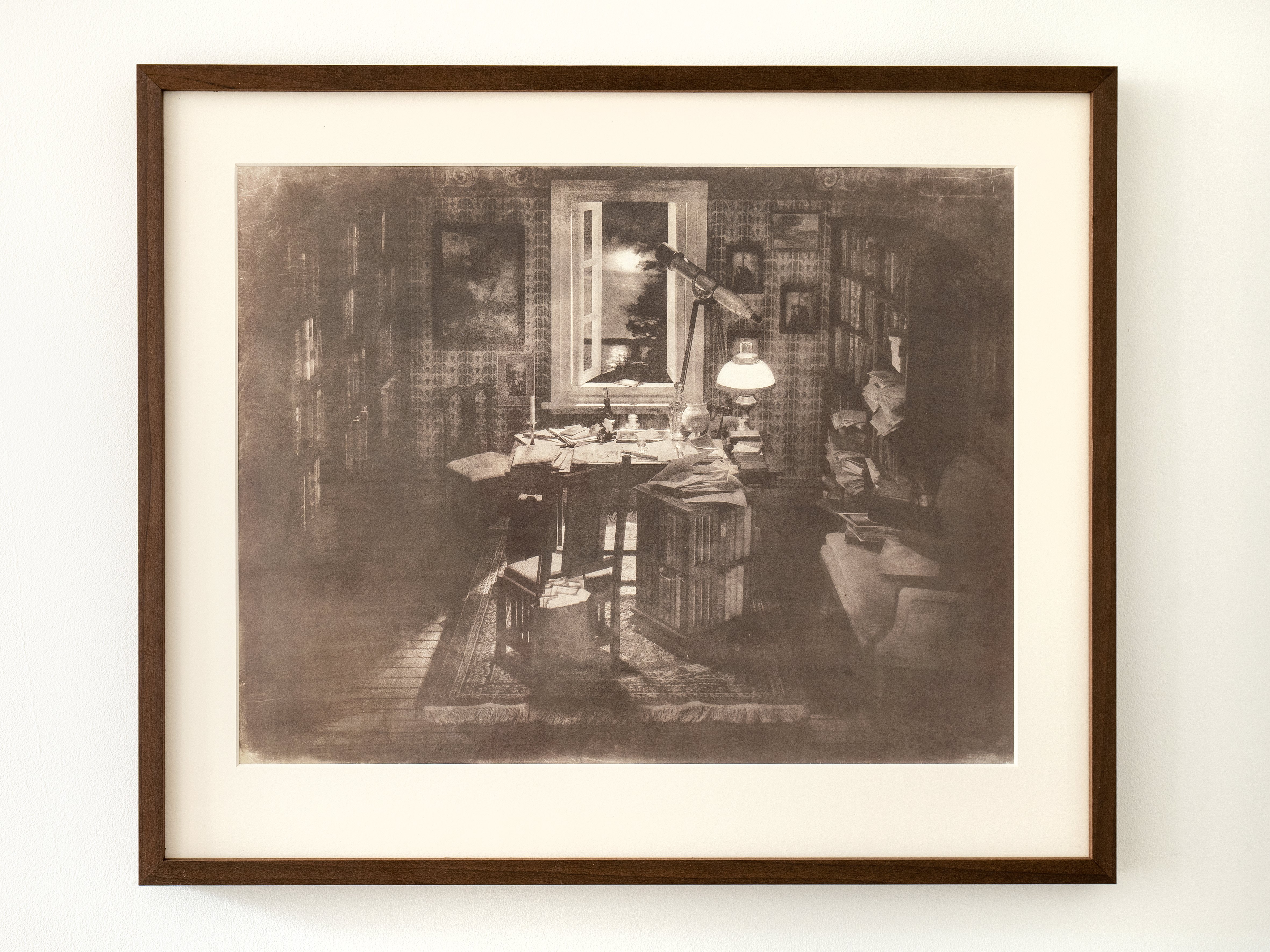
6. Reconstruction of August Strindberg’s Study in 1894 (scale model, 2024)
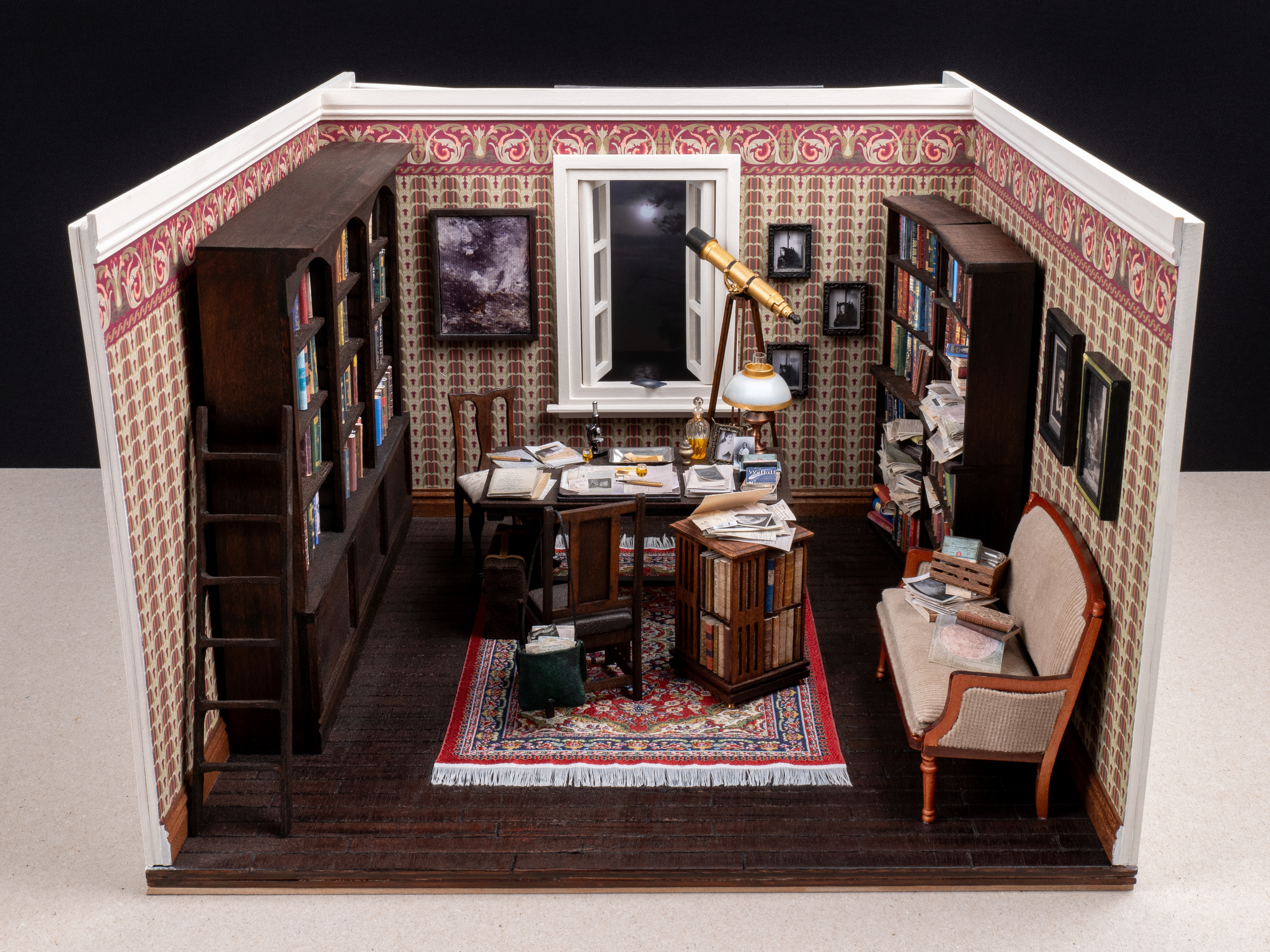
This work originates from the absence of any photographic record of August Strindberg’s study in Dornach, where the Celestographs were produced. No images of this interior are preserved in the collections of the National Library of Sweden, the Nordic Museum, or the Strindberg Museum. According to research on Frida Uhl by Friedrich Buchmayr, such documents may once have existed, but were likely destroyed during the Second World War, when Dornach Castle was occupied.
Faced with this absence, I attempted to reconstruct what had disappeared.
The work takes the form of an imagined scale model of Strindberg’s study as it may have appeared in 1894. The reconstruction is based on fragments: his manuscripts, photographs of interiors from other periods, Frida Uhl’s writings, and my own visits to the site in 2023–2024. As the building was later entirely remodeled, identifying the space required a process of speculation, situating the possible location of his “laboratory.”
The model was photographed on the night of the full moon, 19 August 2024, using only moonlight entering through the miniature window. The image was captured on an unsealed late nineteenth-century glass negative, acquired at an antique market.
This photograph forms the basis of the albumen print Reconstruction of August Strindberg’s Study in 1894 (false archive).
Rather than reconstructing the archive digitally, I sought to give form to what does not exist, bringing a non-reality into physical existence. In doing so, the work blurs the boundary between the true and the false.
7. Reconstruction of August Strindberg’s Study in 1894 (false archive, 2024)
This work extends the reconstruction of August Strindberg’s study through the form of a false archive.
Drawings developed from multiple sources were first assembled into a digital collage, then translated into a scale model and photographed under the light of the actual moon. The resulting image was further transformed through digital intervention.
Within this image, objects appear that were never part of the model itself. Fragments of original Strindberg objects, preserved at the Strindberg Museum in Stockholm, were inserted into the composition. Once fixed onto the photographic surface, these elements lose their original scale and context. The real objects acquire the same presence as the miniature components of the model, becoming indistinguishable.
The image was then printed as an albumen print, using a photographic technique from Strindberg’s time — the same process through which many of his archival images were produced.
What emerges is not a reconstruction of a place, but an image where distinctions between elements begin to dissolve. In this sense, the work reflects on photography itself: a medium in which everything, once recorded, shares the same visual reality.
8. Moon and Earth, Recomposed Archives (2019 / 2025)
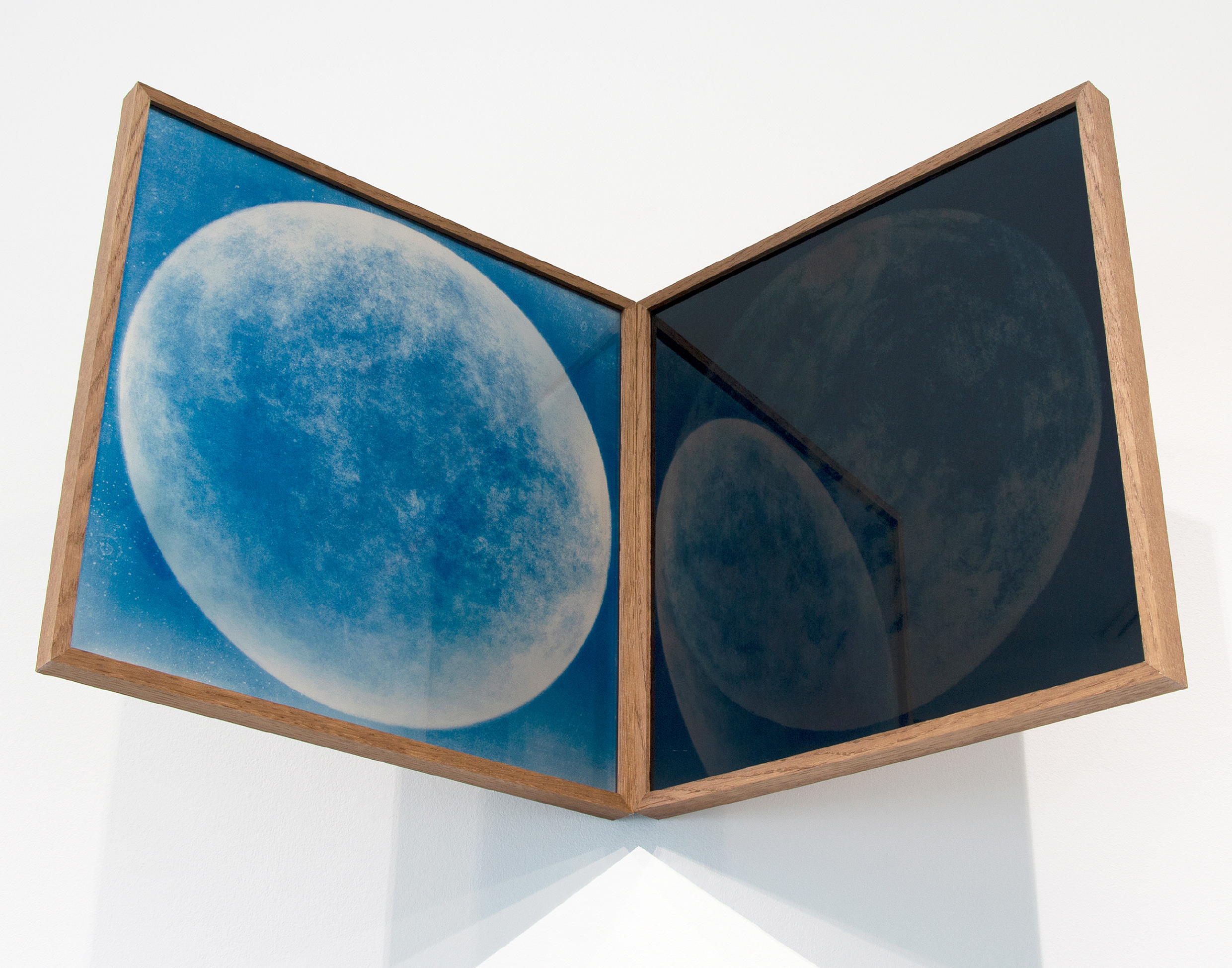
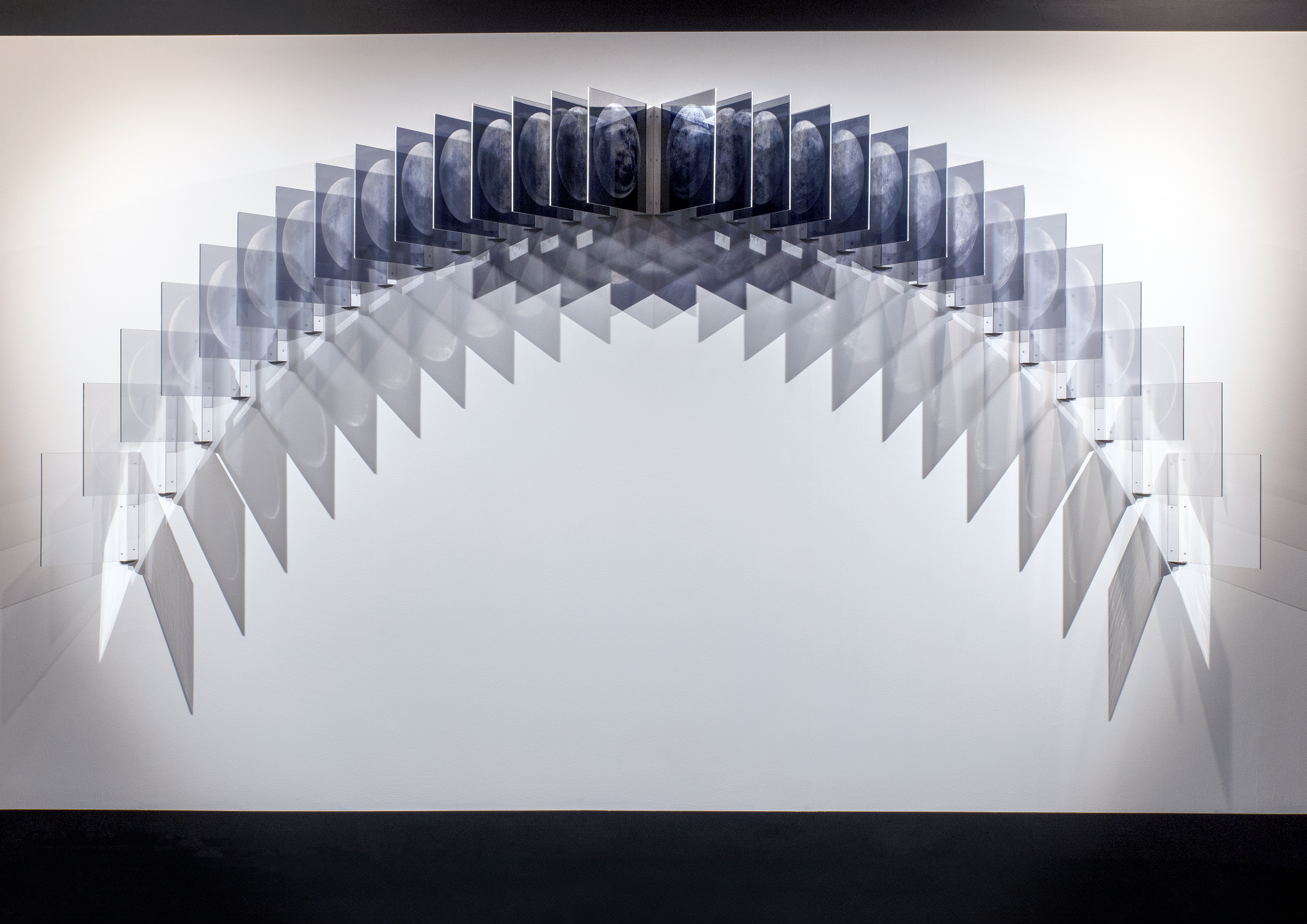
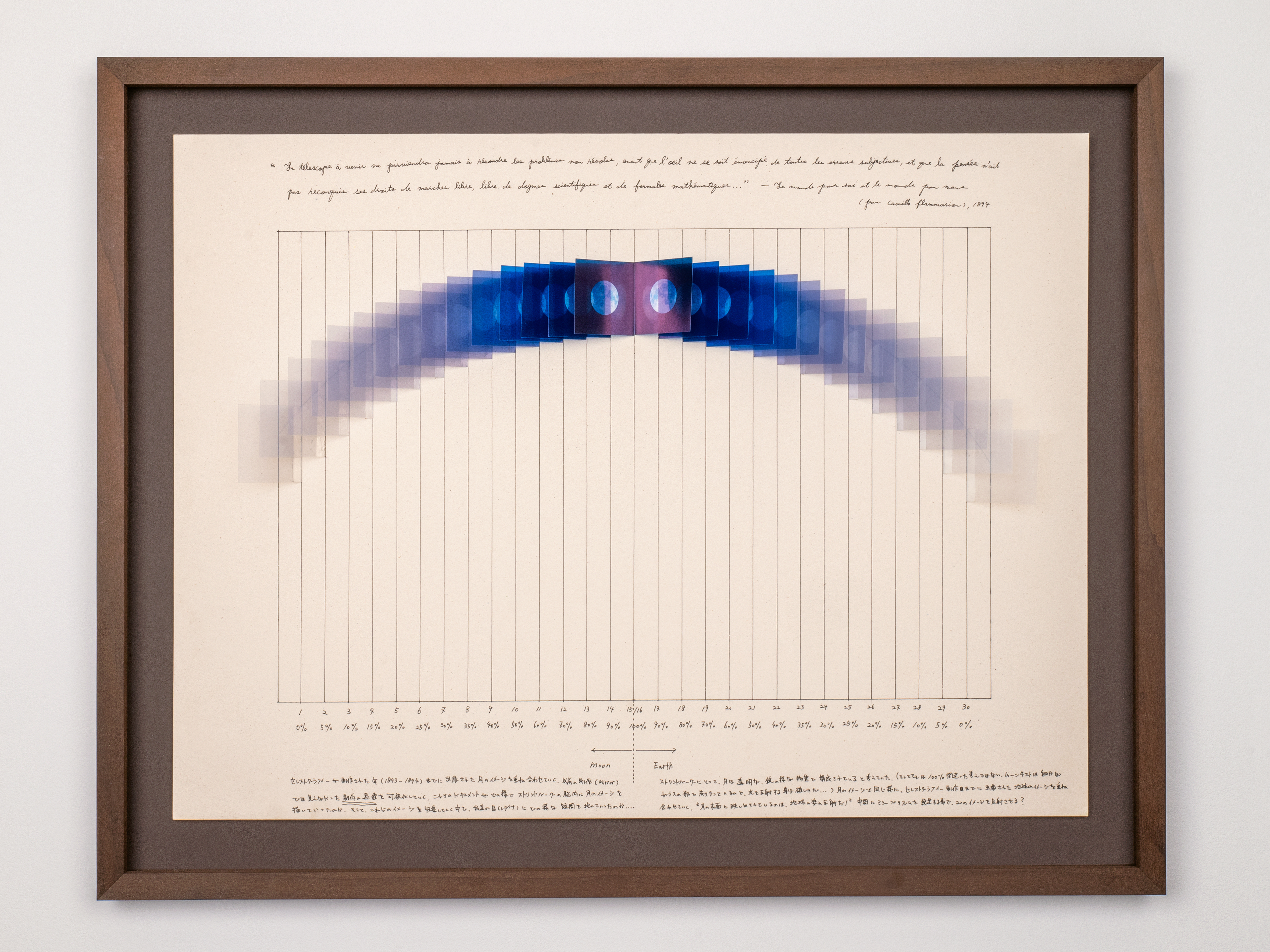
This work originates from astronomy-related cuttings by August Strindberg preserved at the National Library of Sweden. By superimposing illustrations and photographs of the moon and the earth published before 1894, I sought to visualize how these images may have shaped his mental representation of both celestial bodies.
At that time, the moon and the earth did not belong to the same visual regime. The moon had already entered photography, while the earth still existed only through drawings and maps. We did not yet know what our own planet looked like from outside.
Strindberg became preoccupied with a simple question: why did every image of the moon appear as a perfect circle? This doubt extended to the optical device itself. He questioned the circular form of the telescope lens, and by extension, the eye, which he often considered as a lens. If vision already passes through such a structure, how reliable can images be?
The work also draws from a phrase in his manuscript: “The moon is a mirror that reflects the ocean and the earth.” This idea runs throughout his astronomical experiments. In this work, I revisit this belief to explore how representation, repetition, and perception contribute to the formation of his mental vision.
The project exists in two forms.
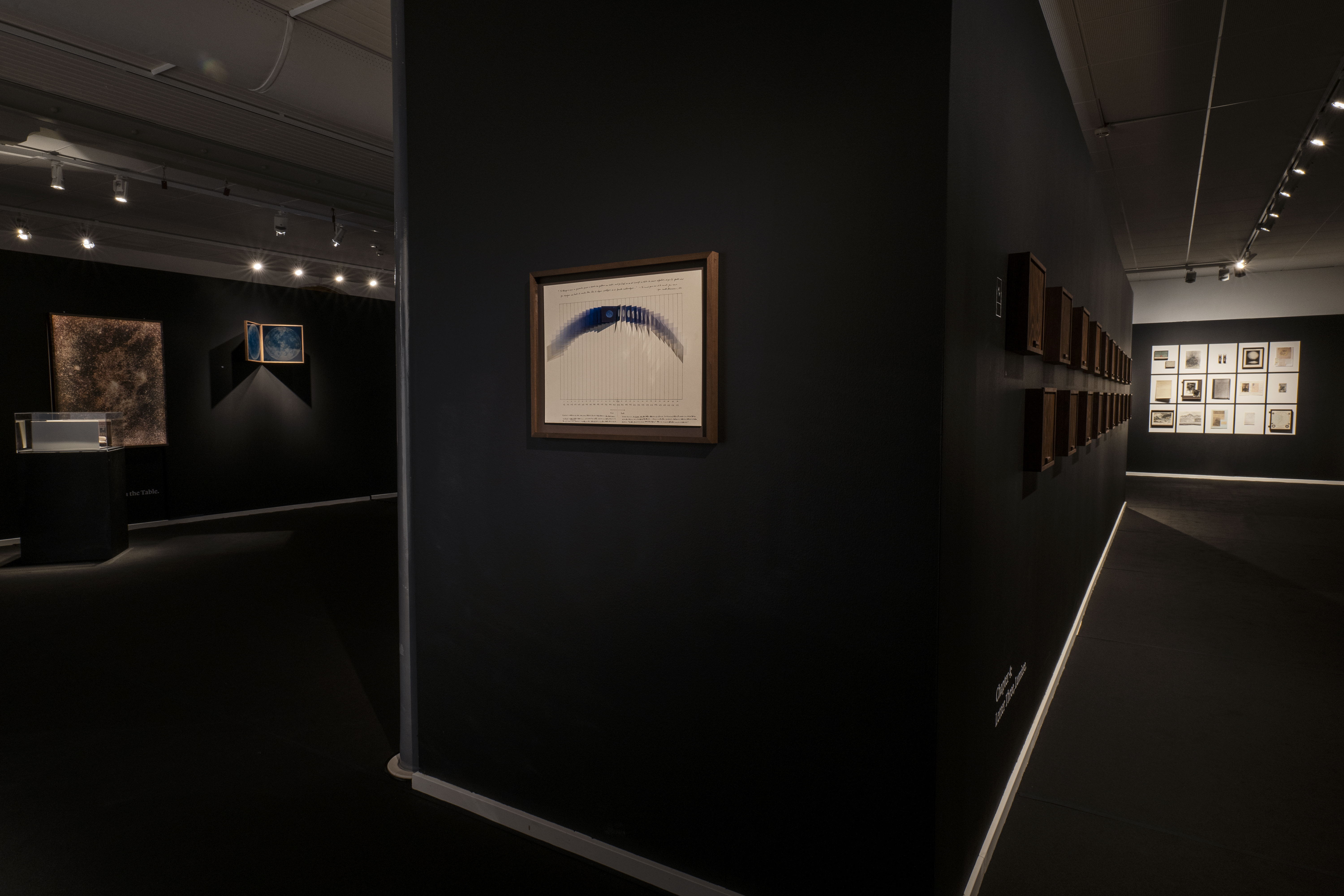
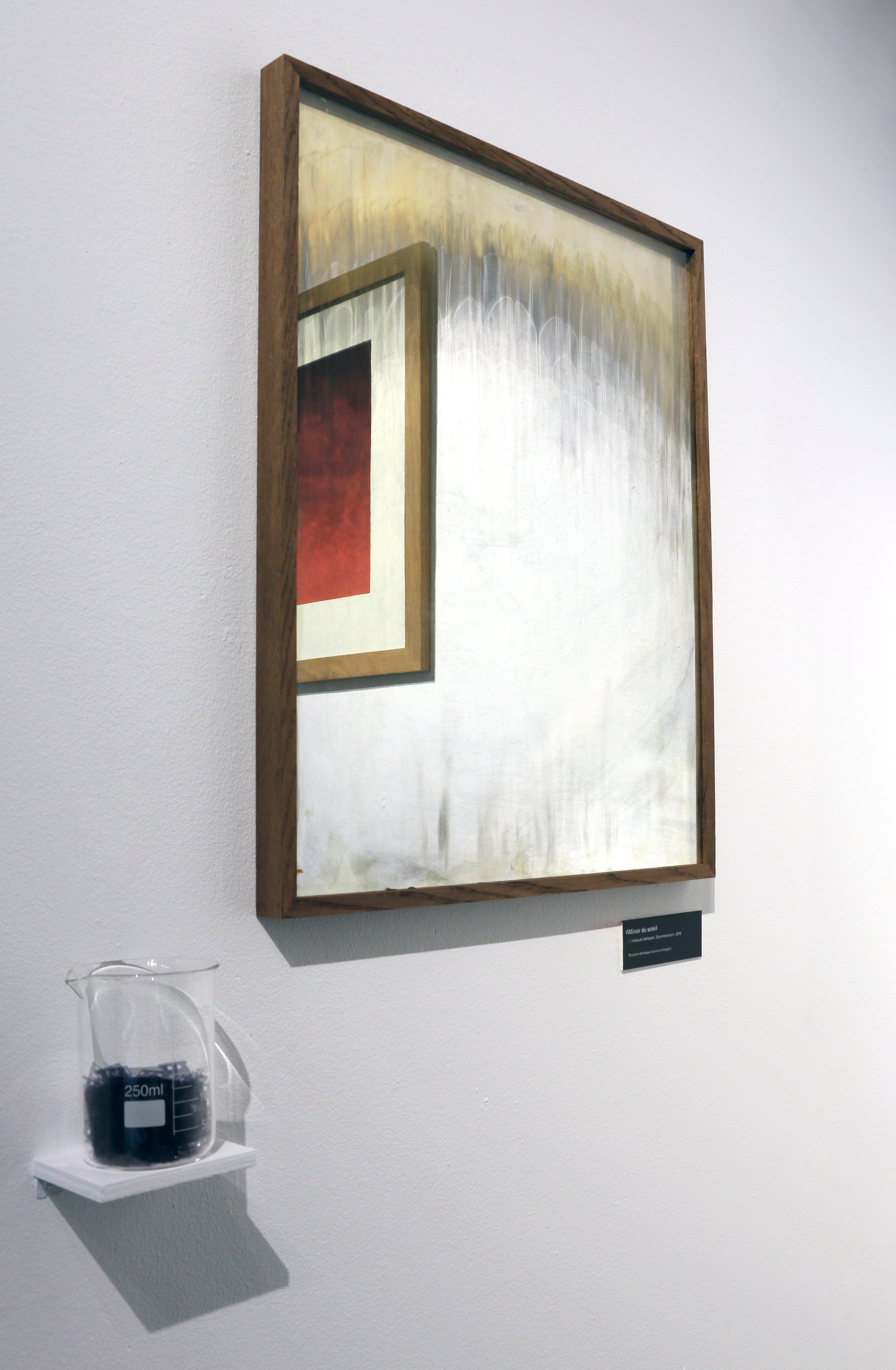
The first version, created in 2019, takes the shape of a single layered composition. Images of the moon and the earth published before 1894 are superimposed into one surface. The resulting cyanotype, printed on glass with silver and black paint applied behind the image, functions as a mirror, allowing the two bodies to reflect one another.
In 2025, the work was reconfigured as an installation composed of 30 plates, half representing the moon and half the earth. Each plate combines ten historical images into a single surface. Presented in sequence, the plates unfold like lunar phases: contrasts shift, shadows recede, and forms gradually emerge.
This process reflects Strindberg’s way of thinking, where ideas take shape through accumulation, doubt, and repetition. It also echoes Frida Uhl’s accounts of his intense research, oscillating between uncertainty and conviction. At the same time, it mirrors my own method: constructing images from existing fragments, assembling layers of ideas into new constellations.
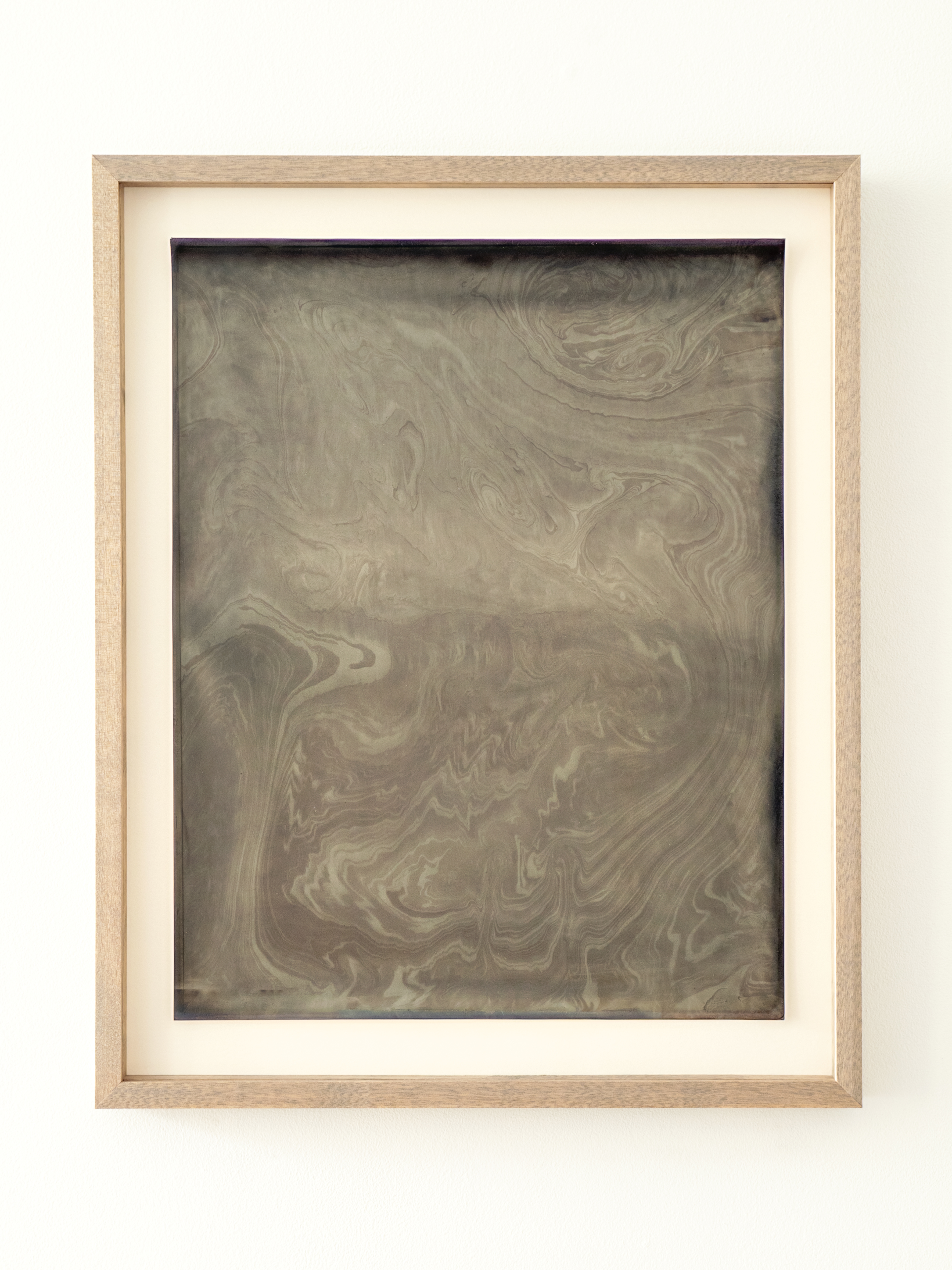
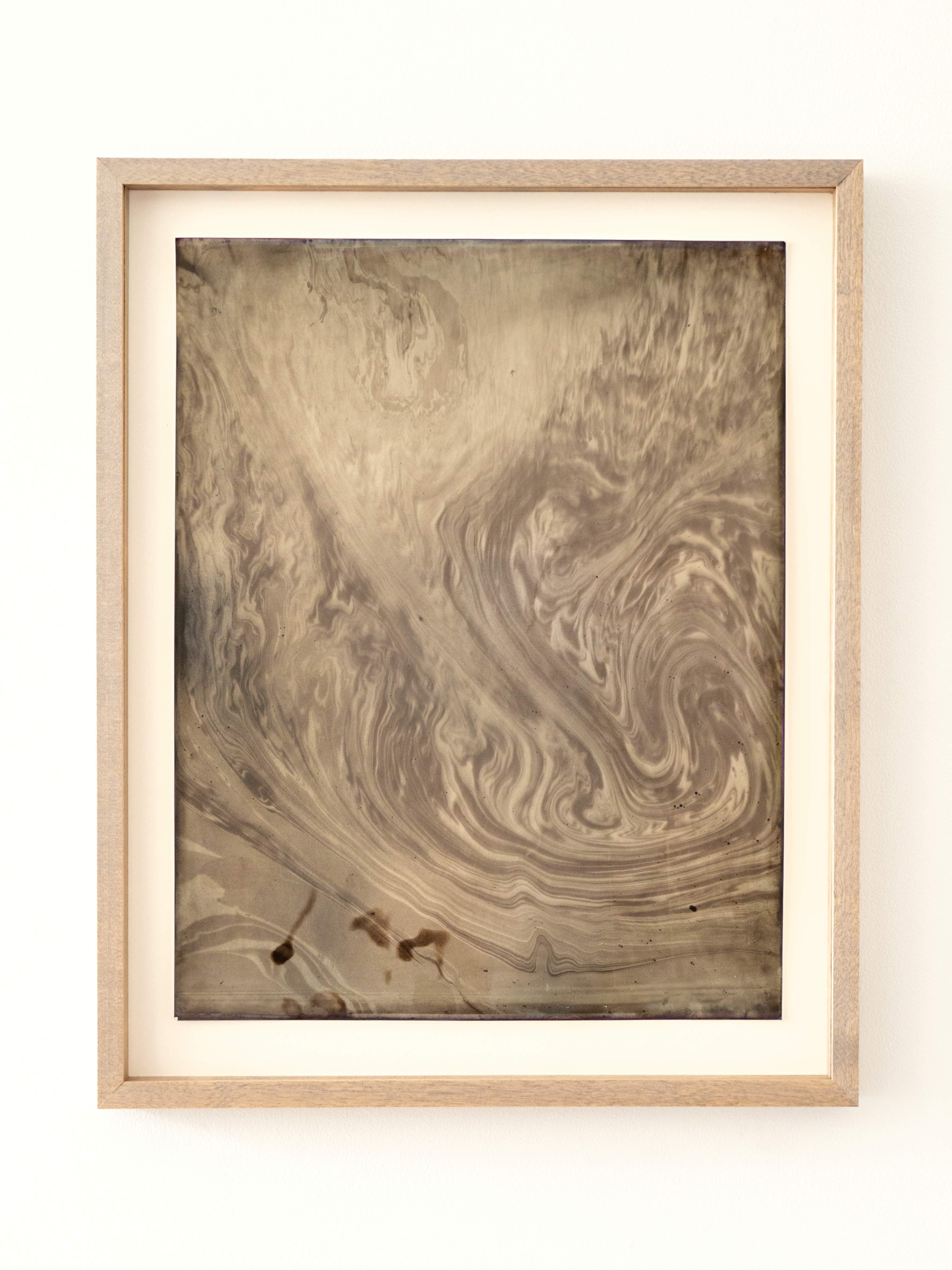
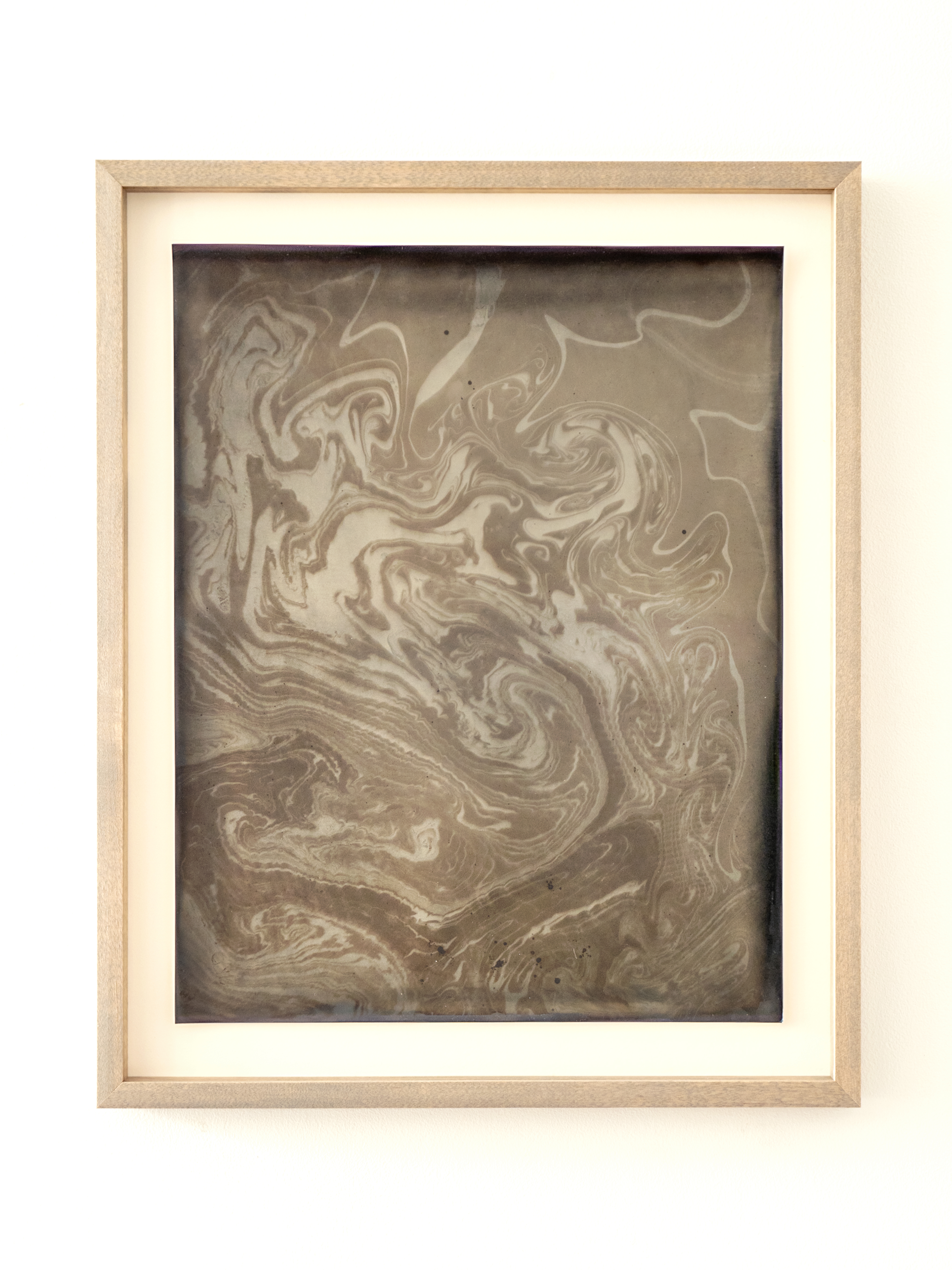
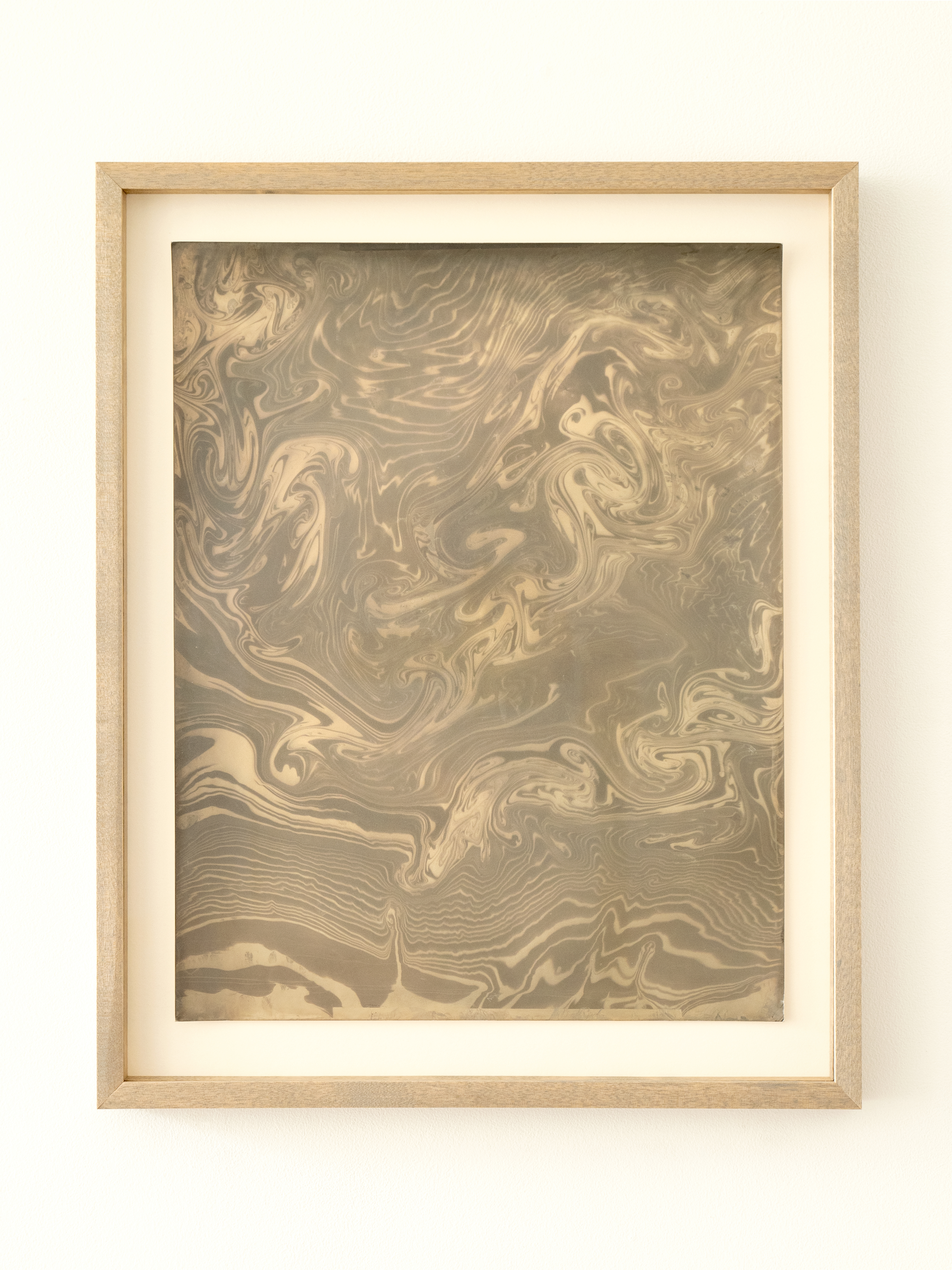
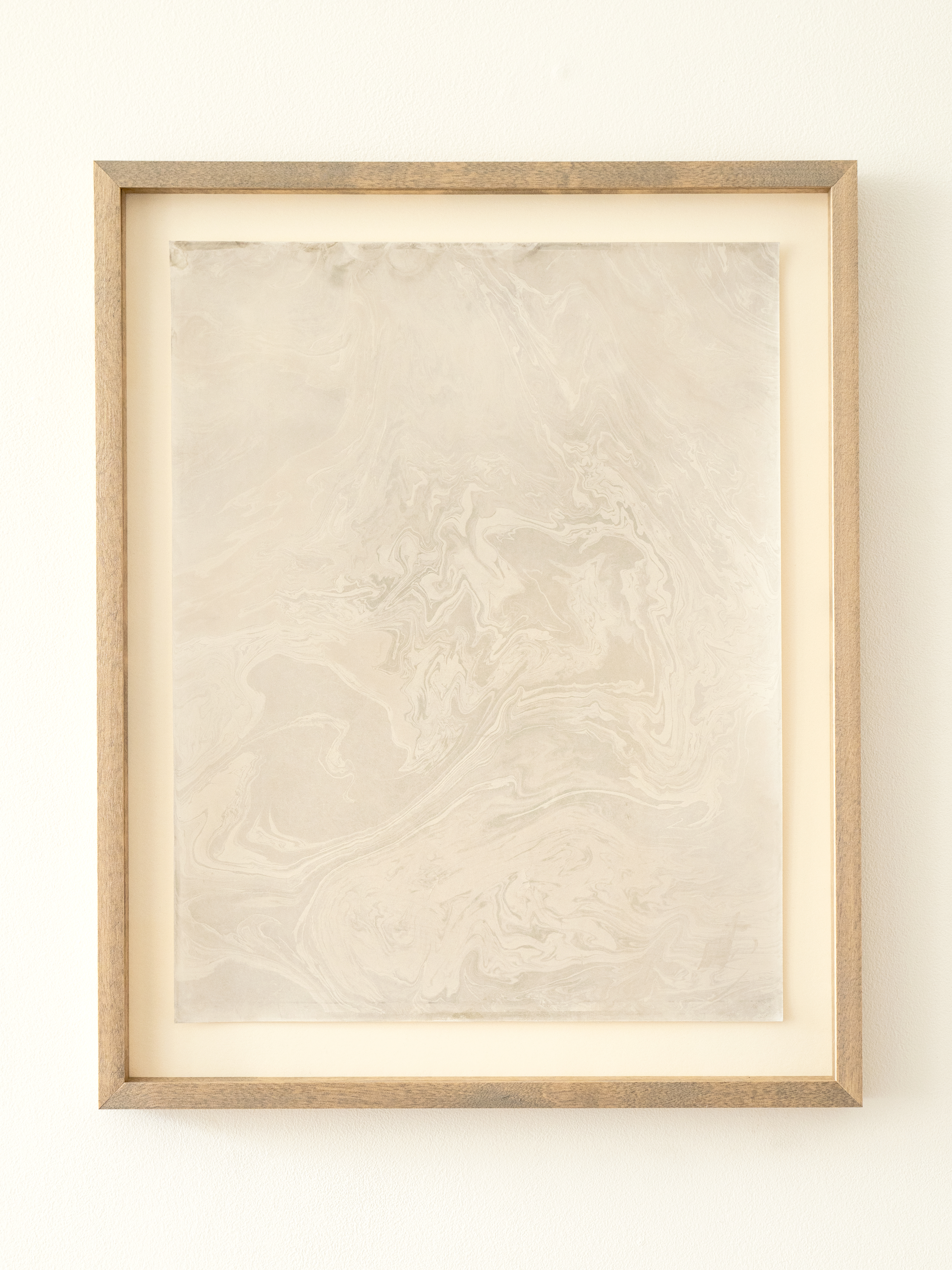
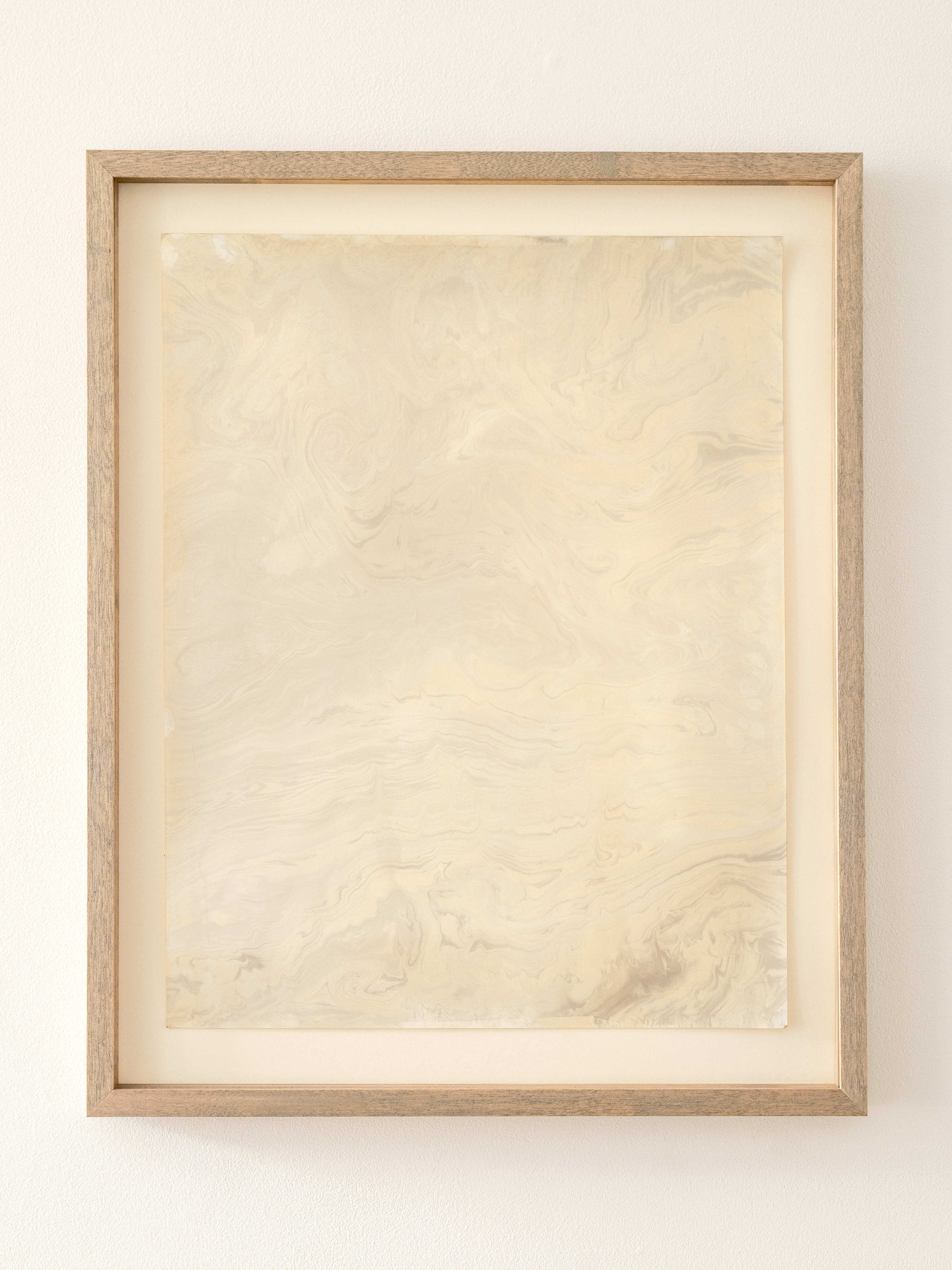
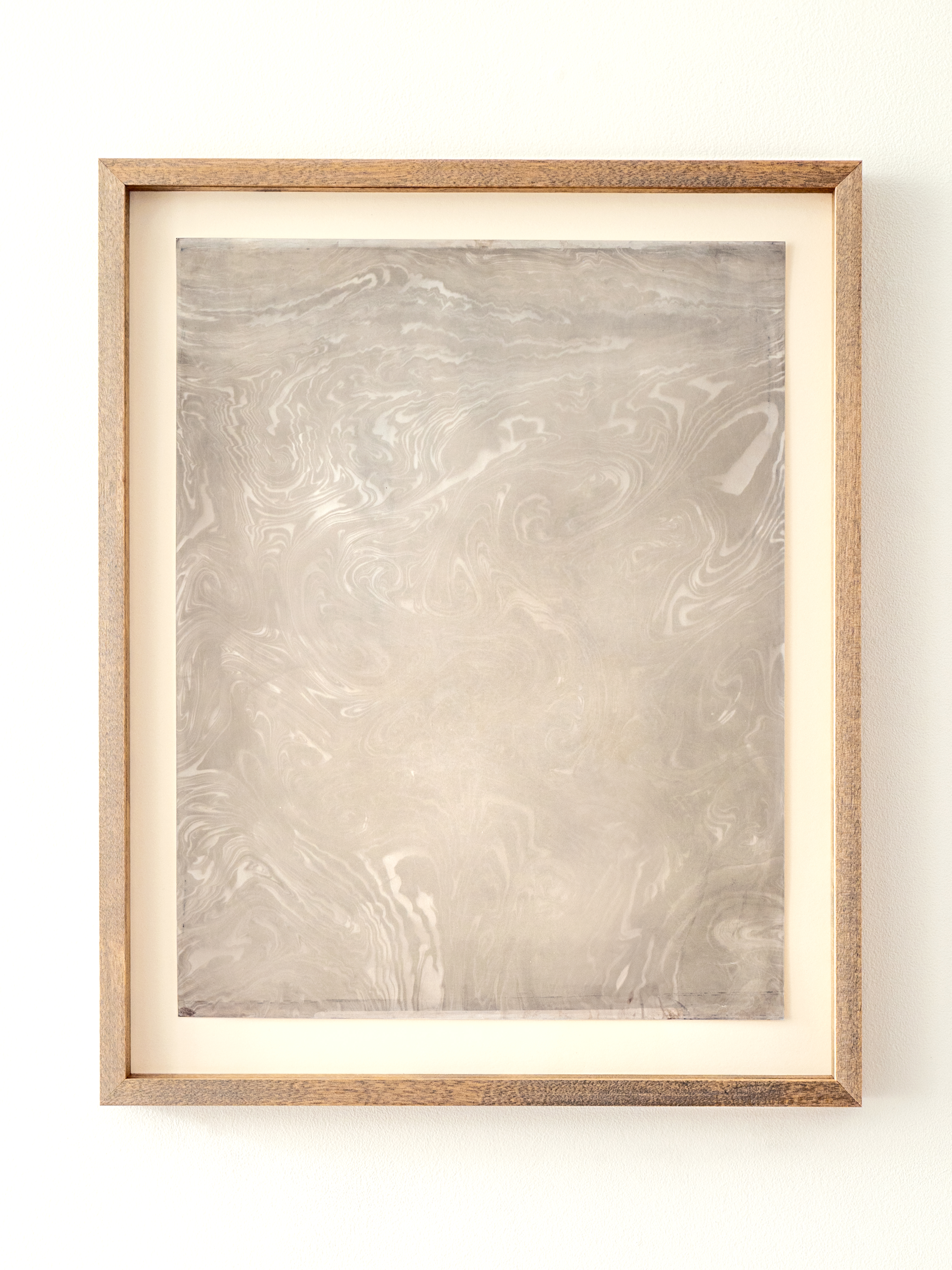
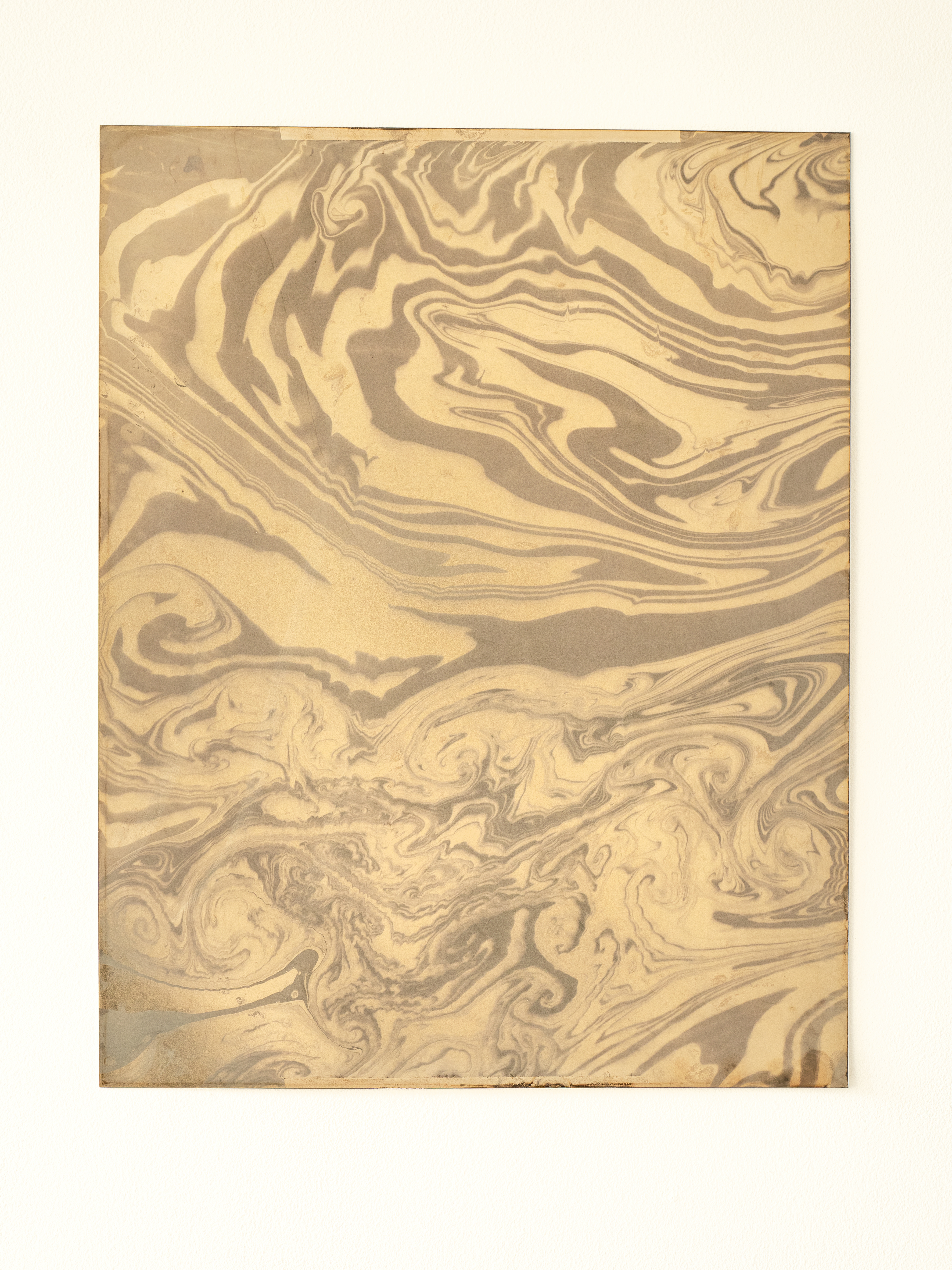
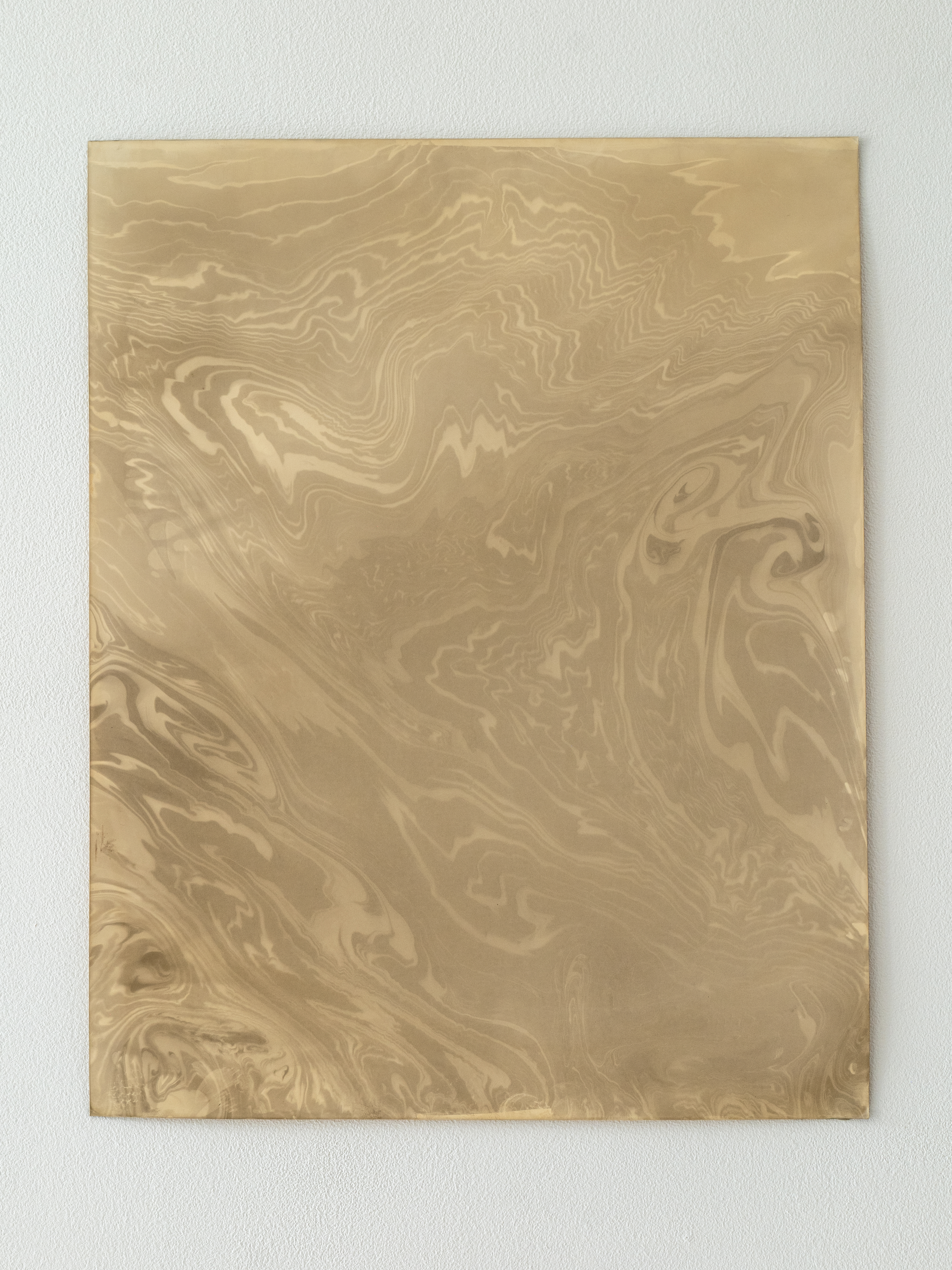
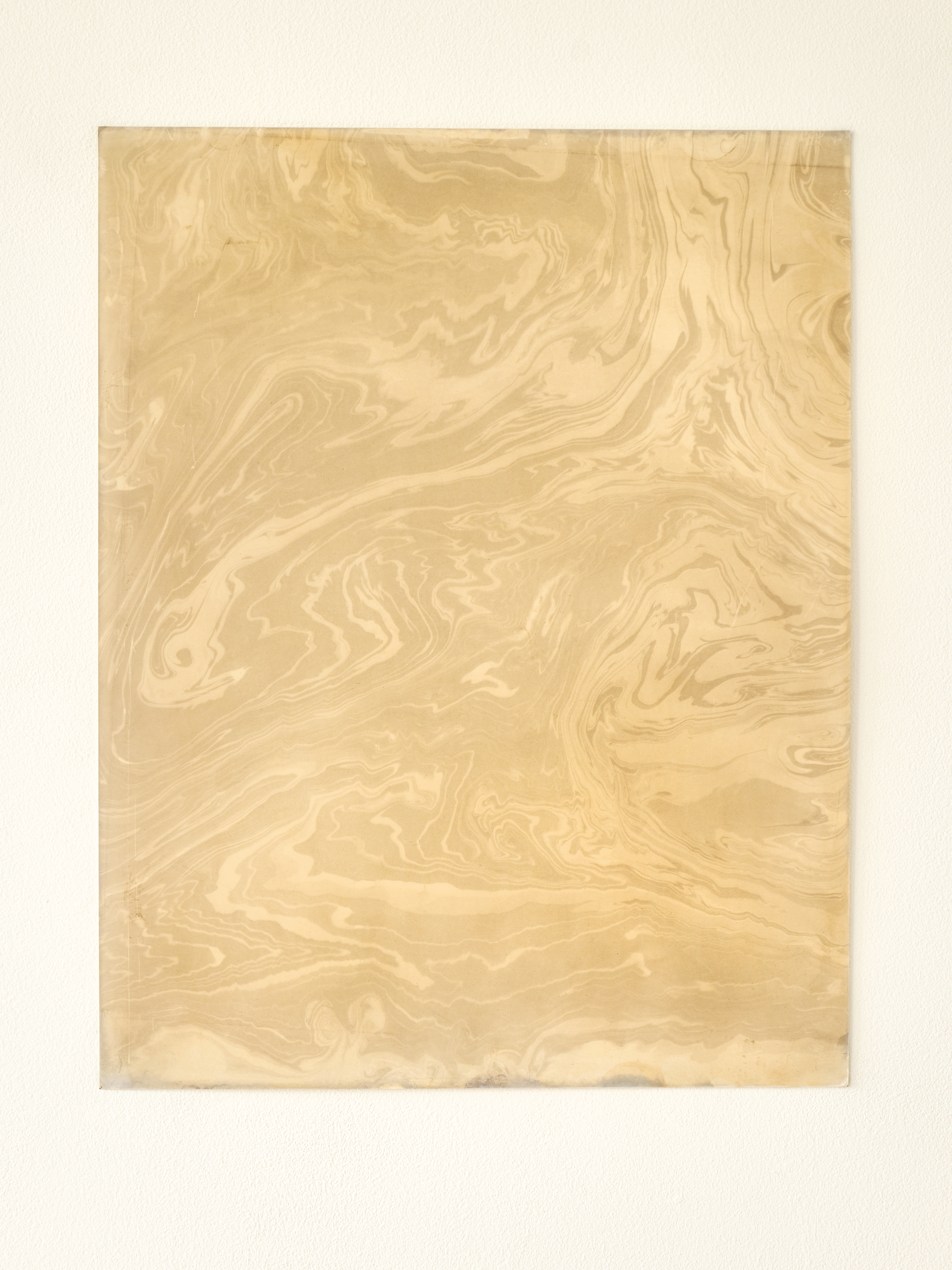
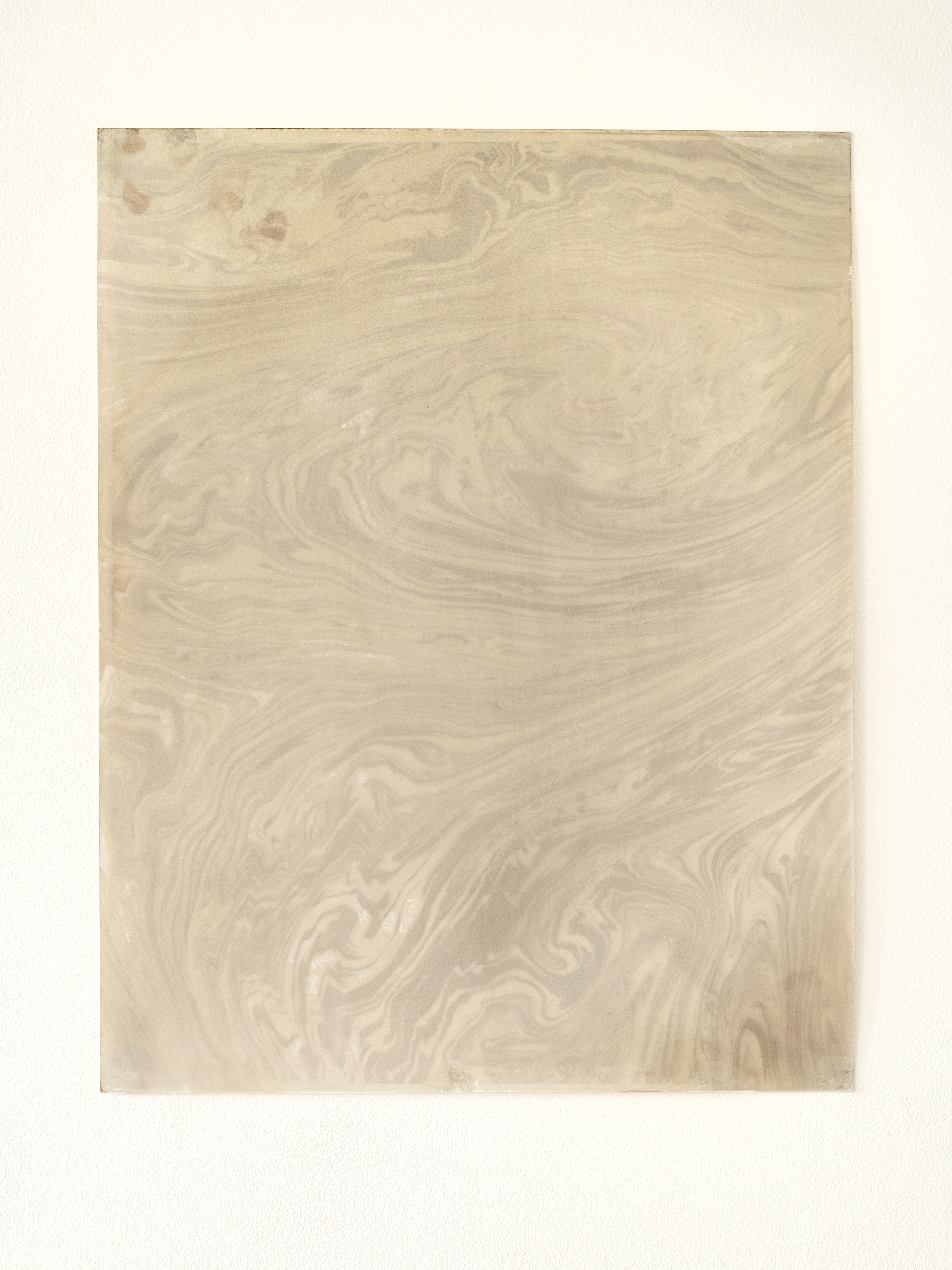
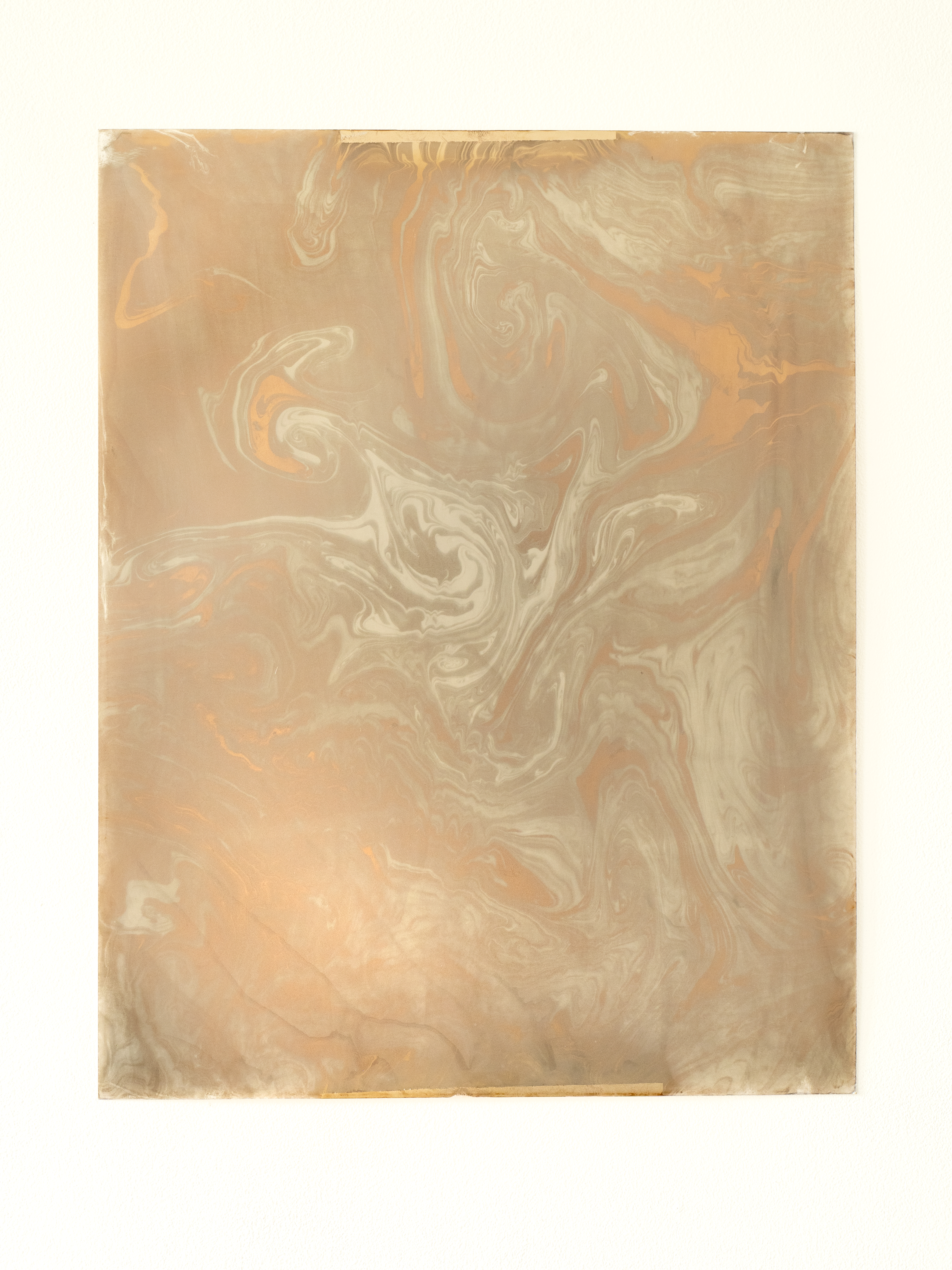
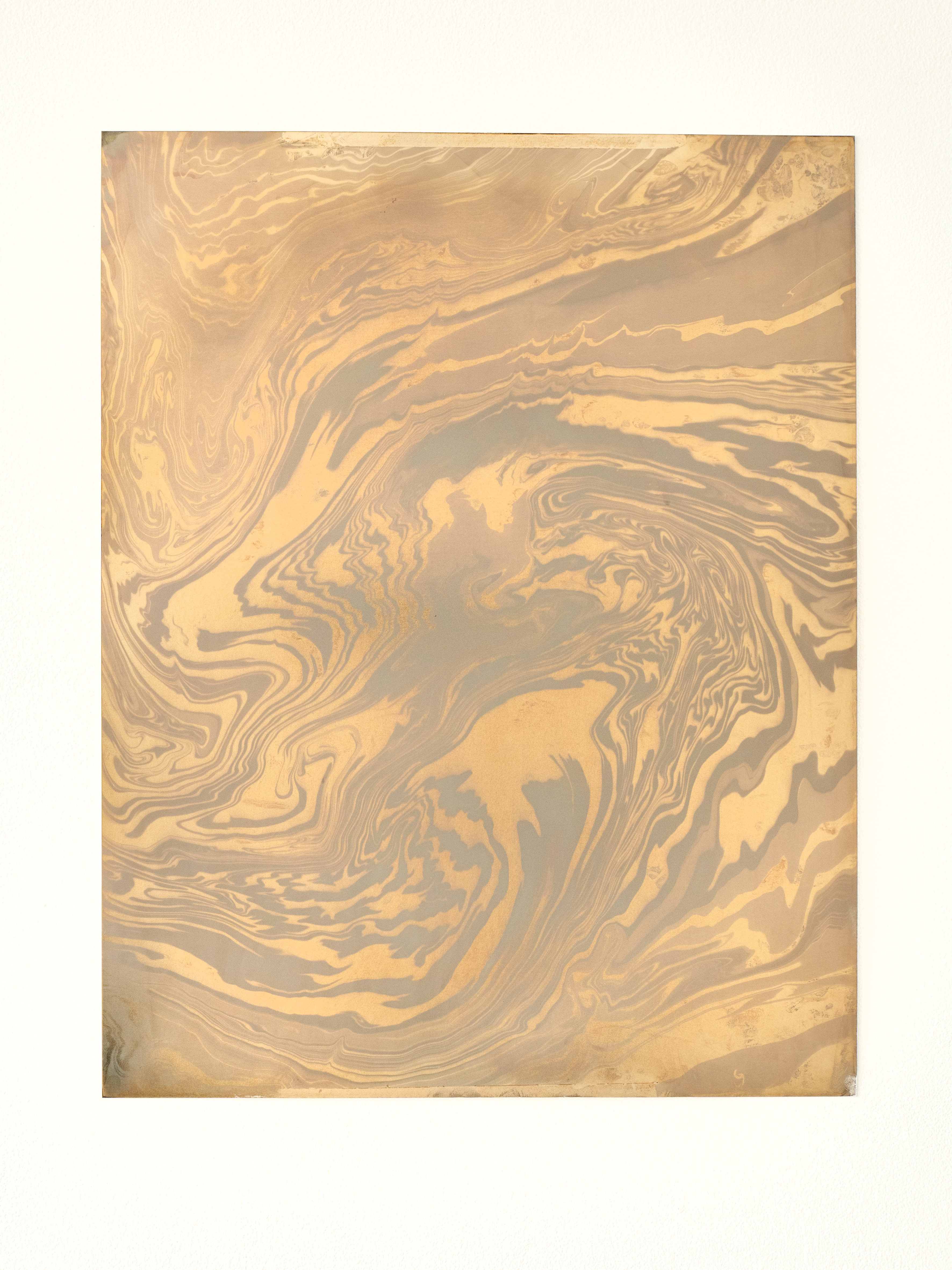
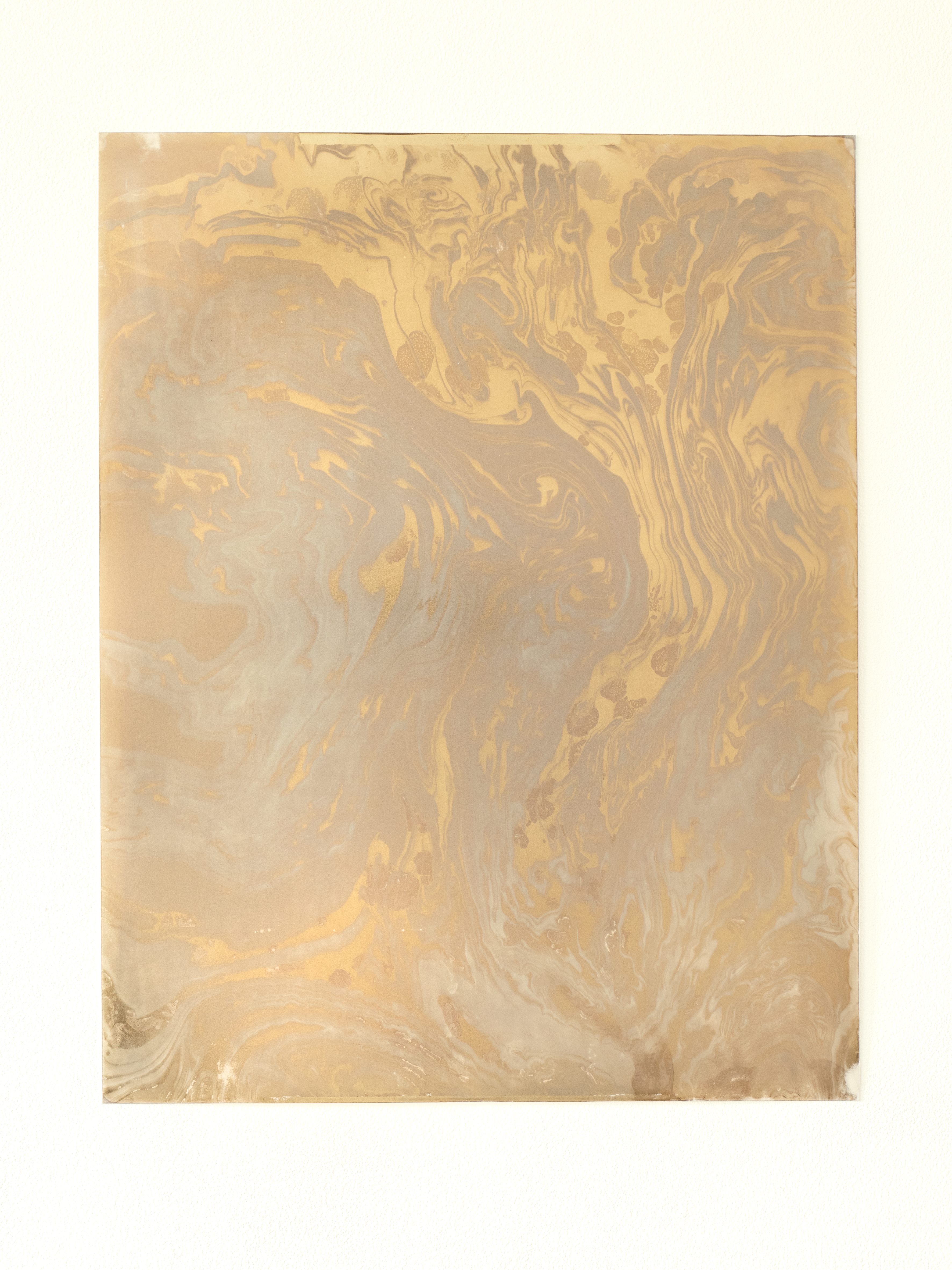
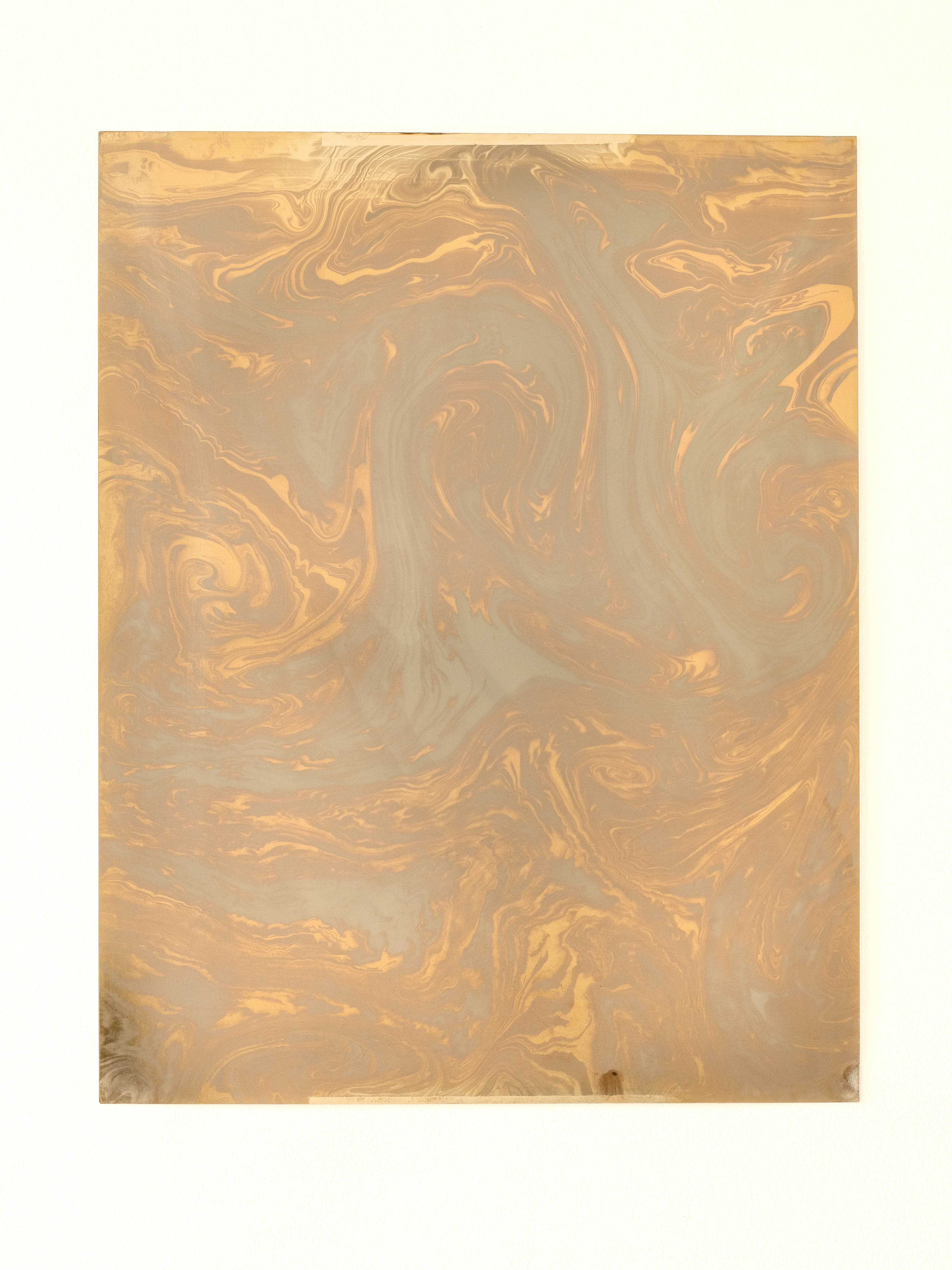
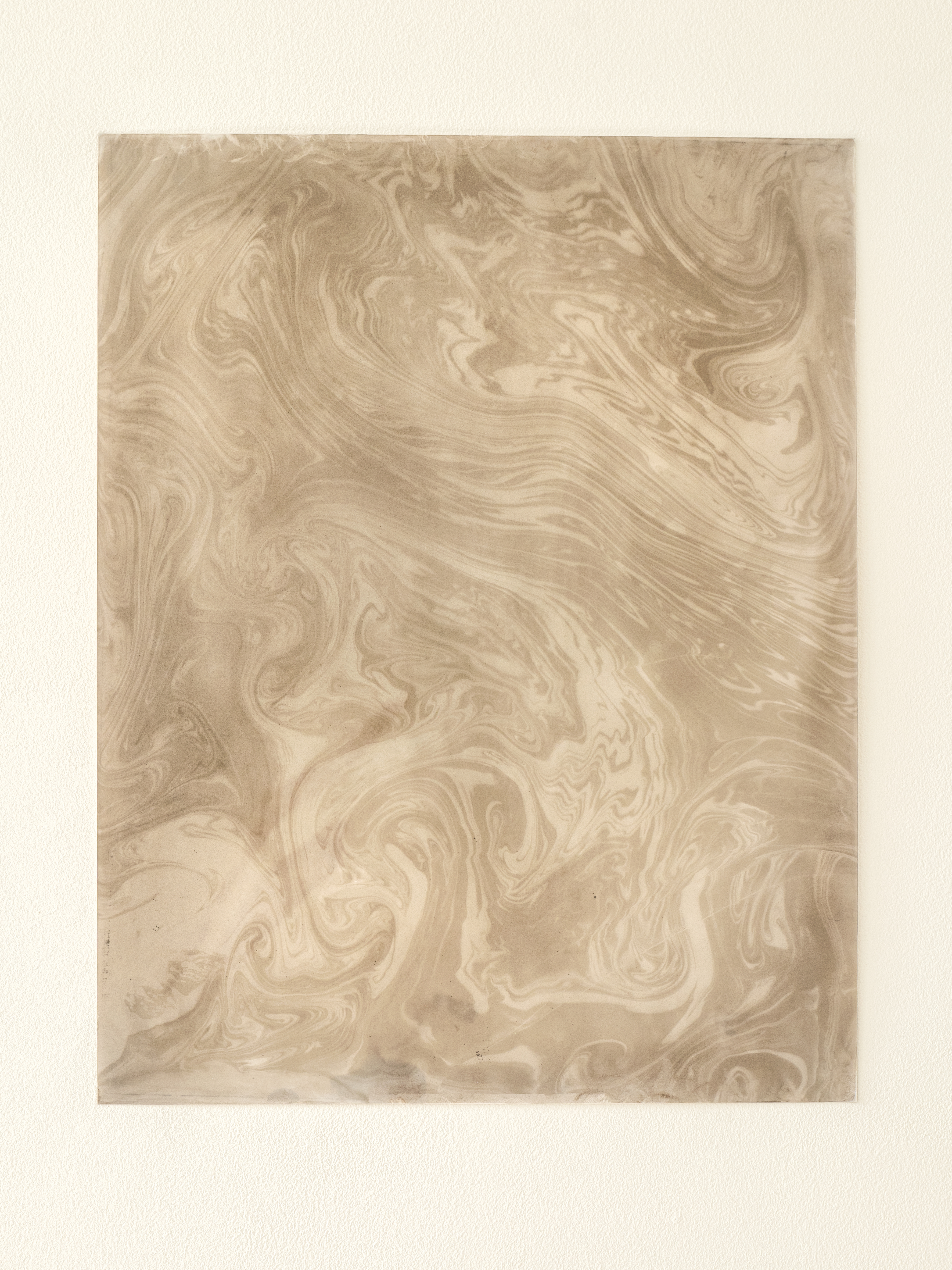
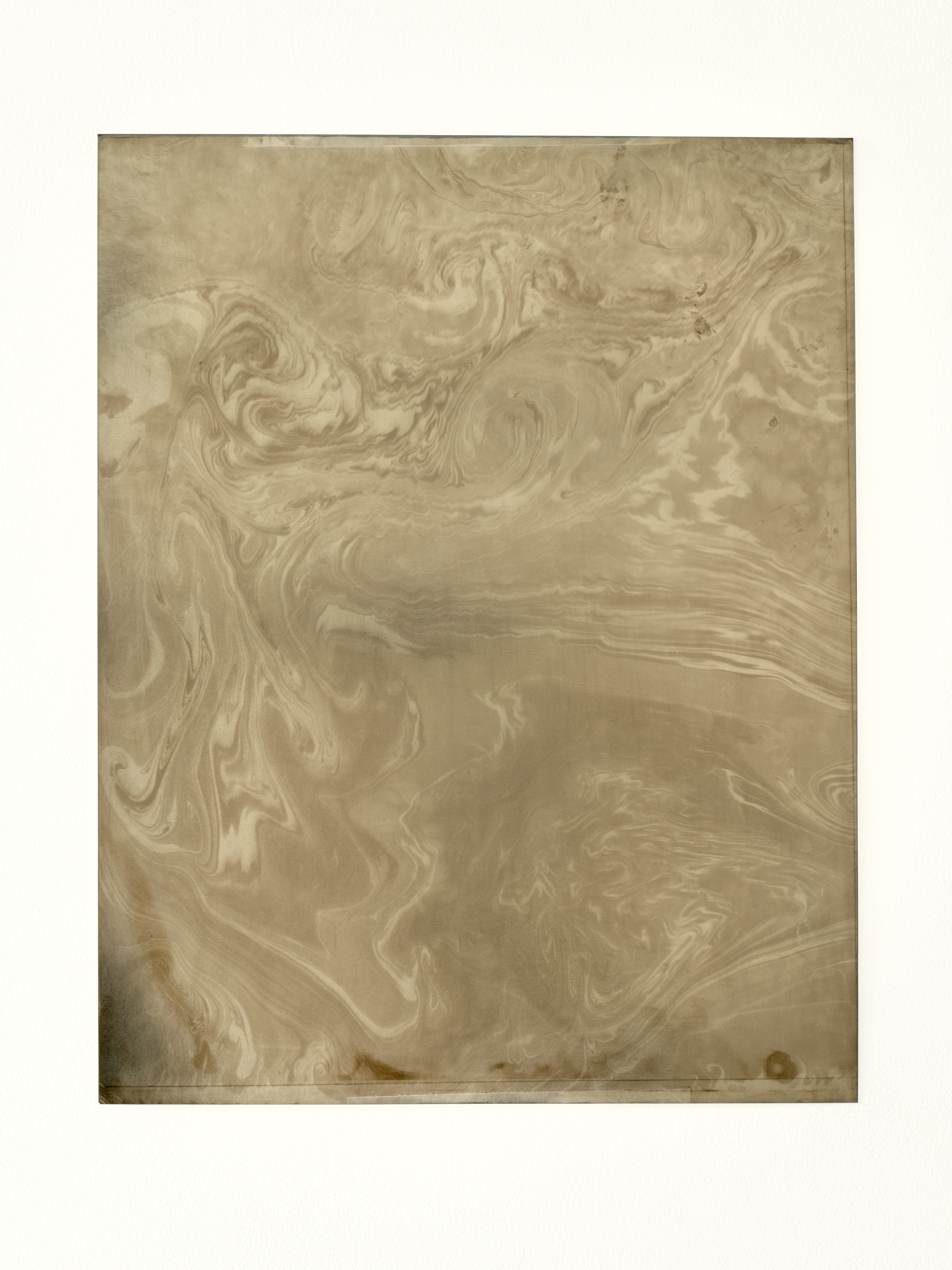
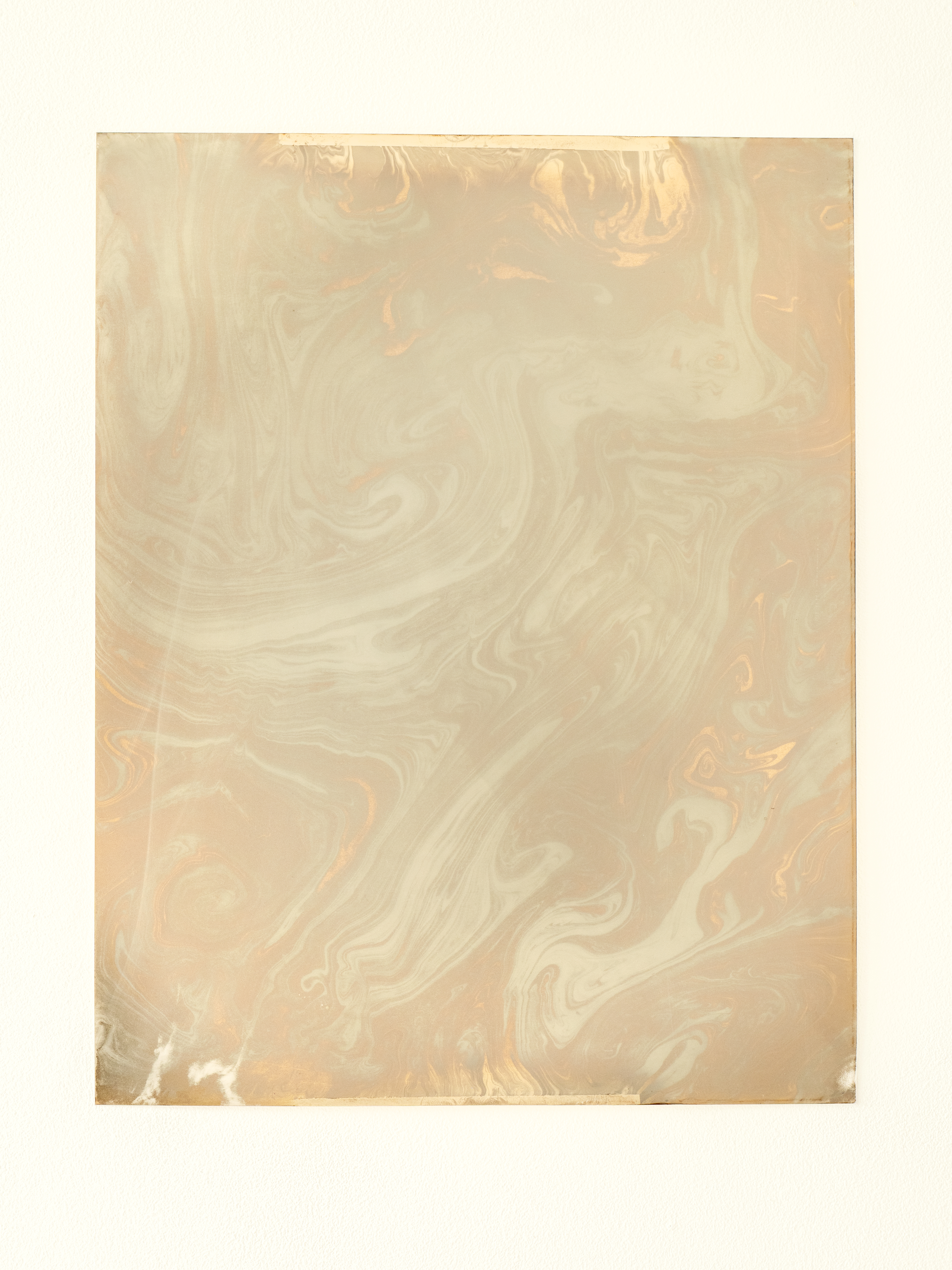
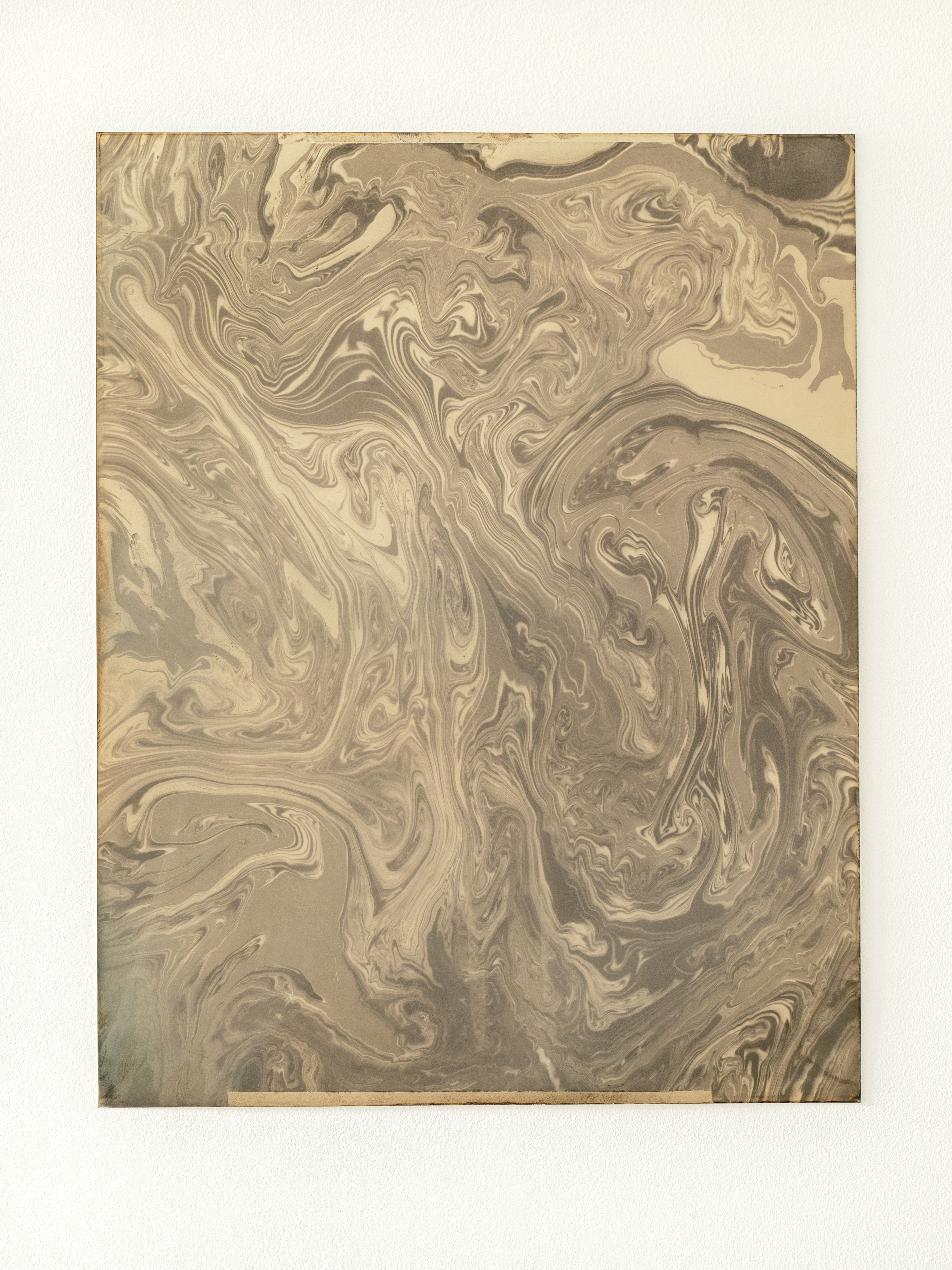
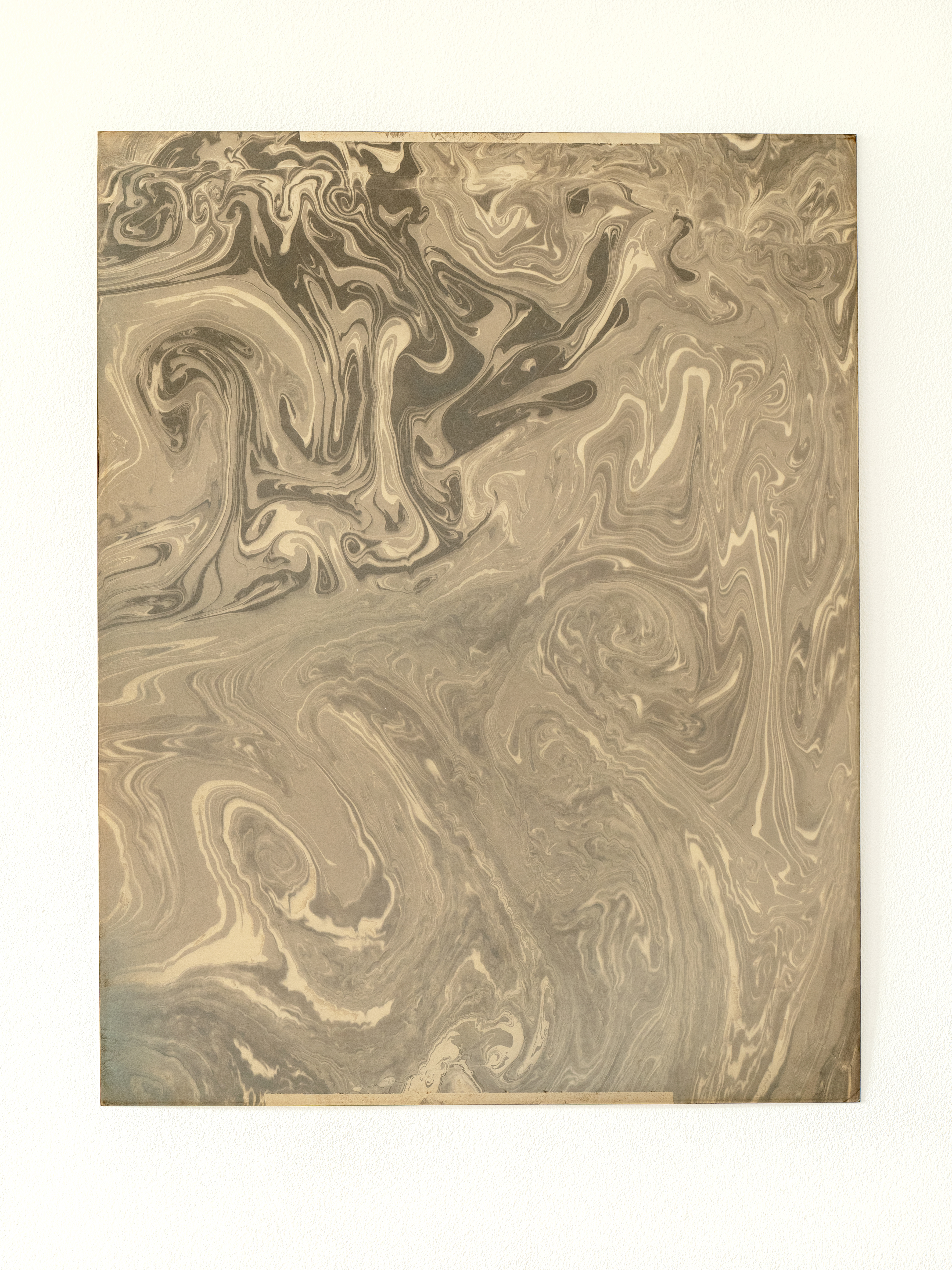
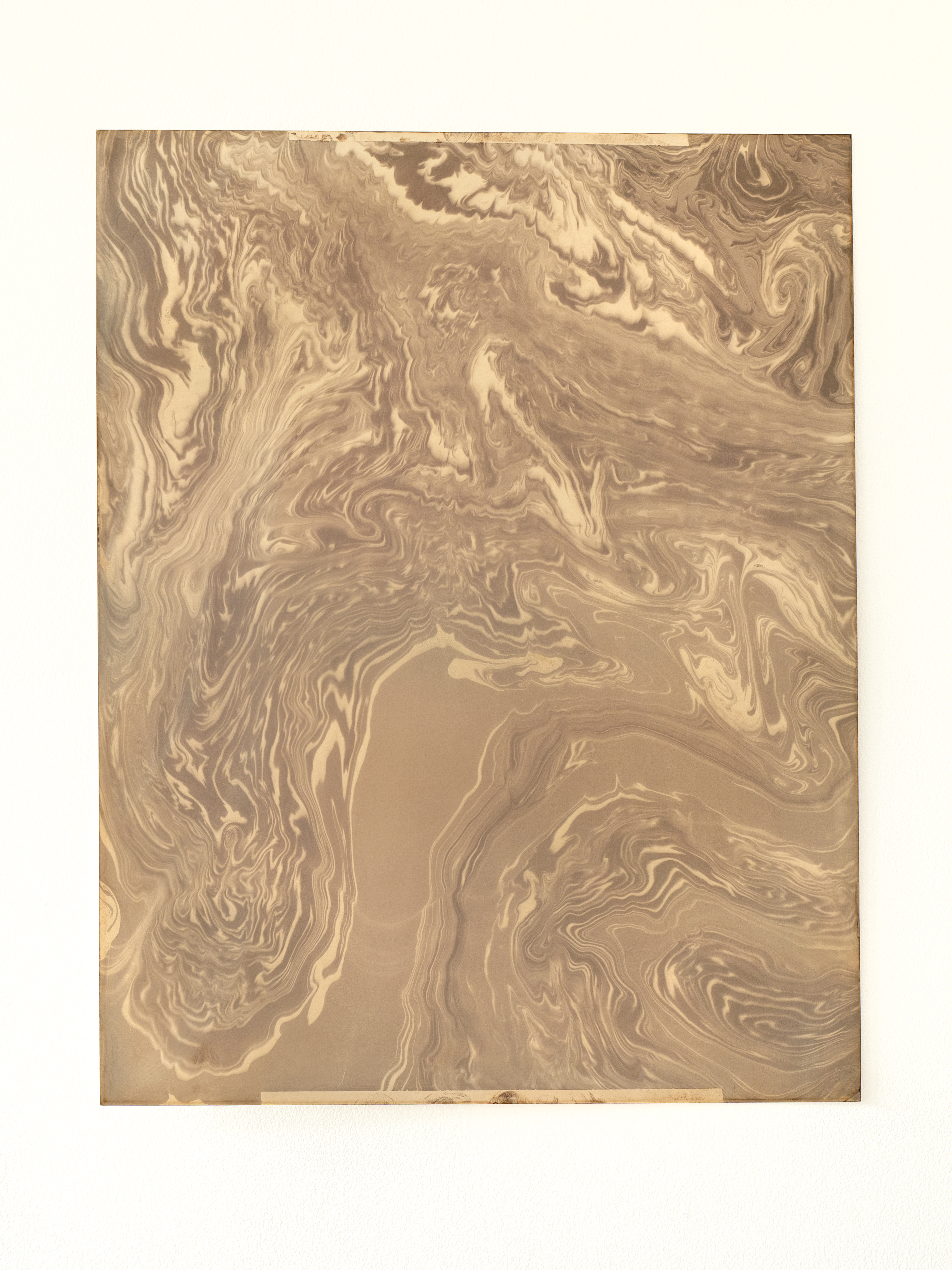
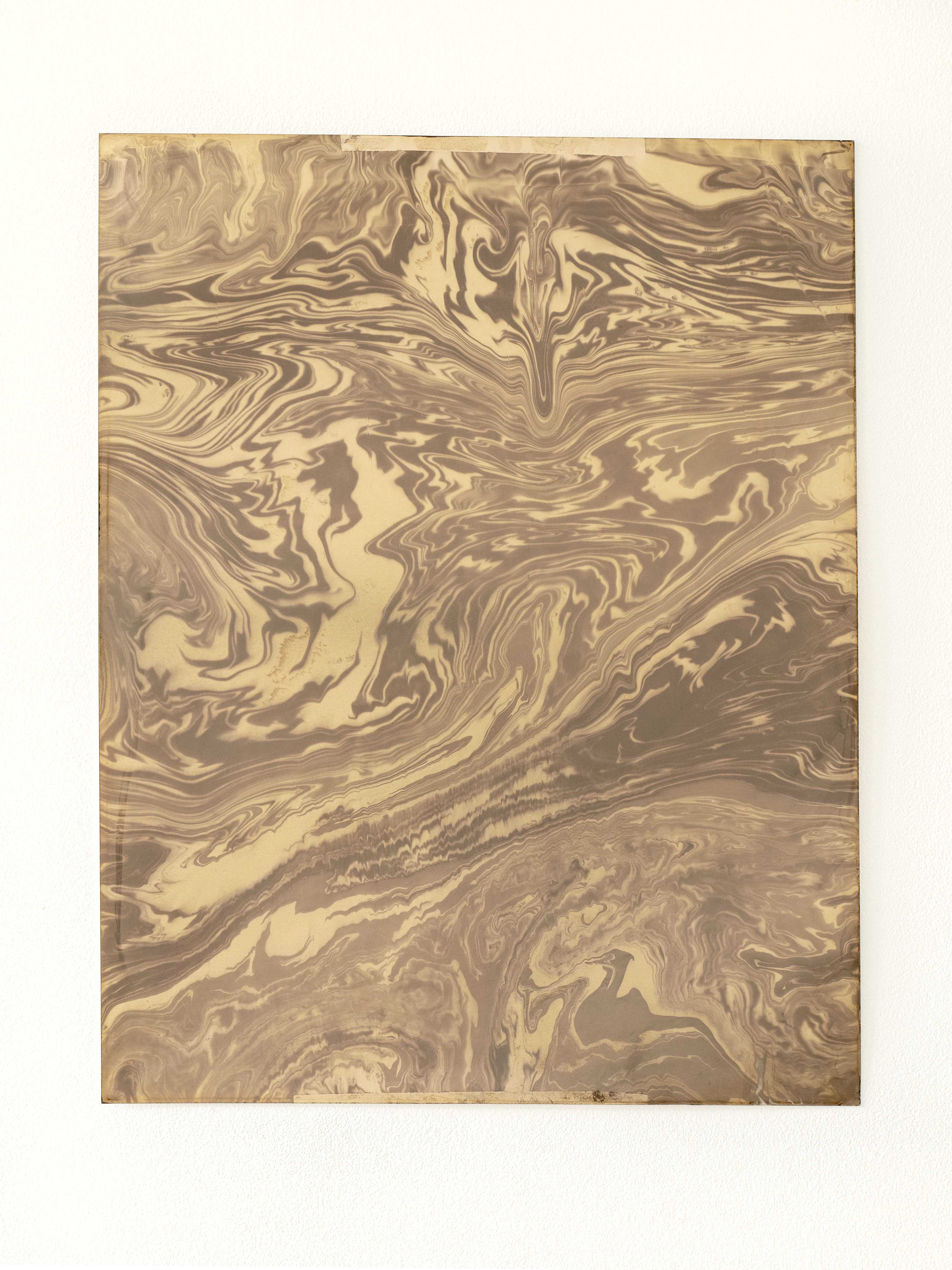
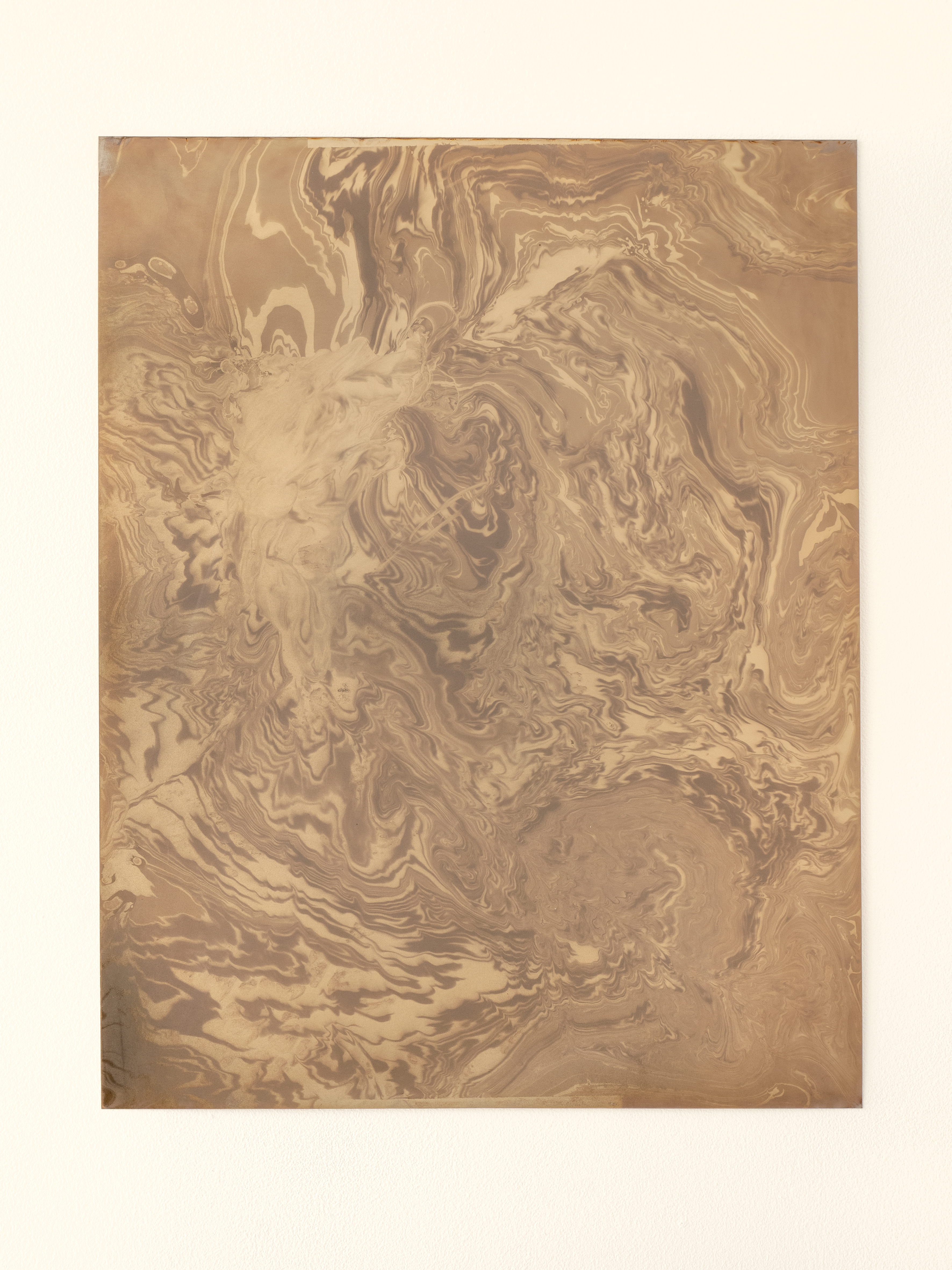
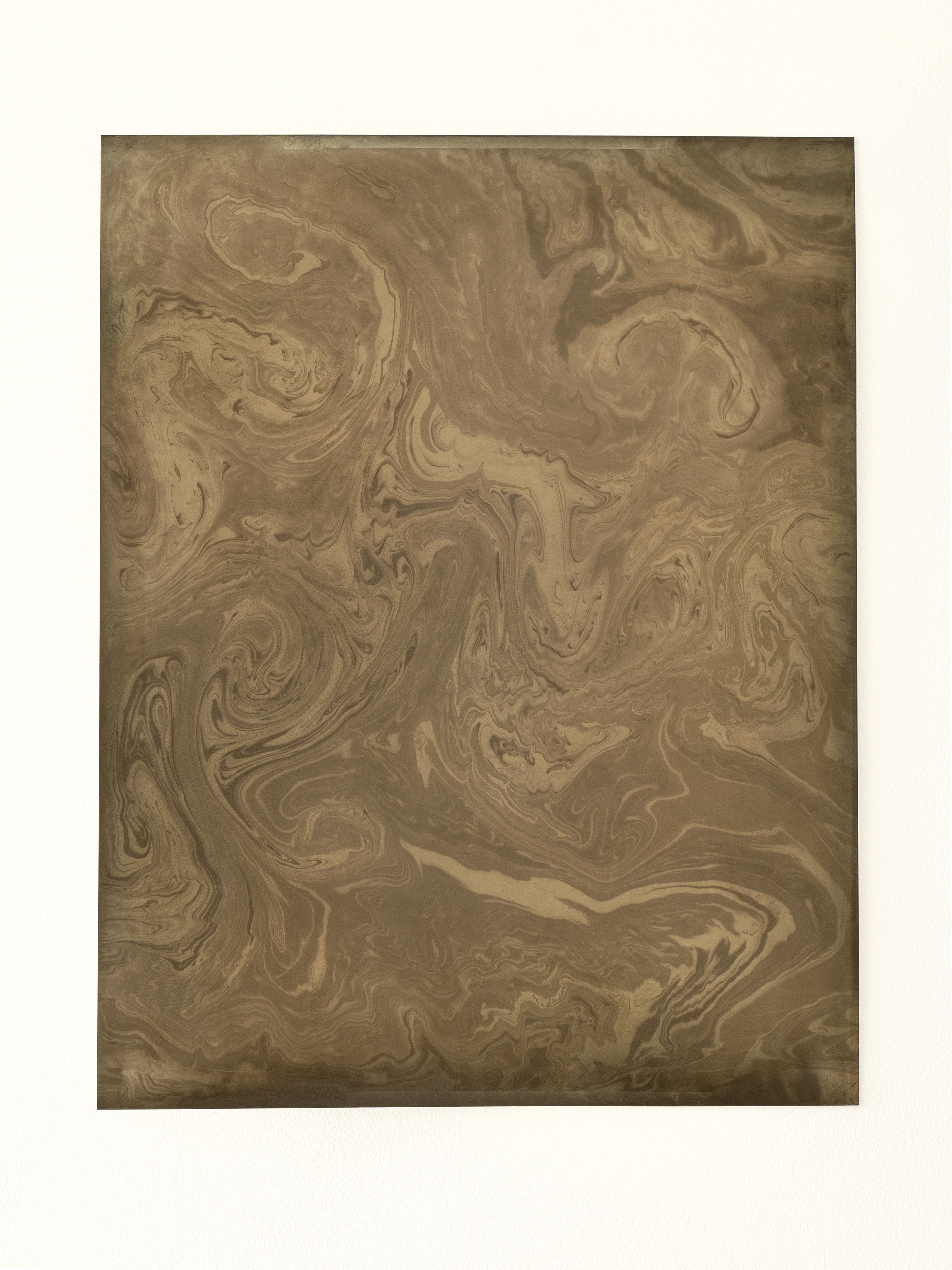
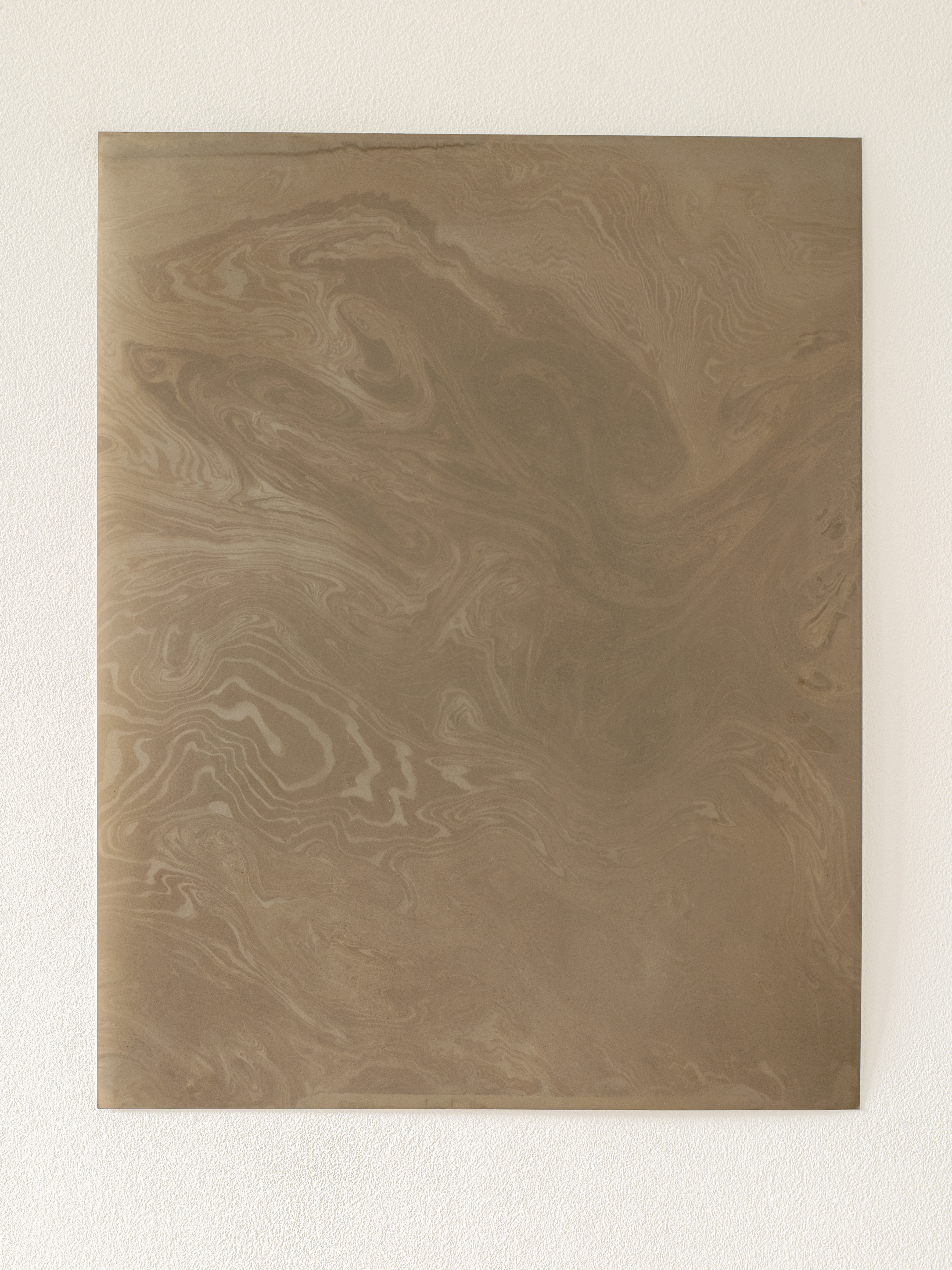
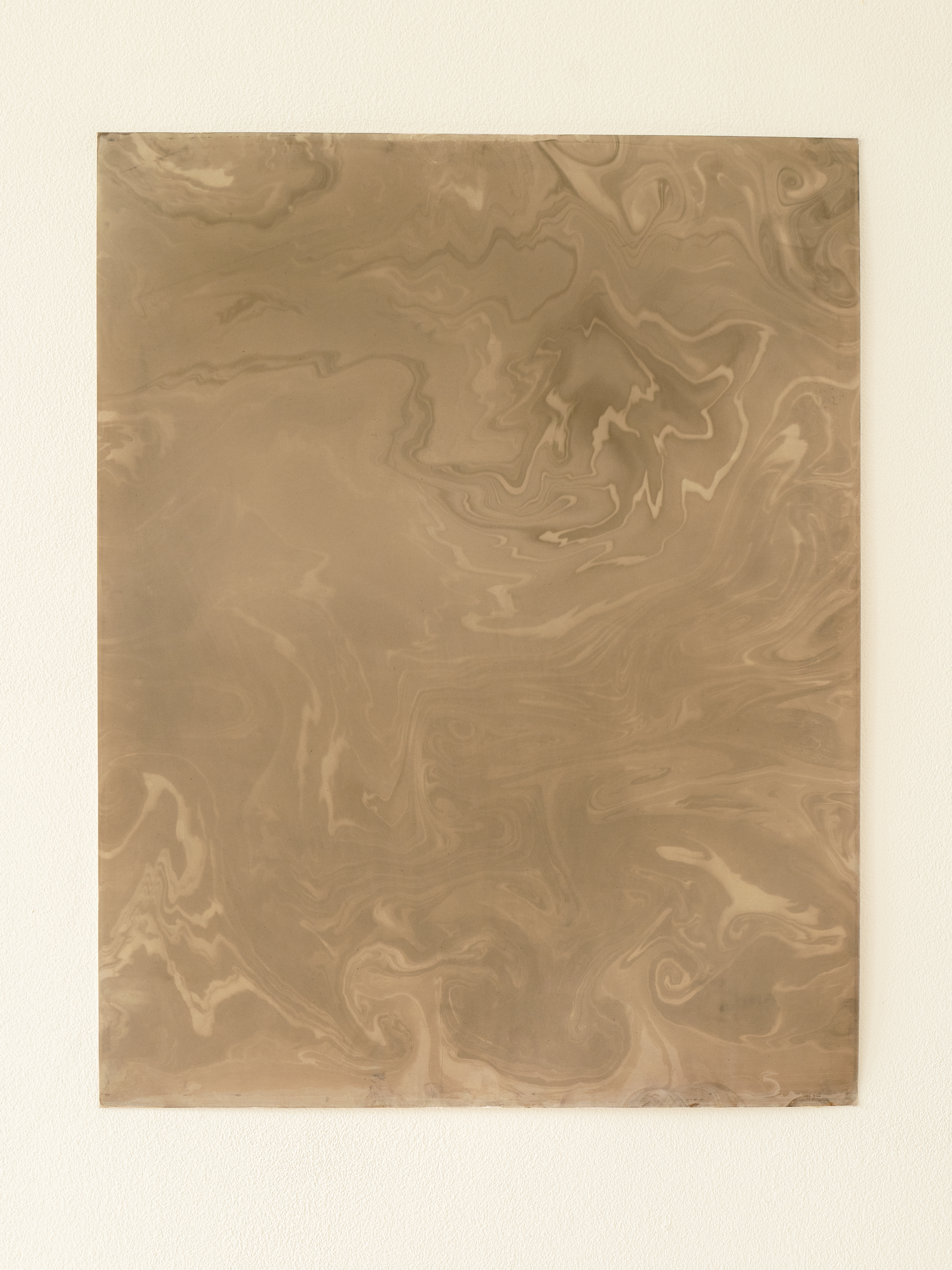
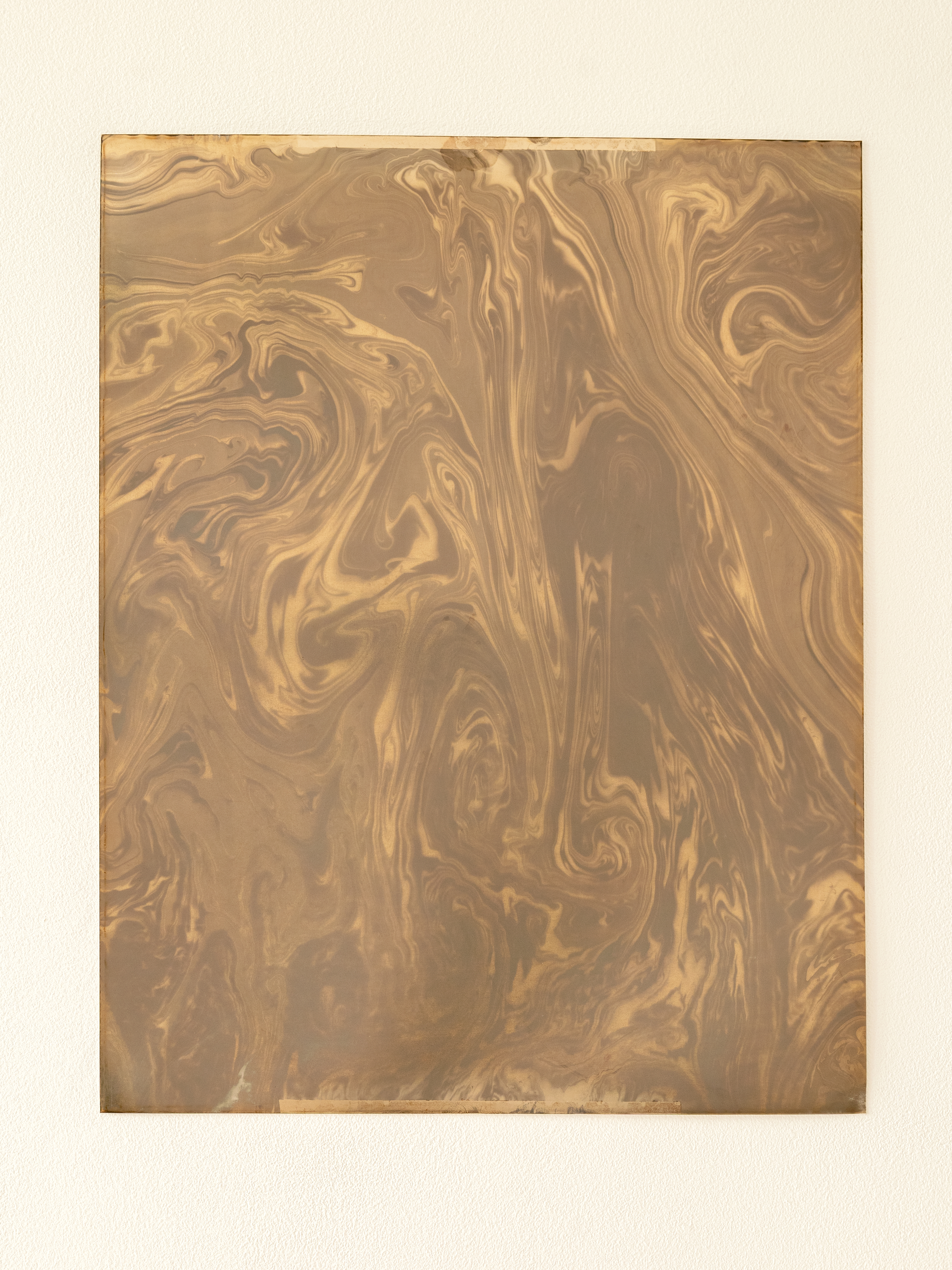
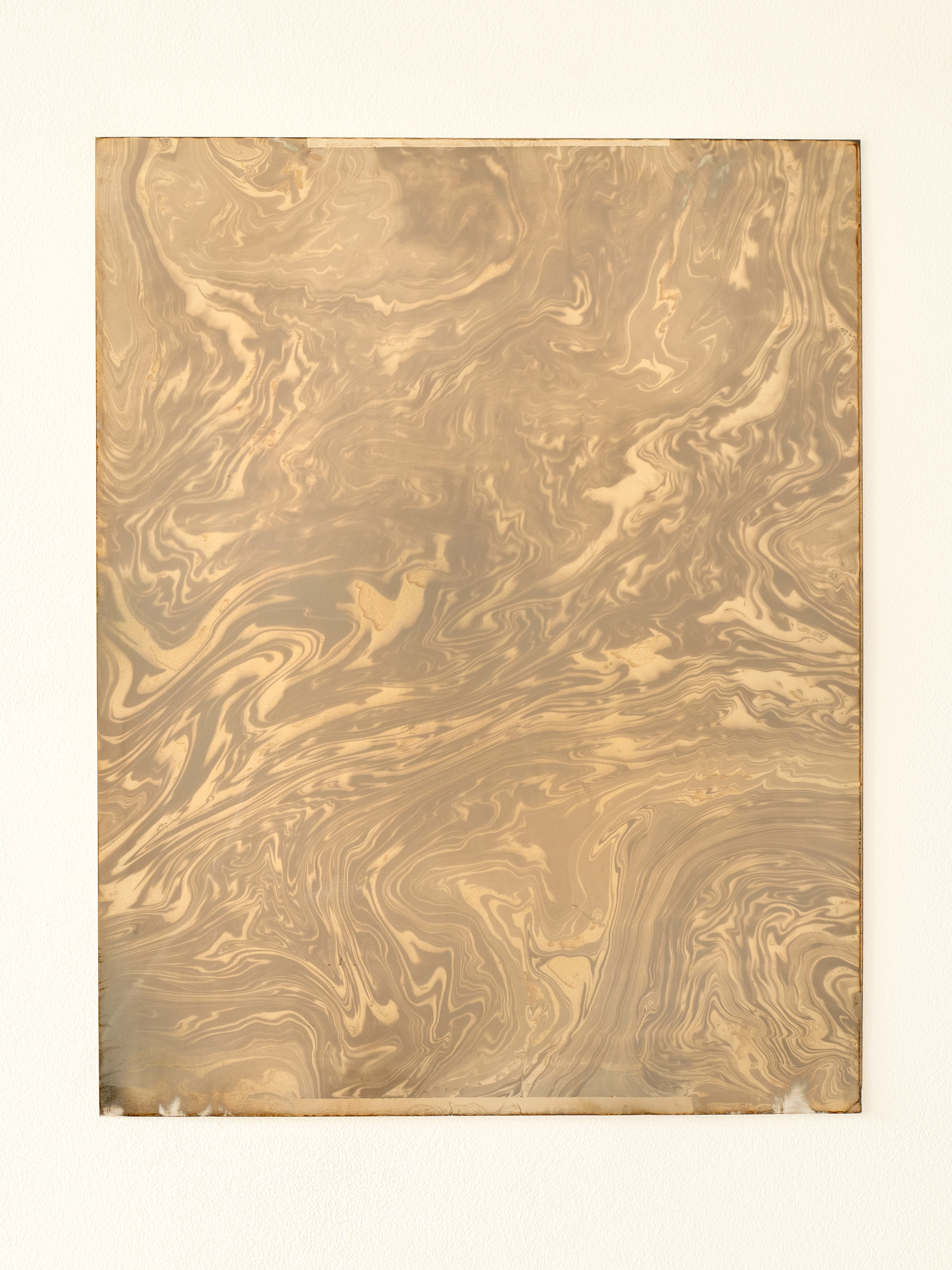
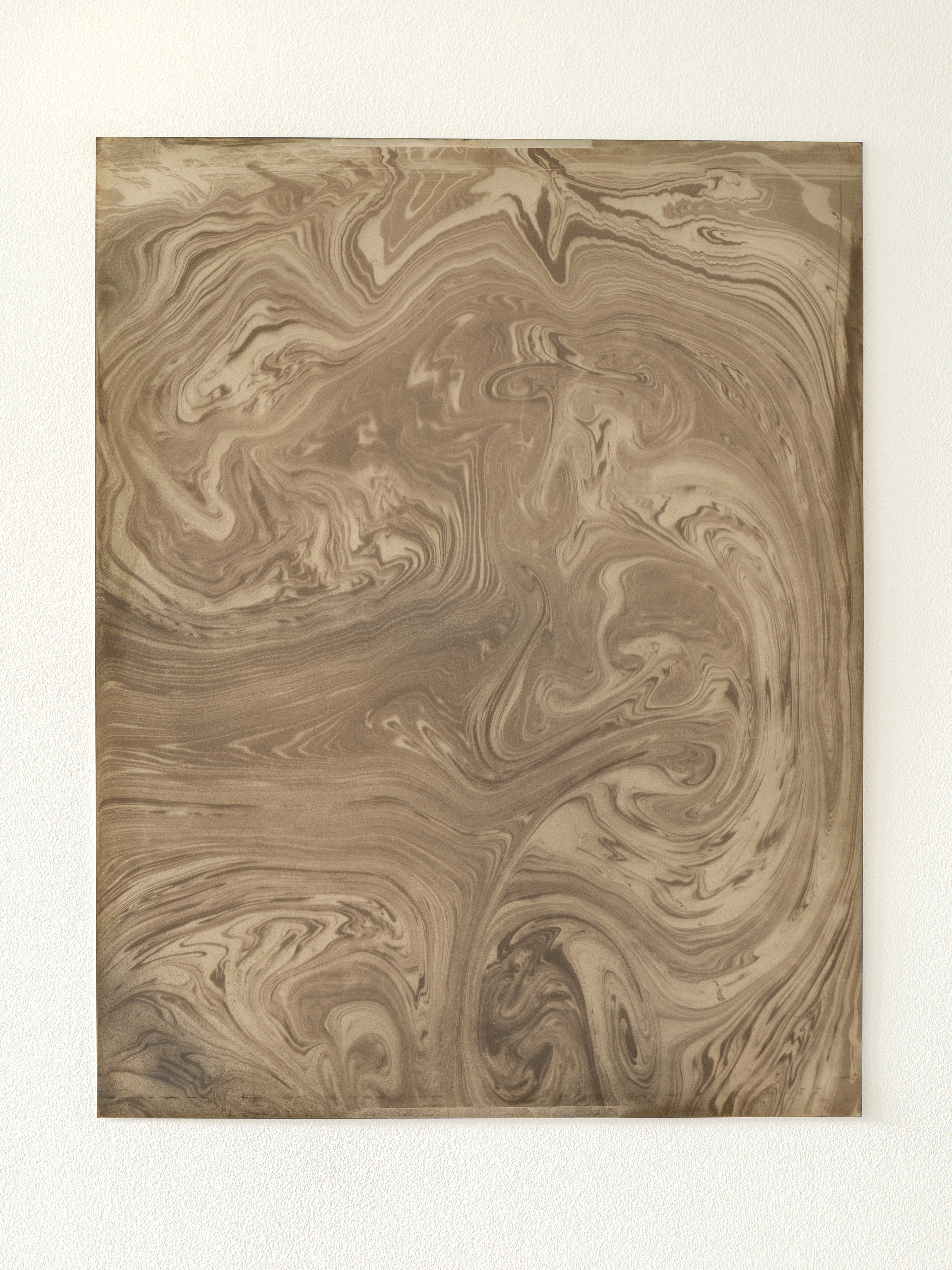
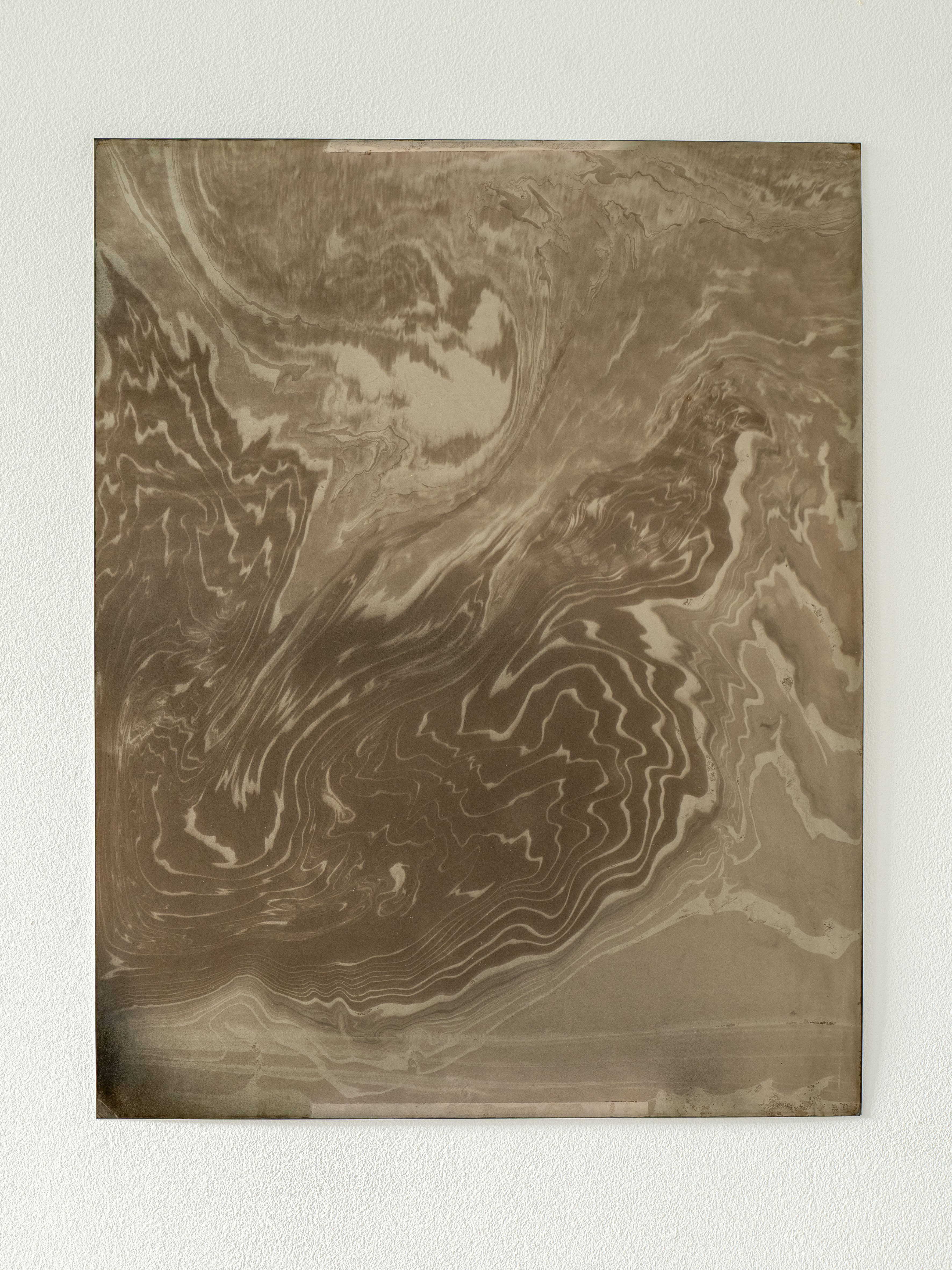
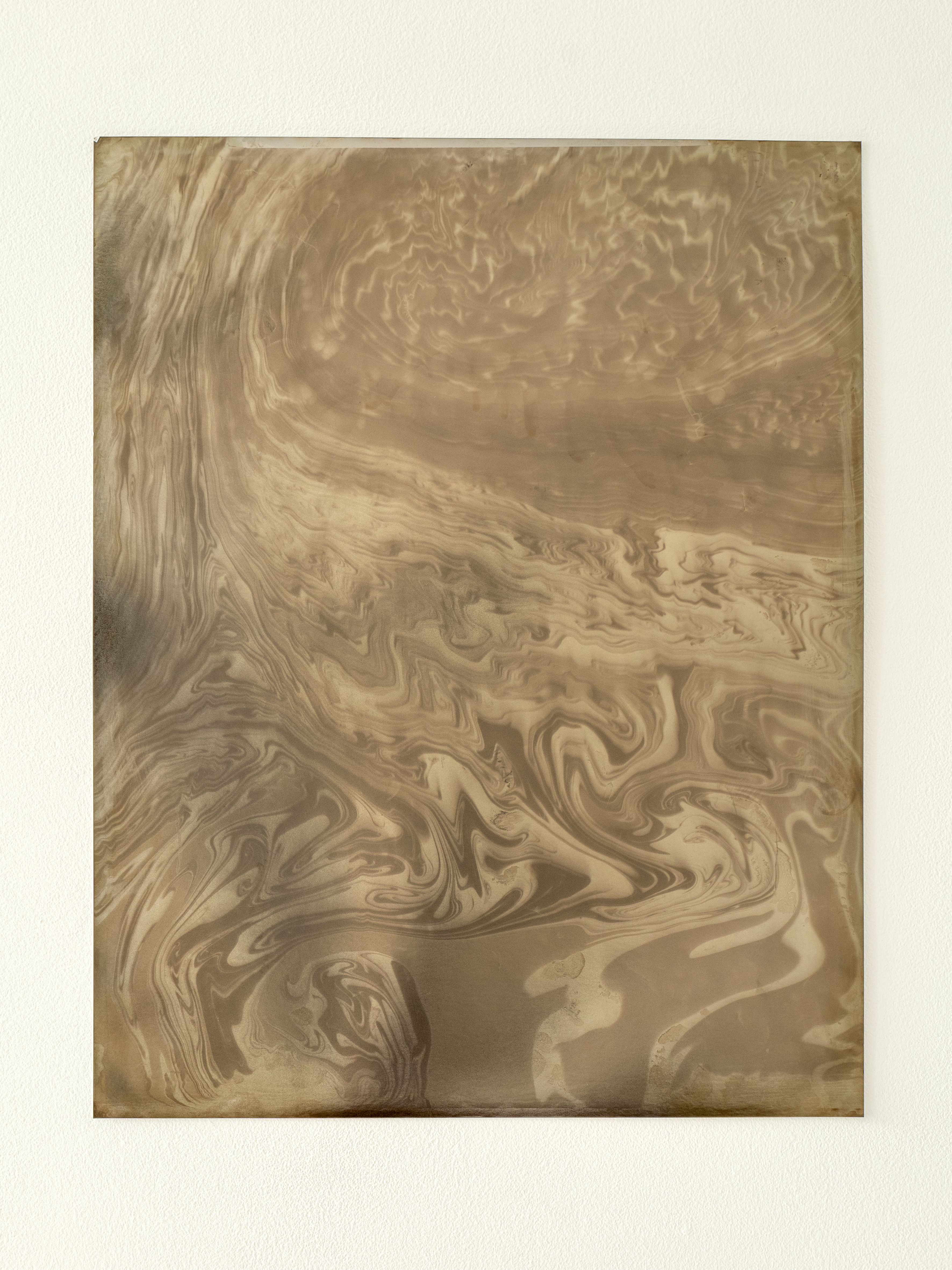
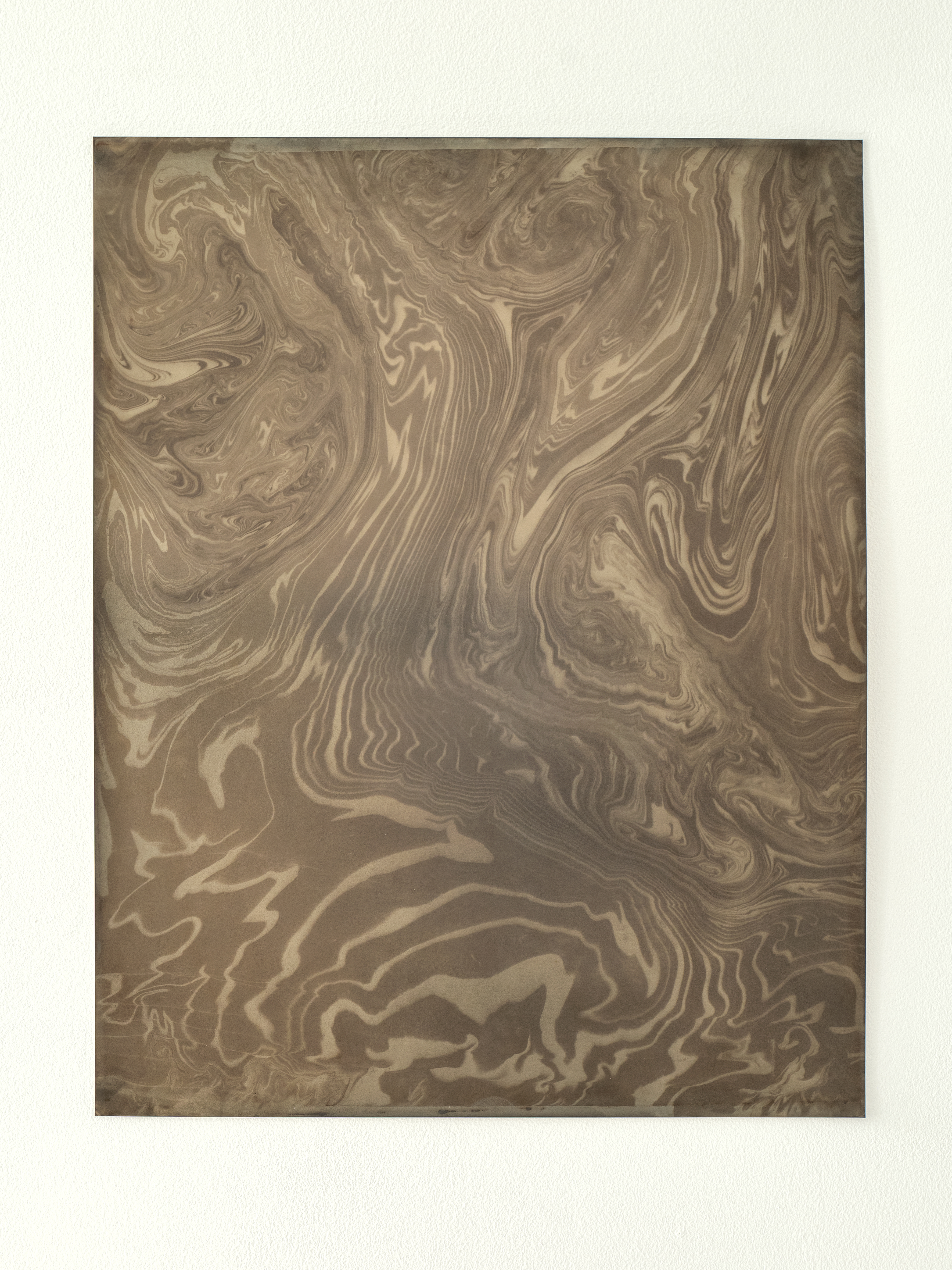
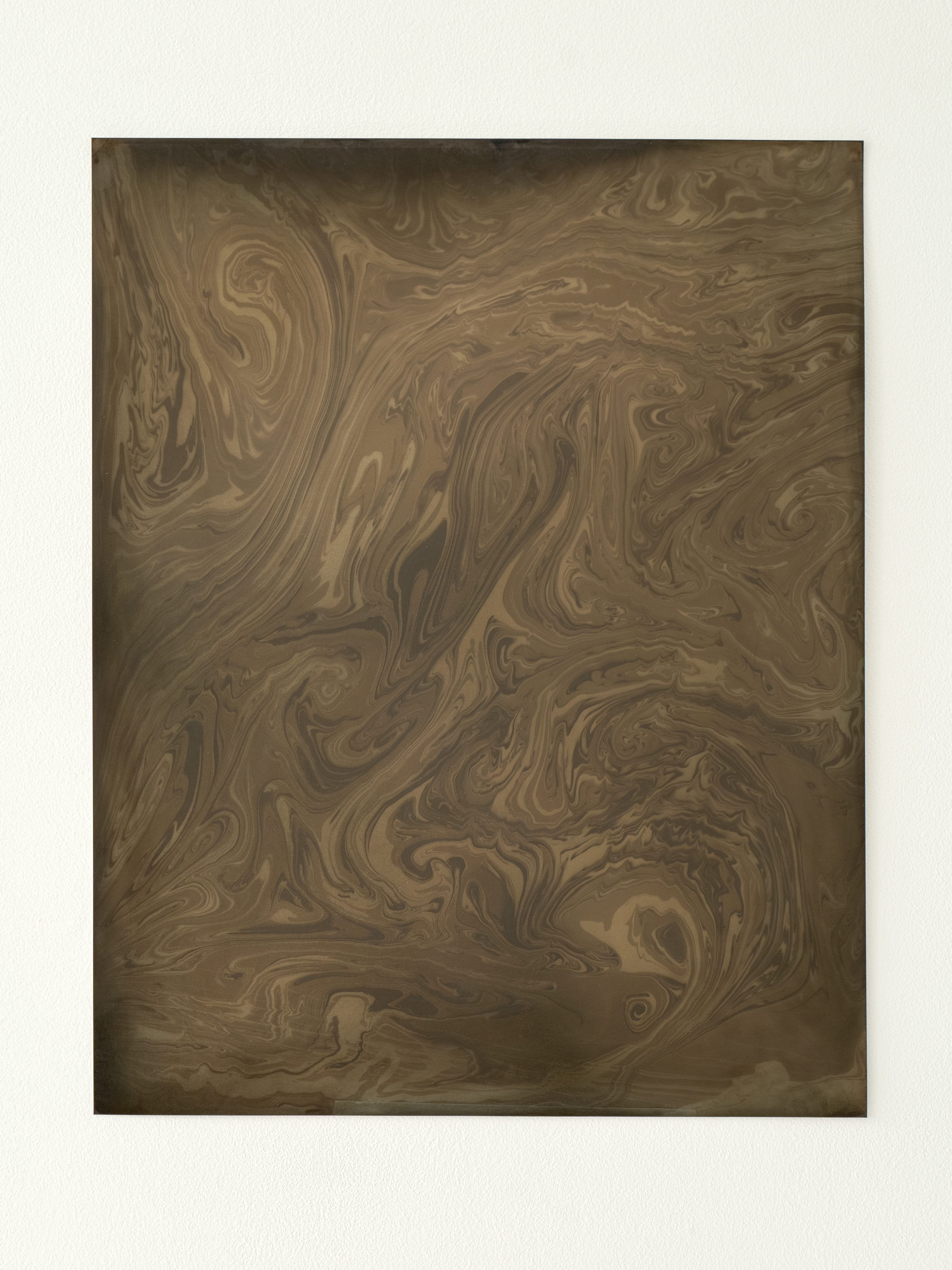
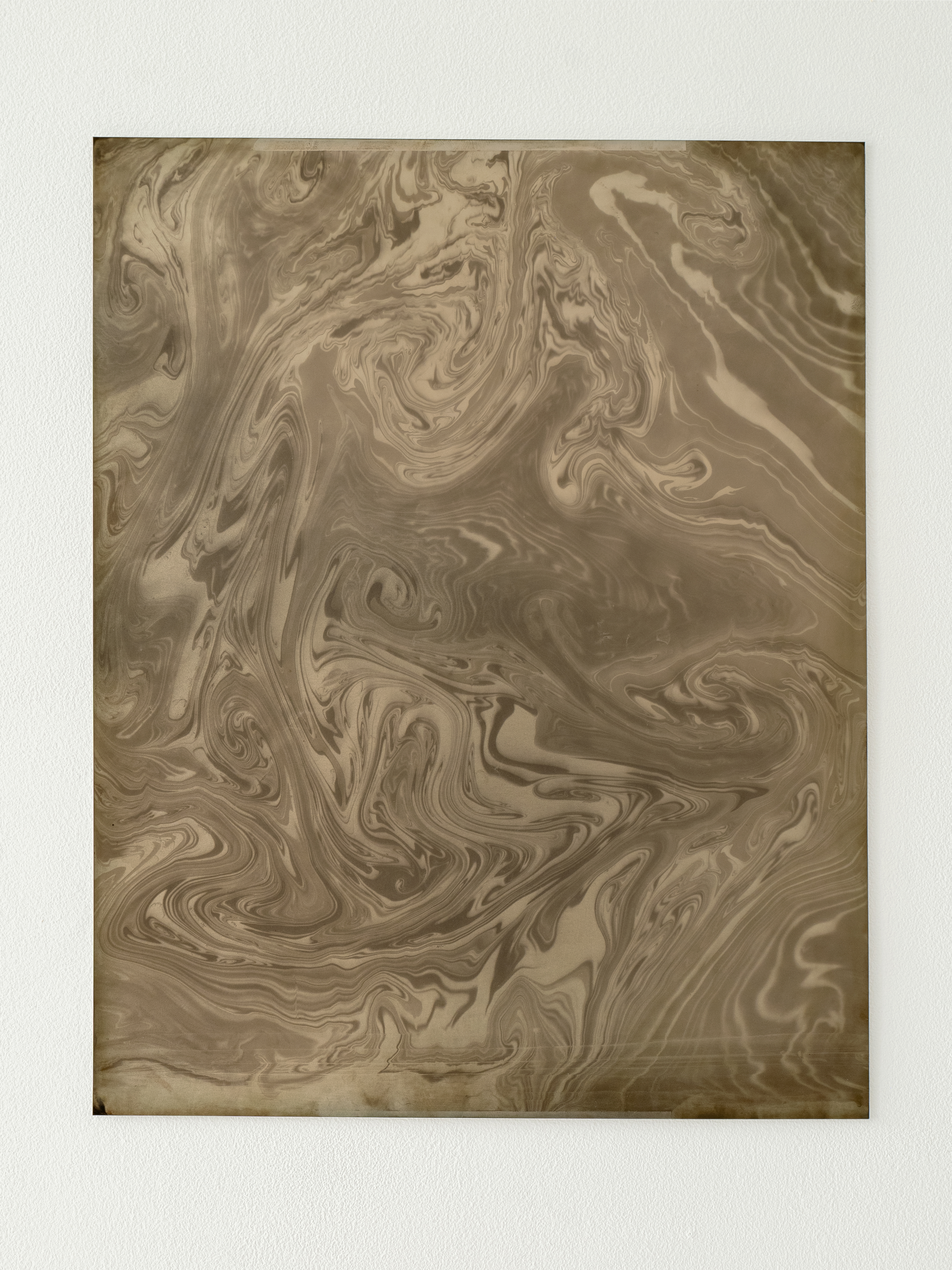
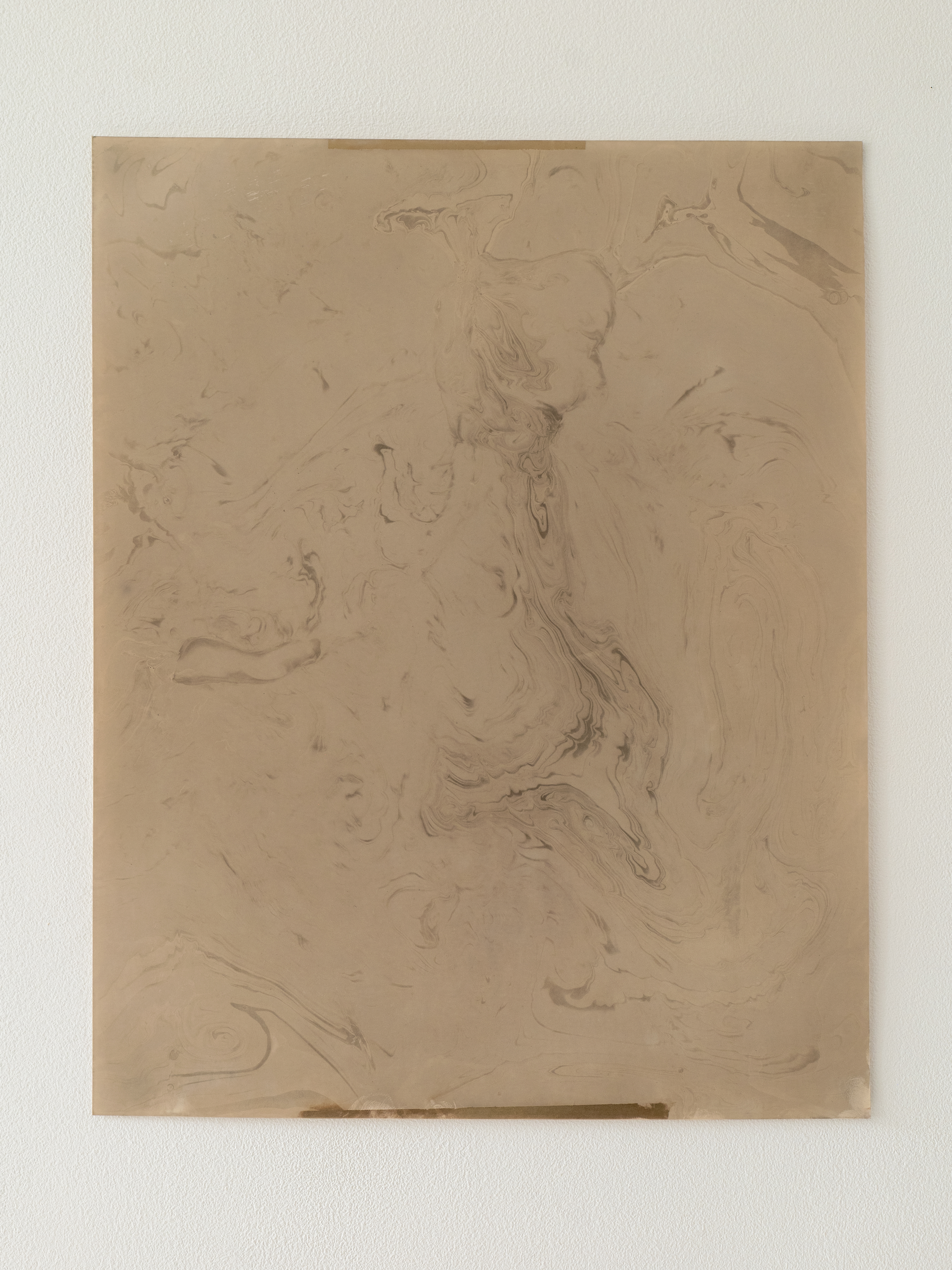
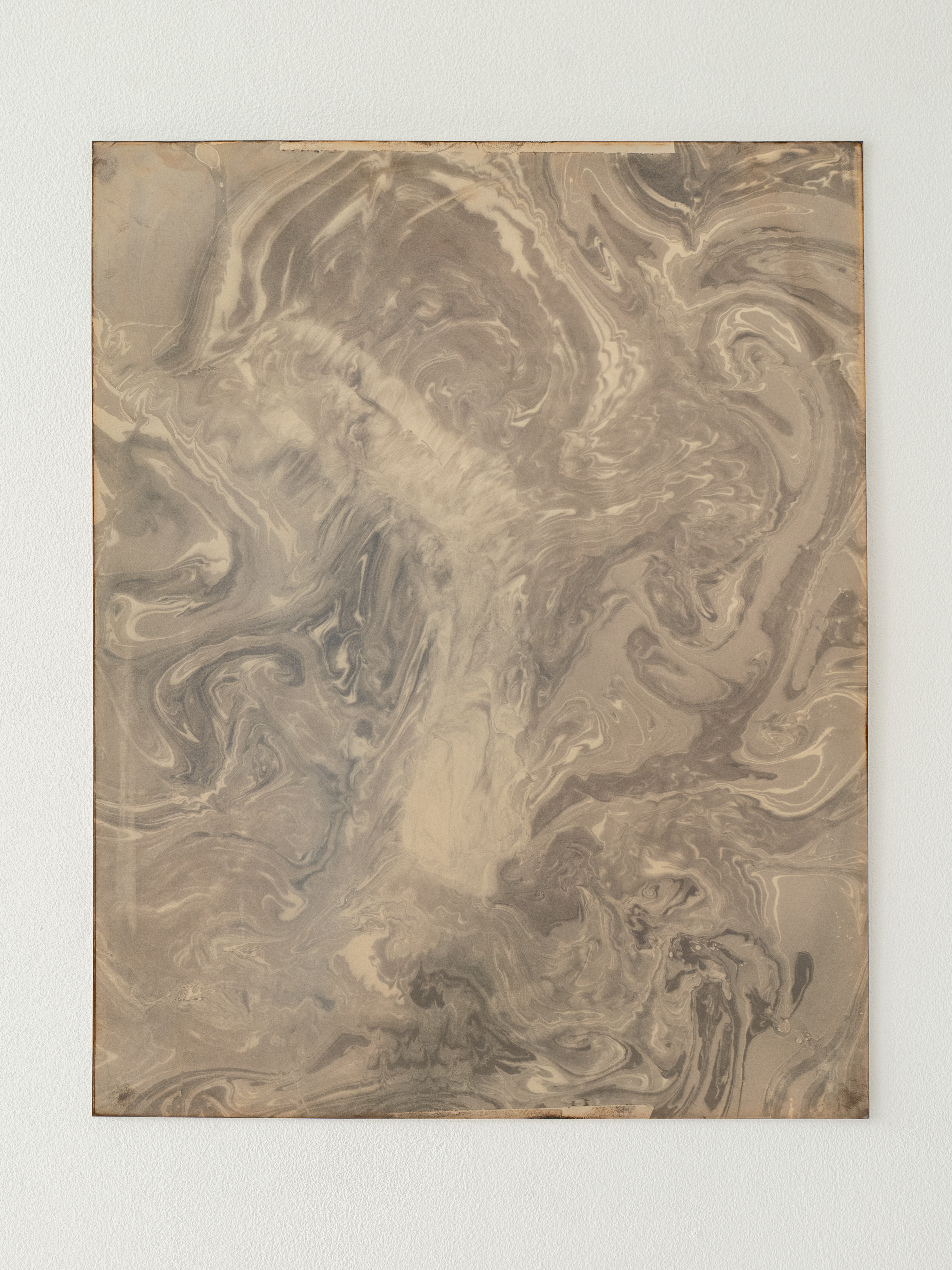
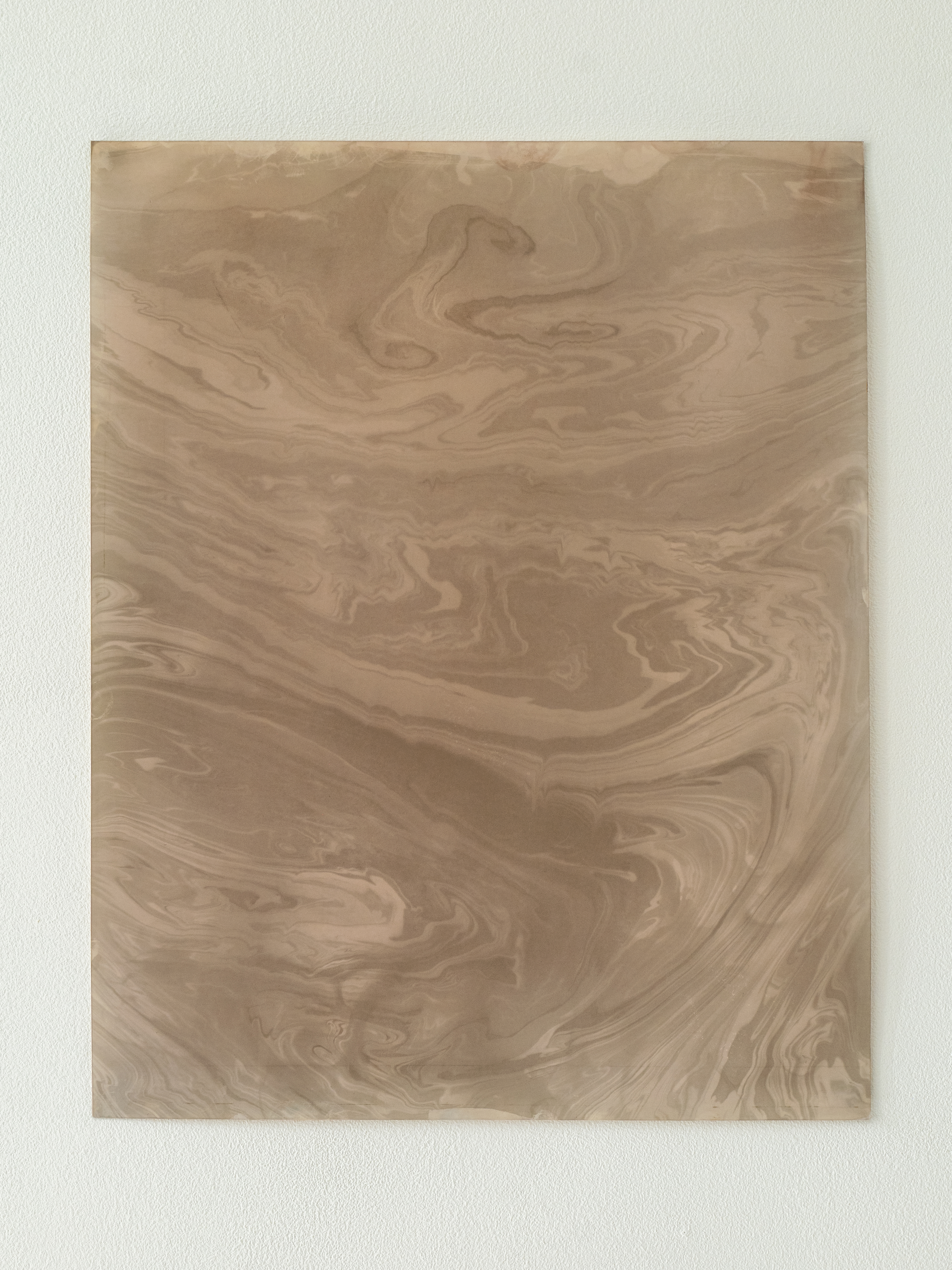
9. Sunflower
“Gold is nothing less than sunlight photographically fixed.”
This phrase from August Strindberg’s text Le grand Soleil became the starting point for a series of experiments with light and chemistry.
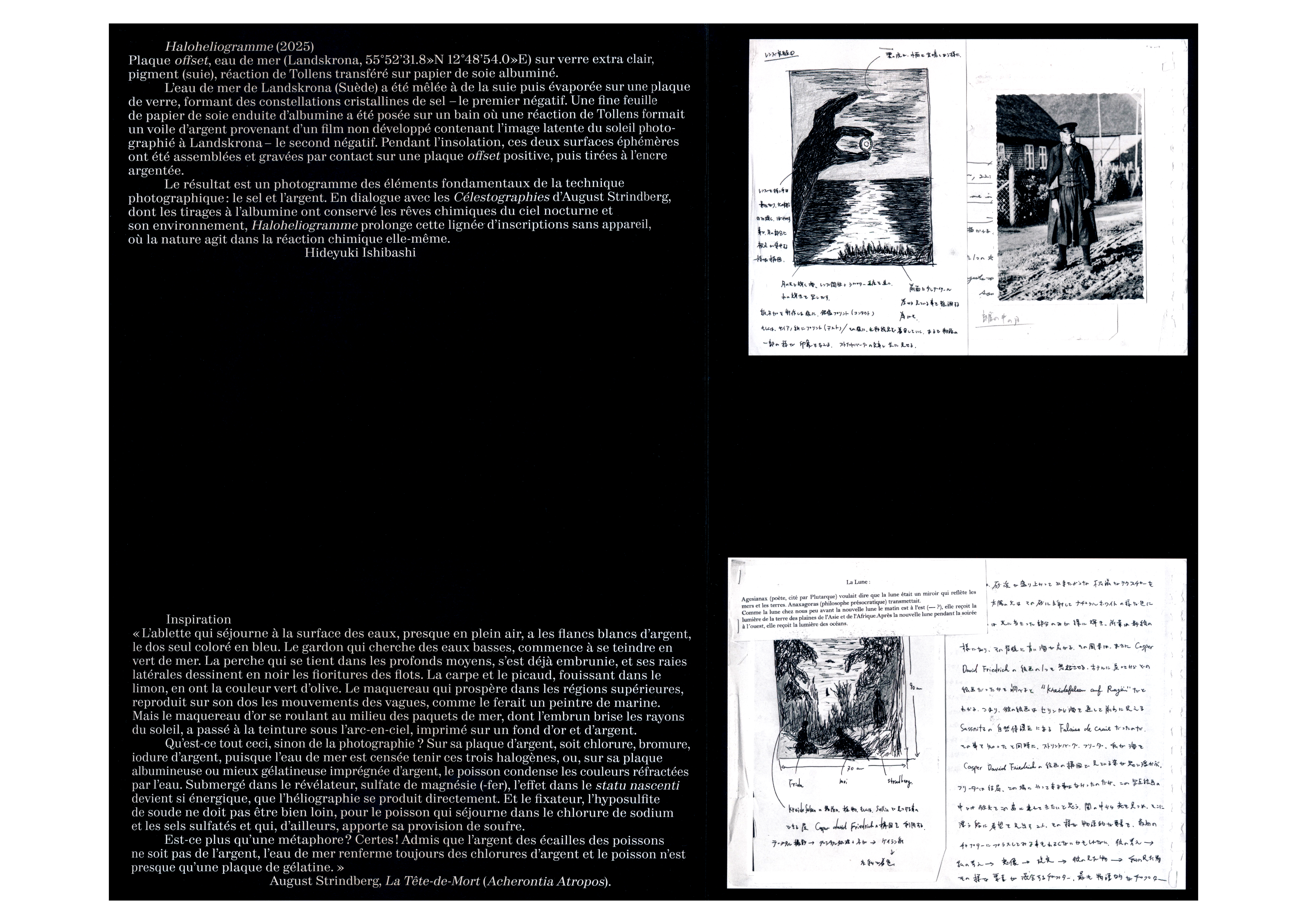
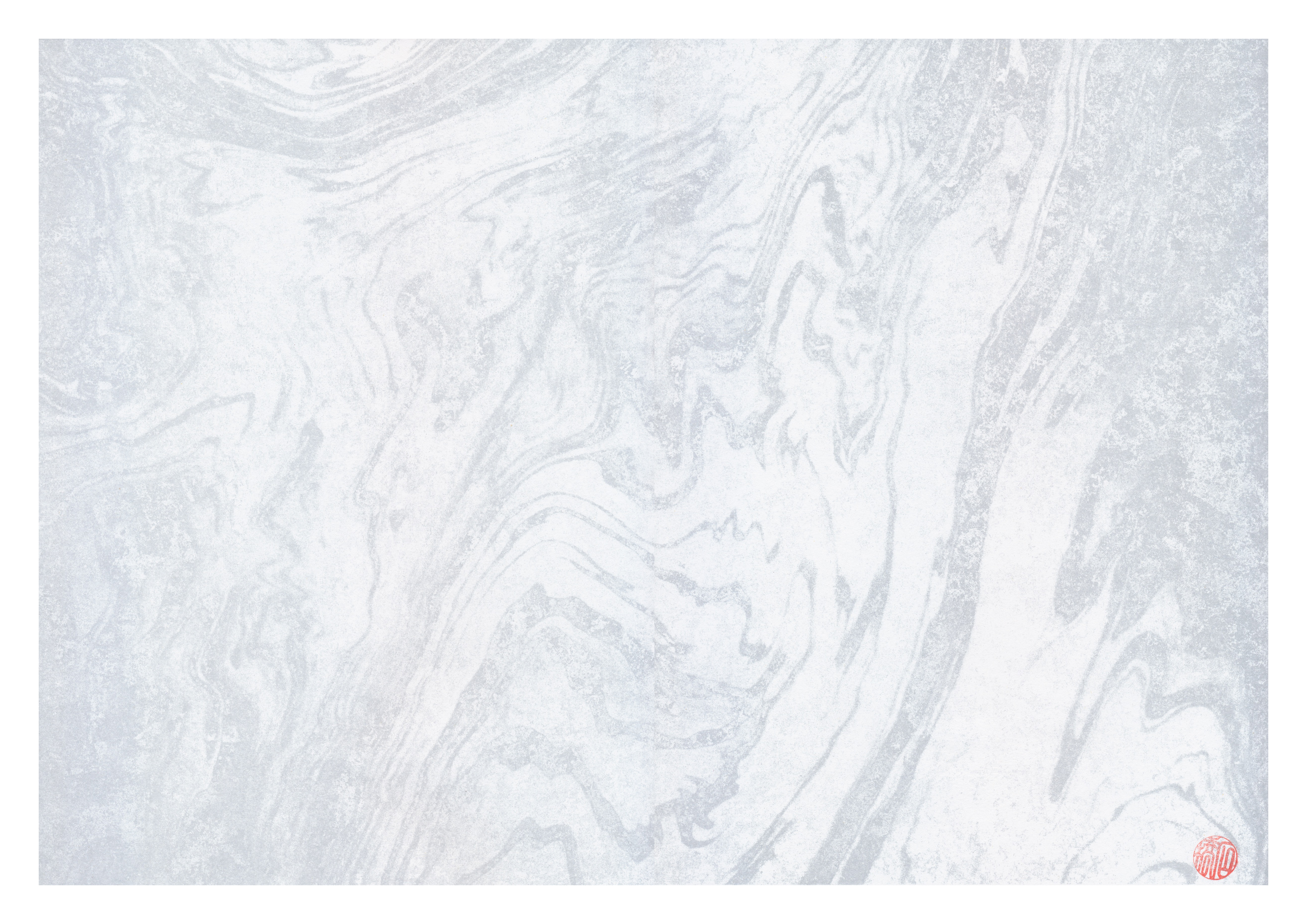
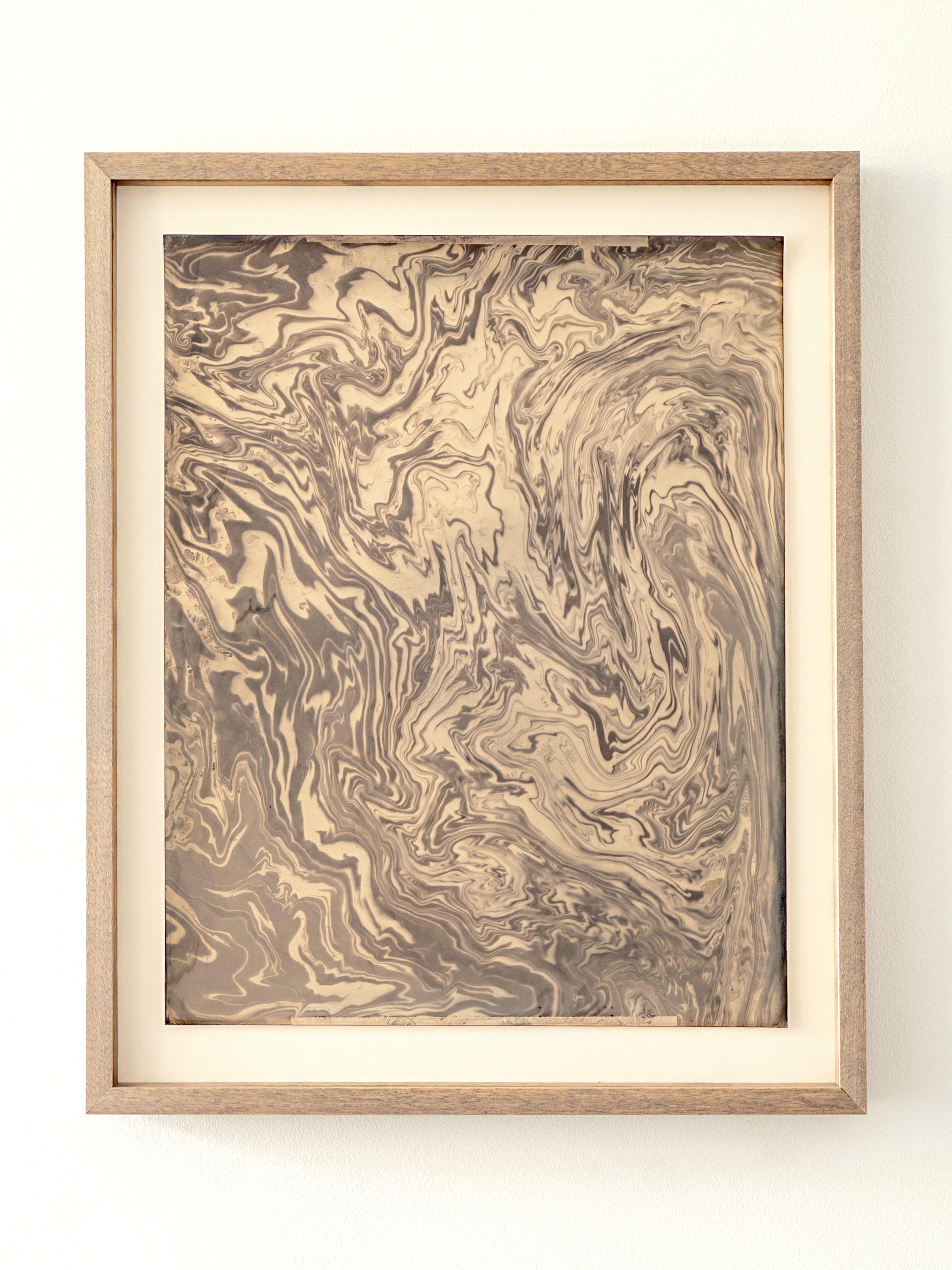
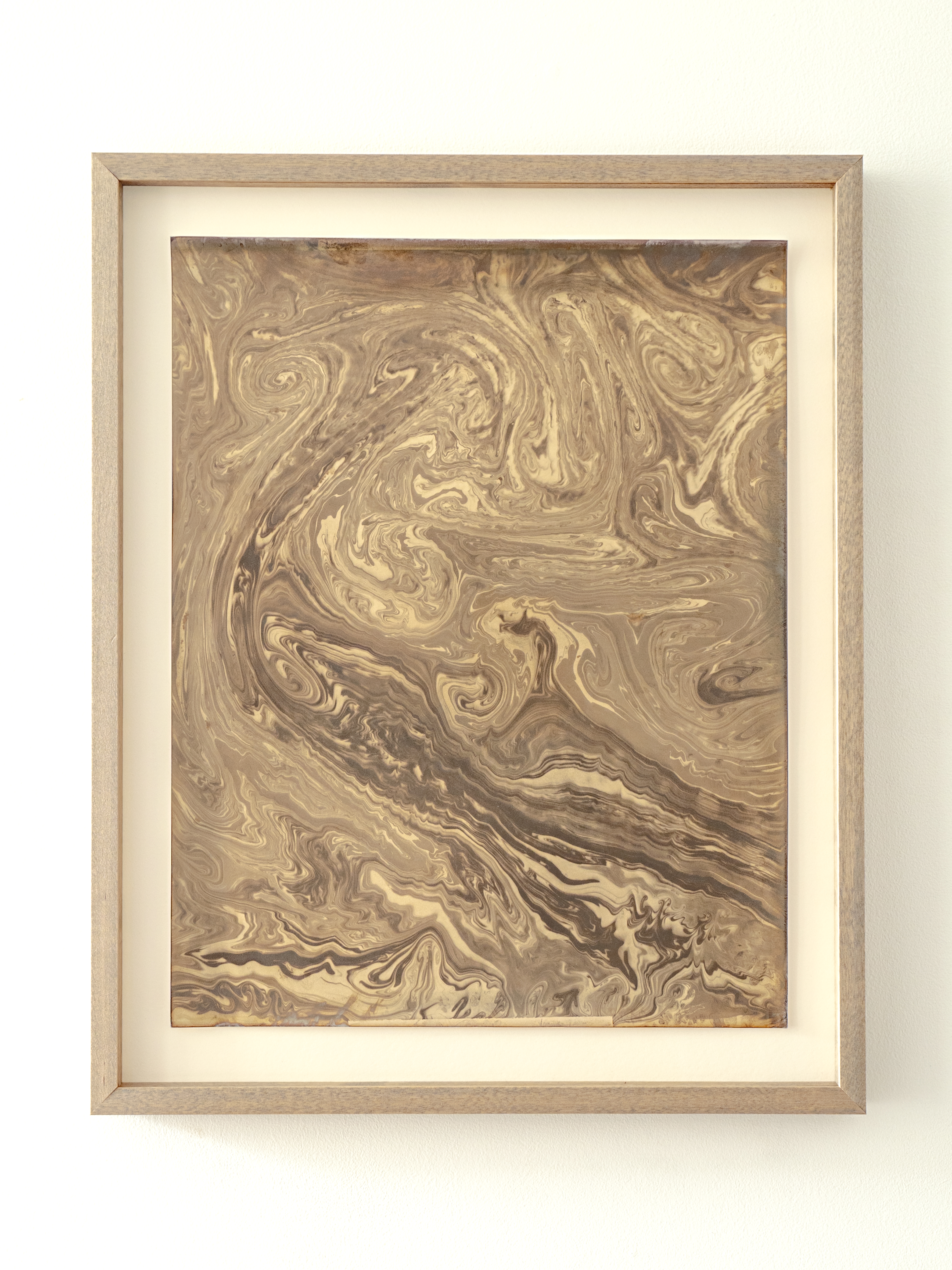
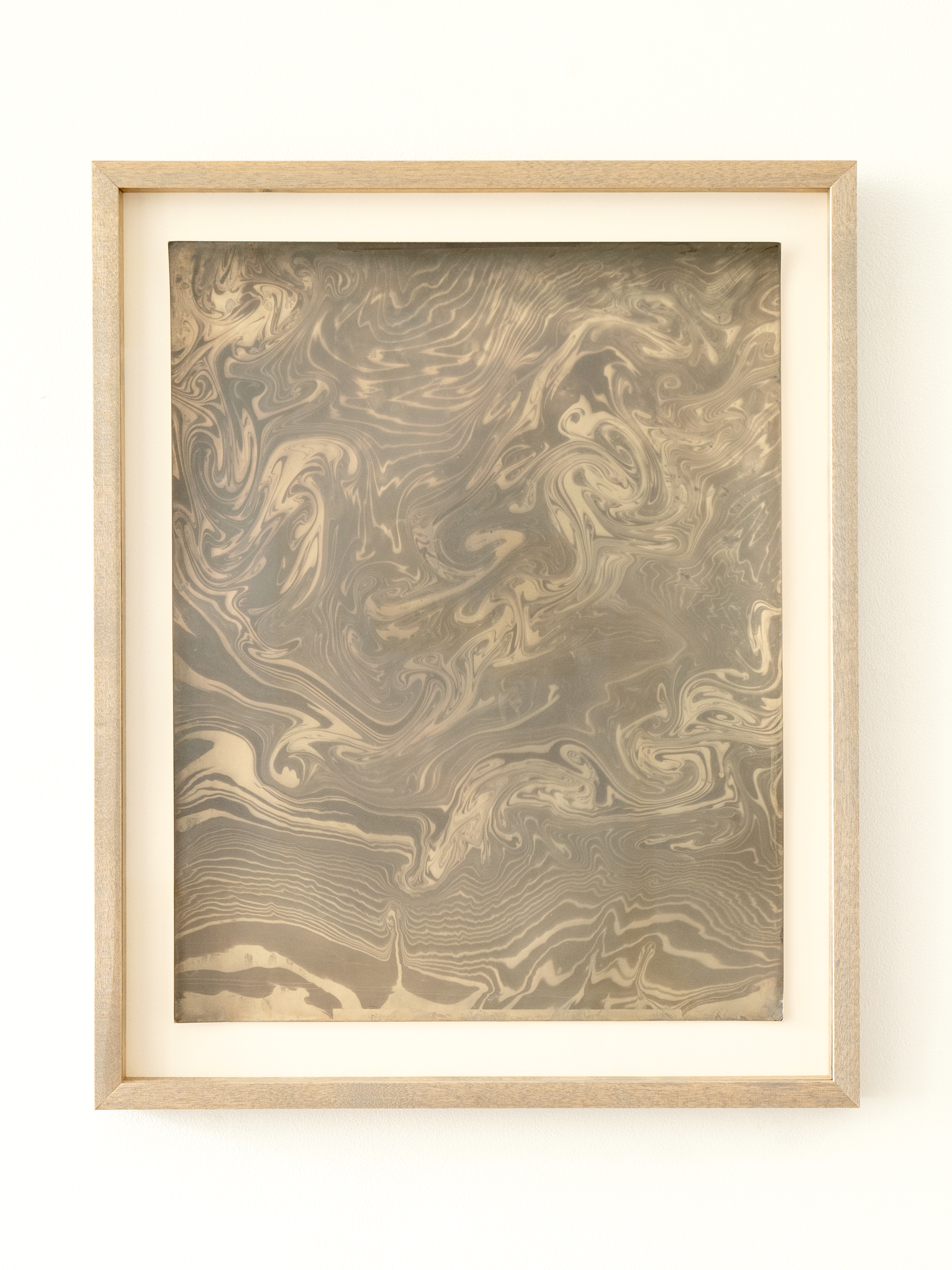
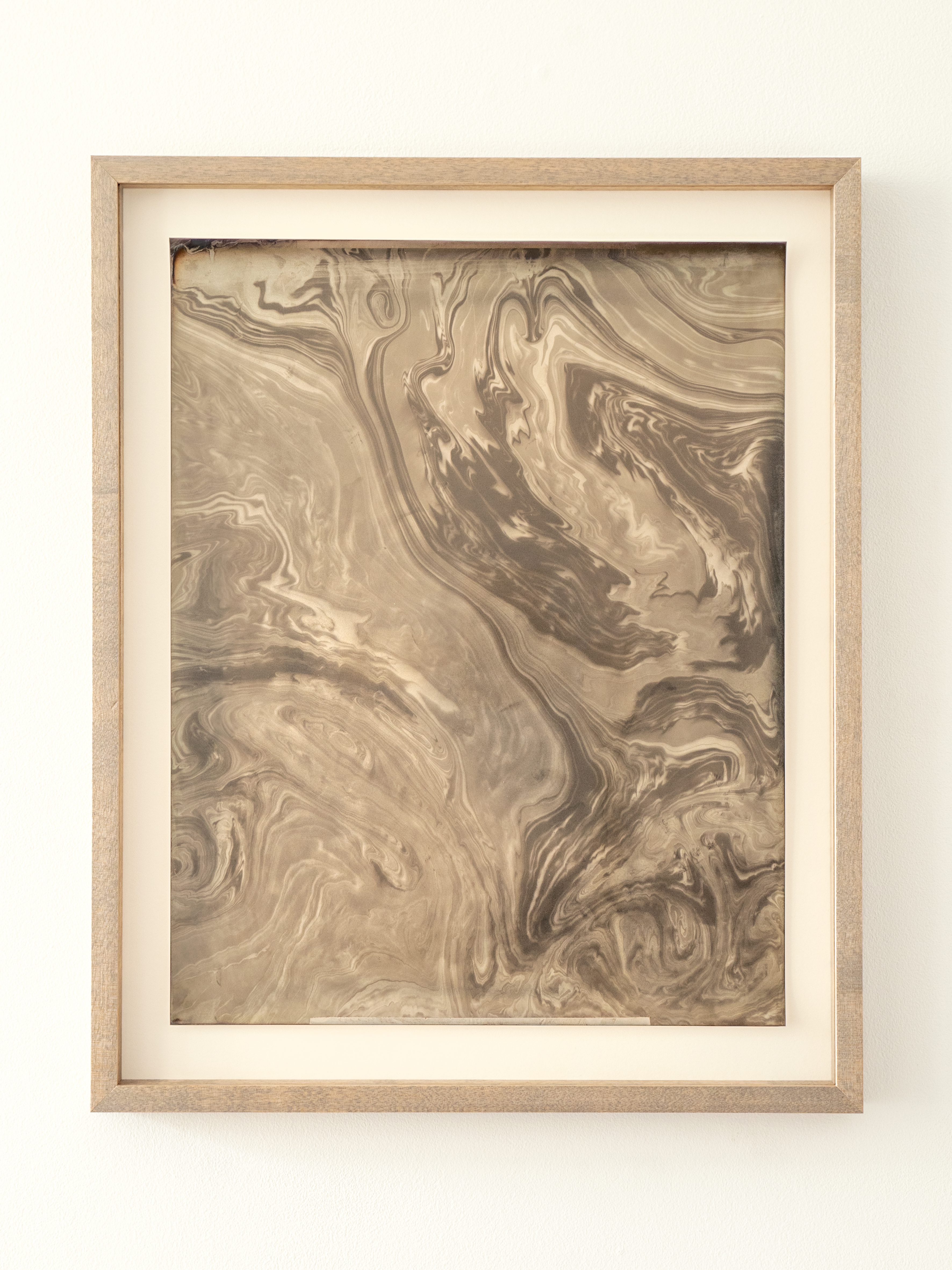
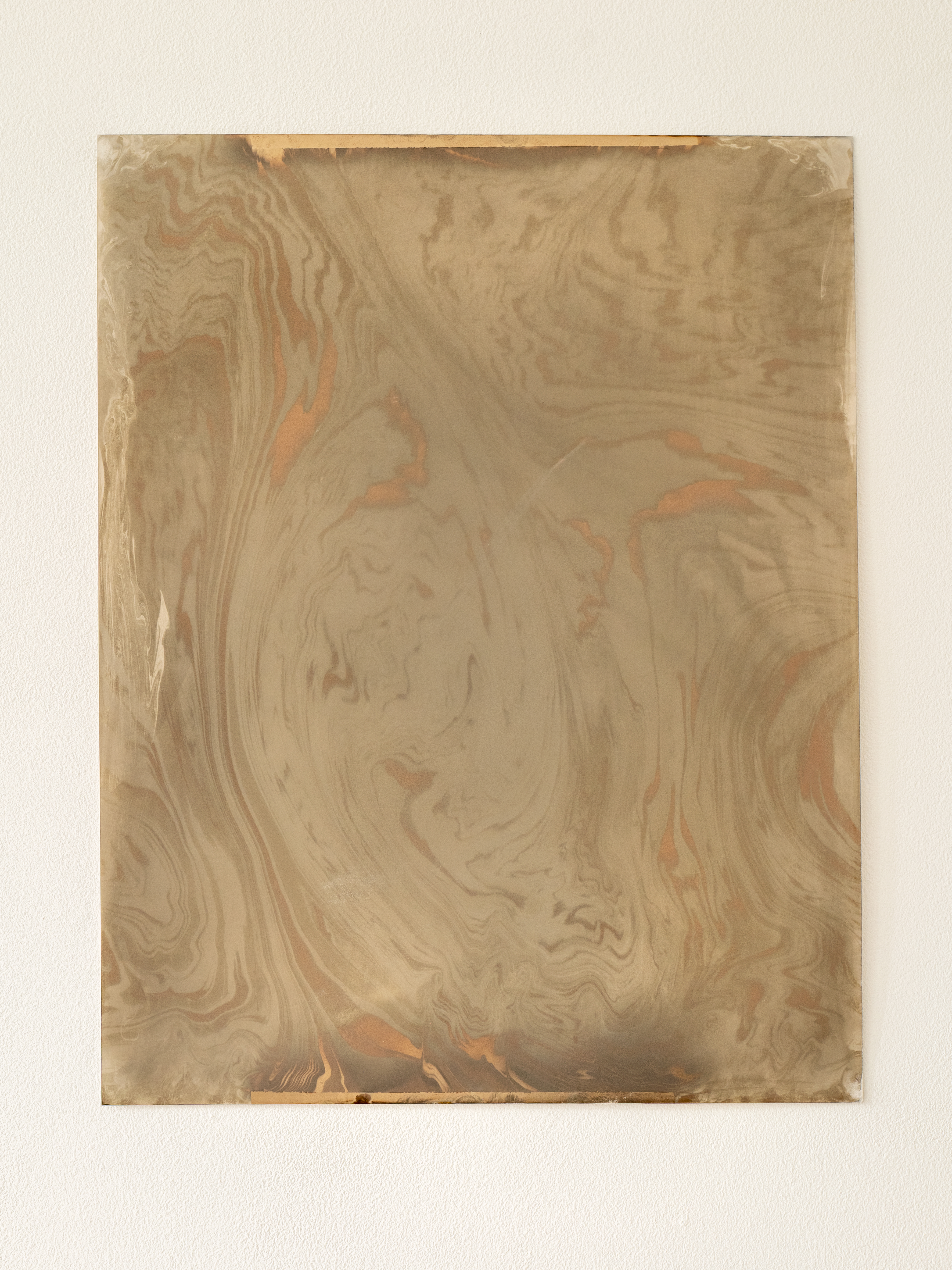
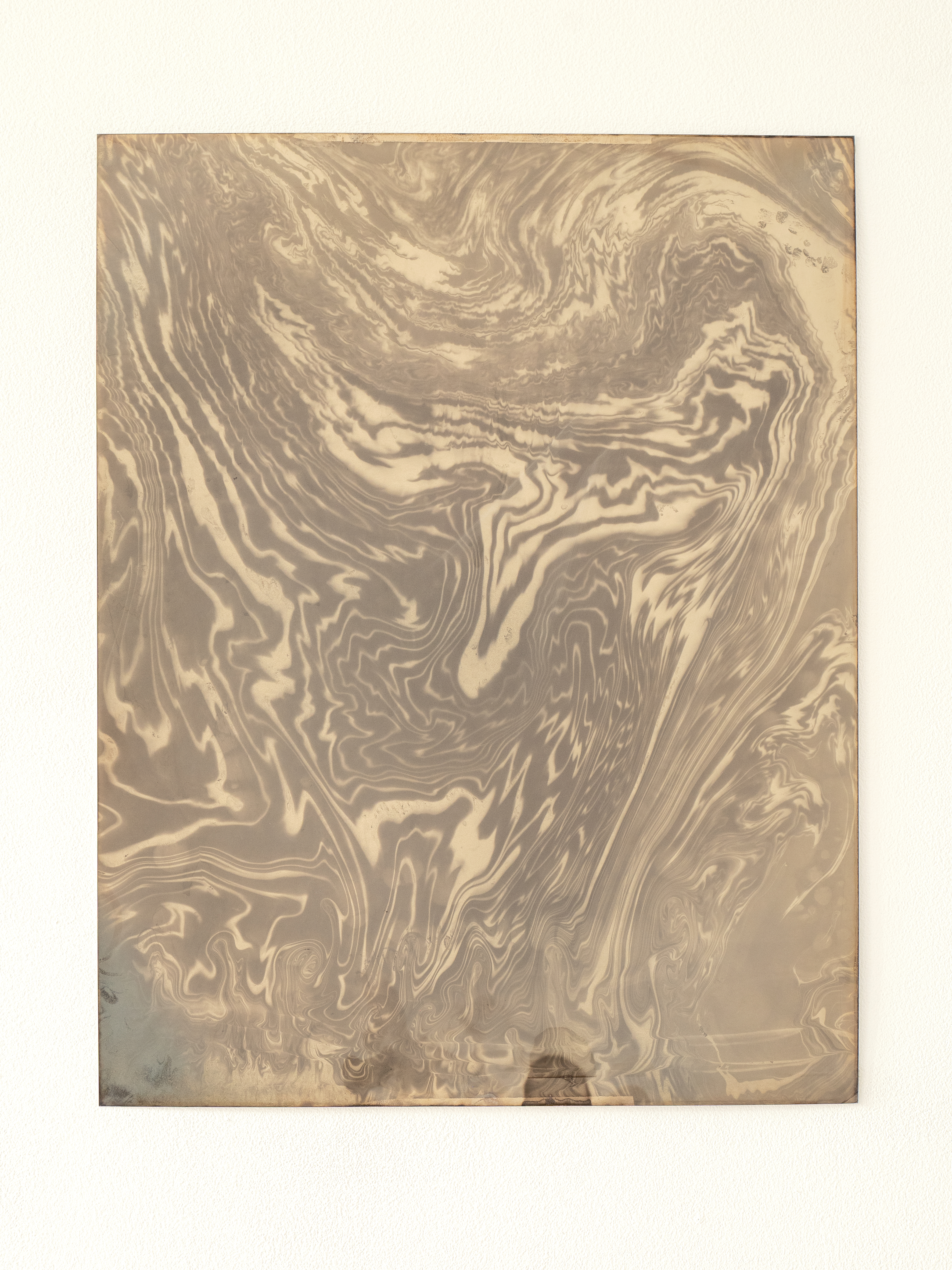
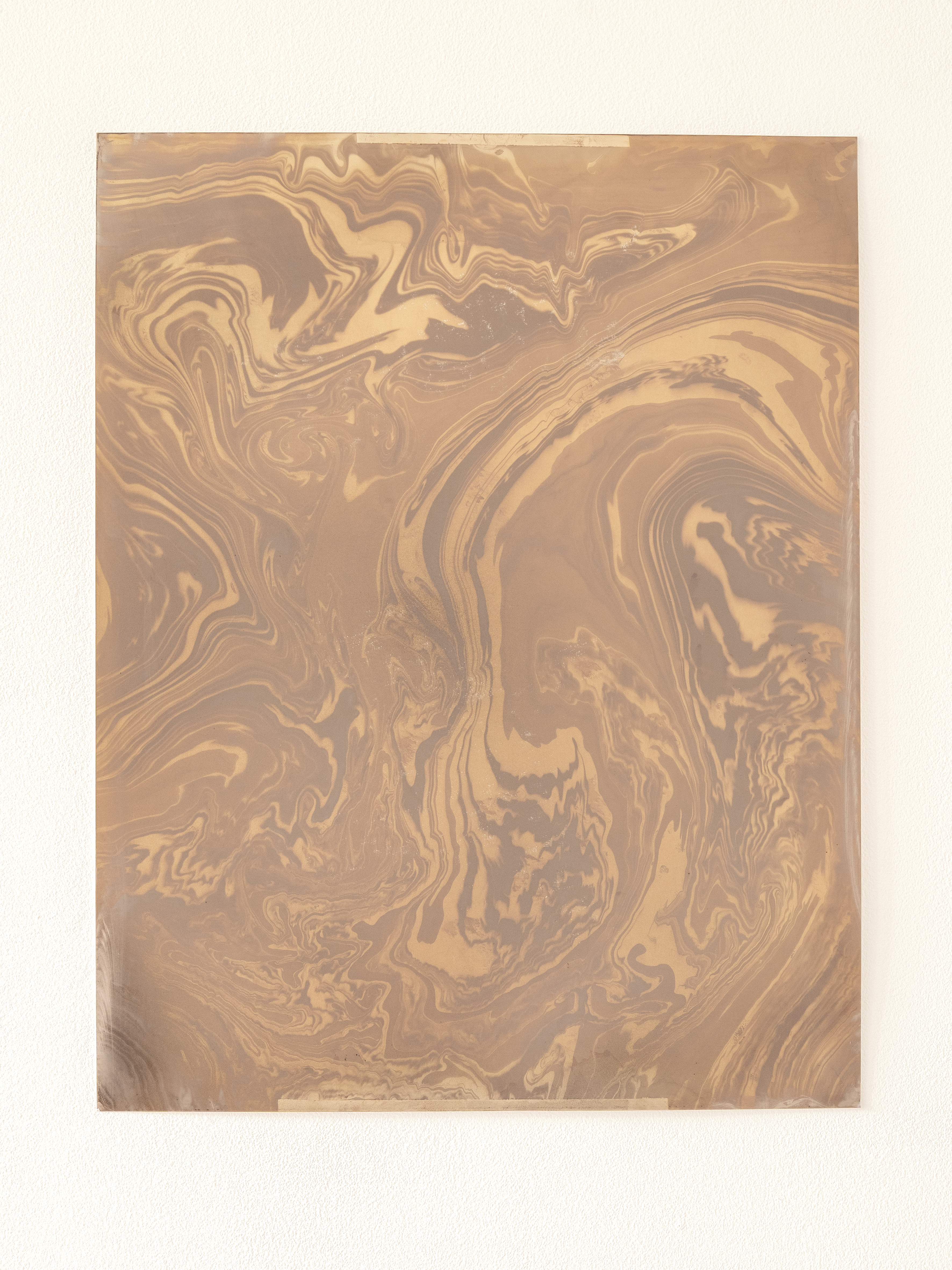
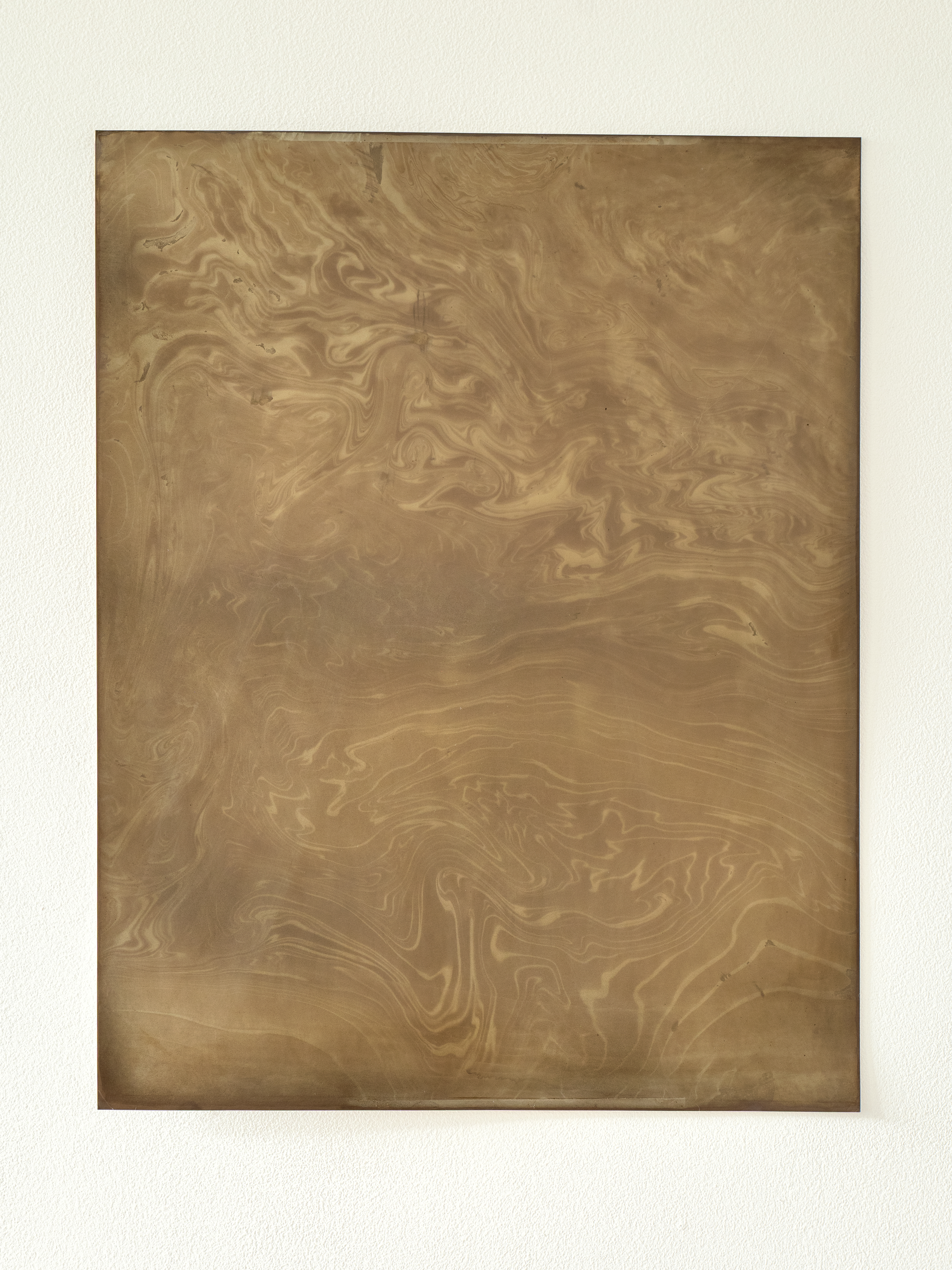
Inspired by this idea, and by the Japanese marbling technique Suminagashi, I began to think of photography as a space where nature, through chemical reaction, could act on its own — through light and chance. This approach is also an homage to Strindberg’s prophetic text The New Arts! or The Role of Chance in Artistic Creation, published in 1894.
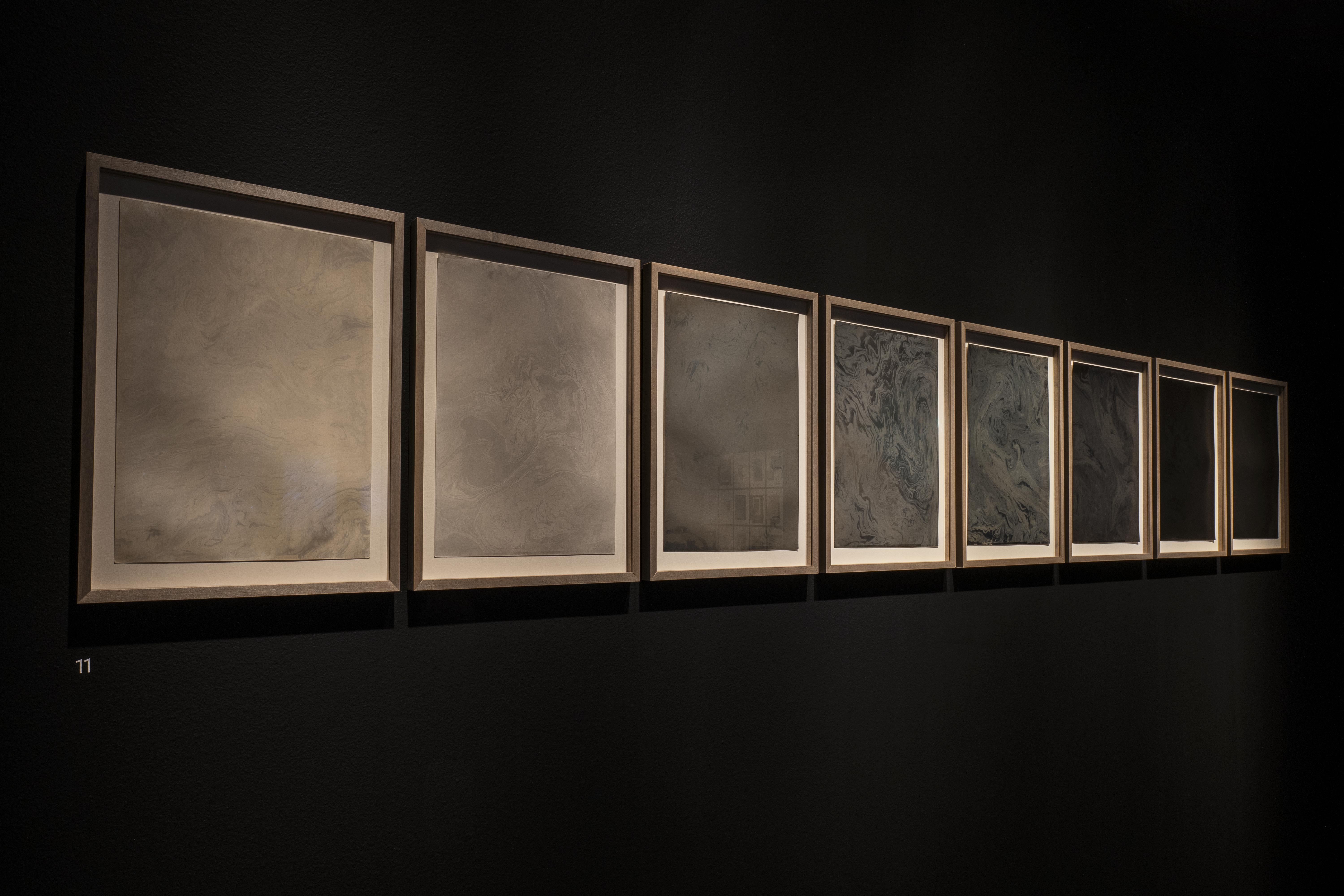
During my research travels in 2022, I photographed the sun in each city I visited. Instead of developing these images conventionally, I transformed their material basis: the silver bromide in the film was converted into liquid silver, leaving the image of the sun latent — present, but unseen.
Onto this invisible foundation, I applied Tollens’ reagent, allowing silver to form mirrored patterns on the surface of thickened water. These reactions were then transferred onto photographic paper and developed using a Chromoskedasic Sabattier process, producing unstable metallic tones.
The variations in each image are shaped by external conditions: the intensity of ultraviolet light in each location, and the freshness of the developer. Each work thus becomes a record of time, place, and process.
The images remain unfixed. Oxidation continues during the exhibition: black spots emerge, and colors slowly shift. The work thus becomes a living process: the photograph does not merely depict nature, but becomes nature itself.
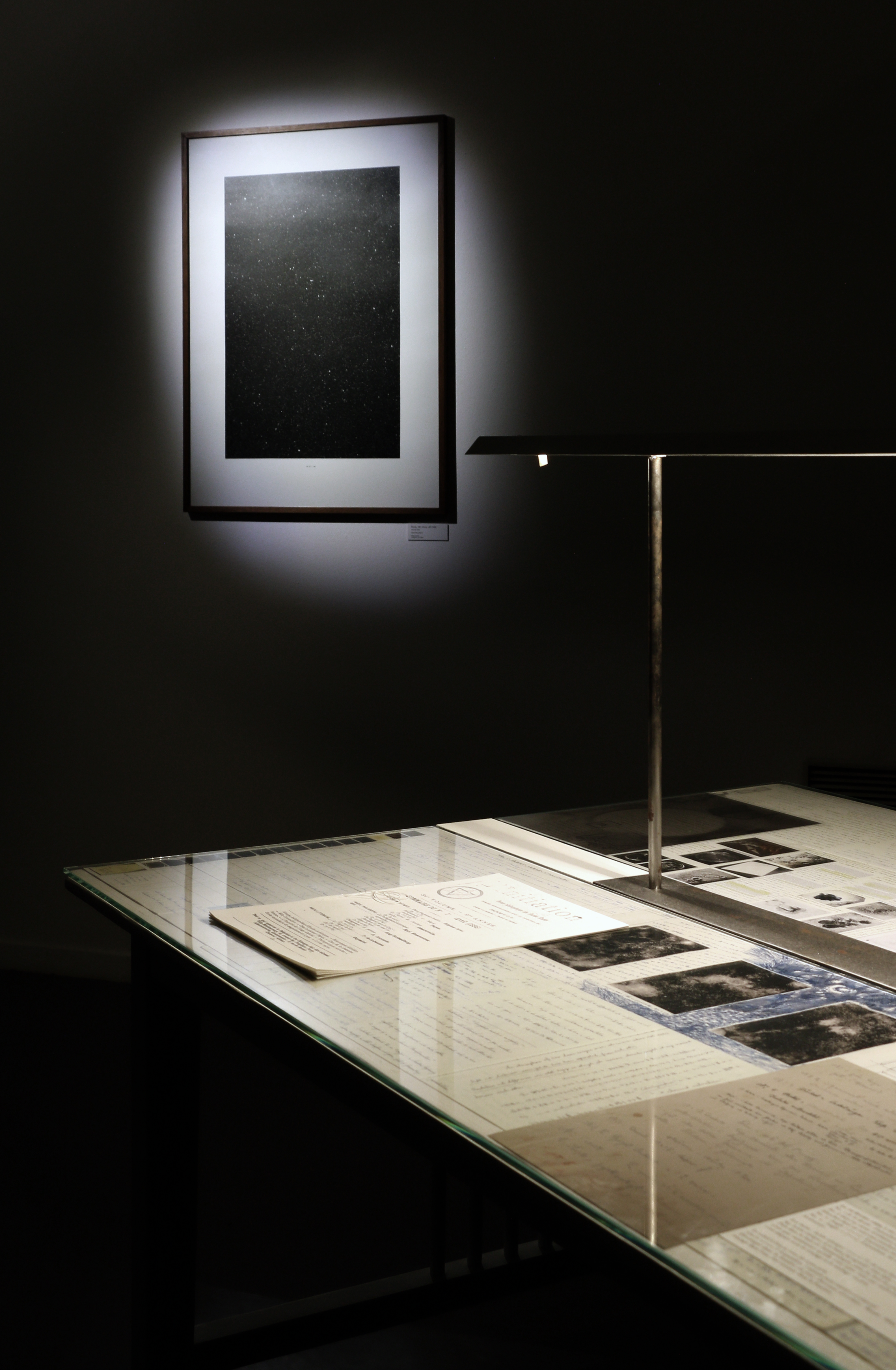
10. Stars
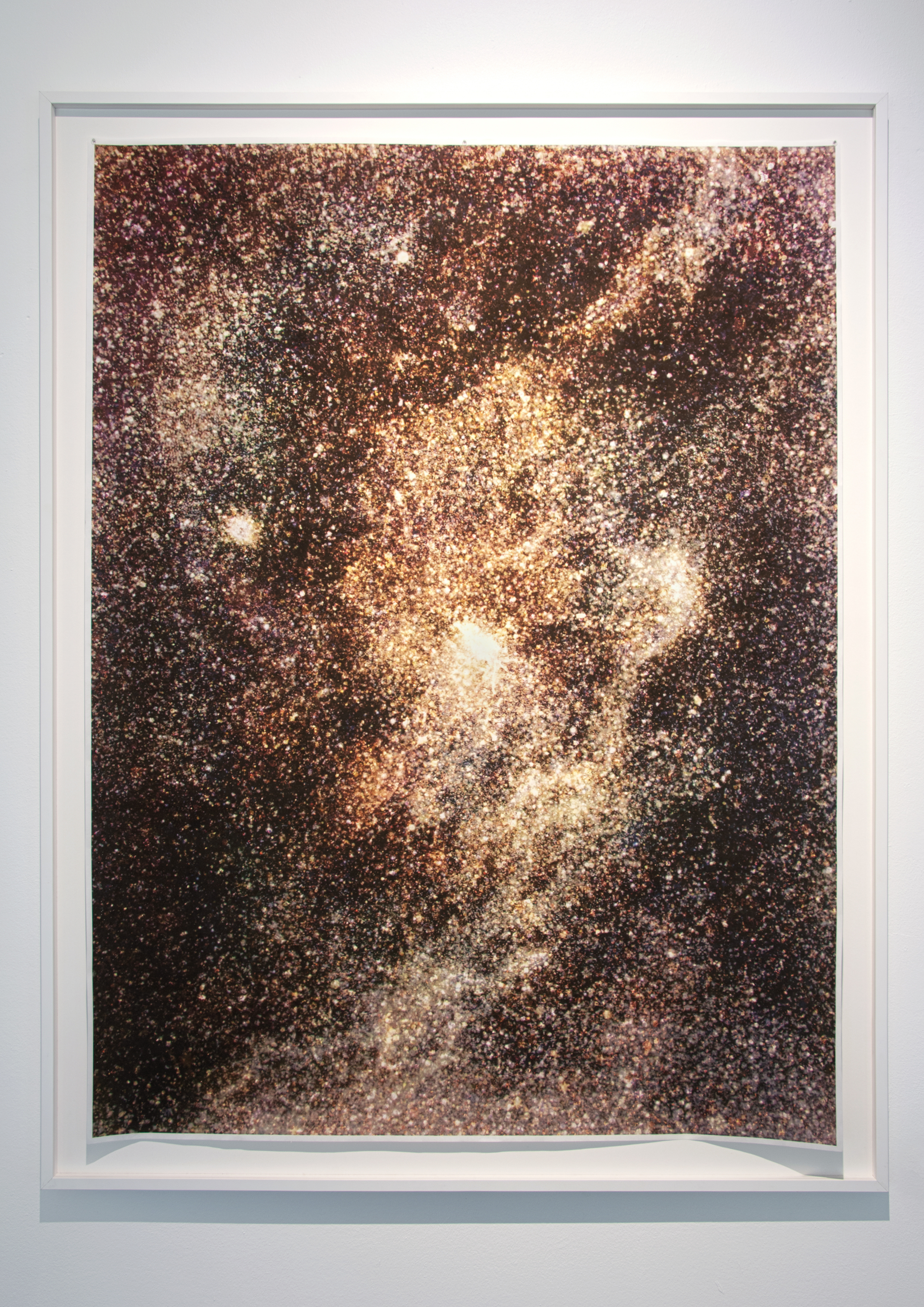
In the early 1890s, August Strindberg became fascinated by the idea that the universe might be shaped like an egg — a living shell pierced with openings through which starlight could pass. This vision came from Ein neues Weltall: Astro-Embryologie (1892) by K. G. Dobler, a curious hybrid of astronomy and embryology that deeply influenced him. Strindberg encountered this book through his close friend Edvard Munch during their time together in Berlin, where both artists were exploring experimental paths between art and science.
Strindberg and Munch shared a concern for vision and the unseen. Less widely known is that Munch worked closely with photography, using it as a tool for distortion, repetition, and psychological exploration. Strindberg, meanwhile, grew increasingly skeptical of lenses and cameras as claims to truth, leading him to develop Celestography.
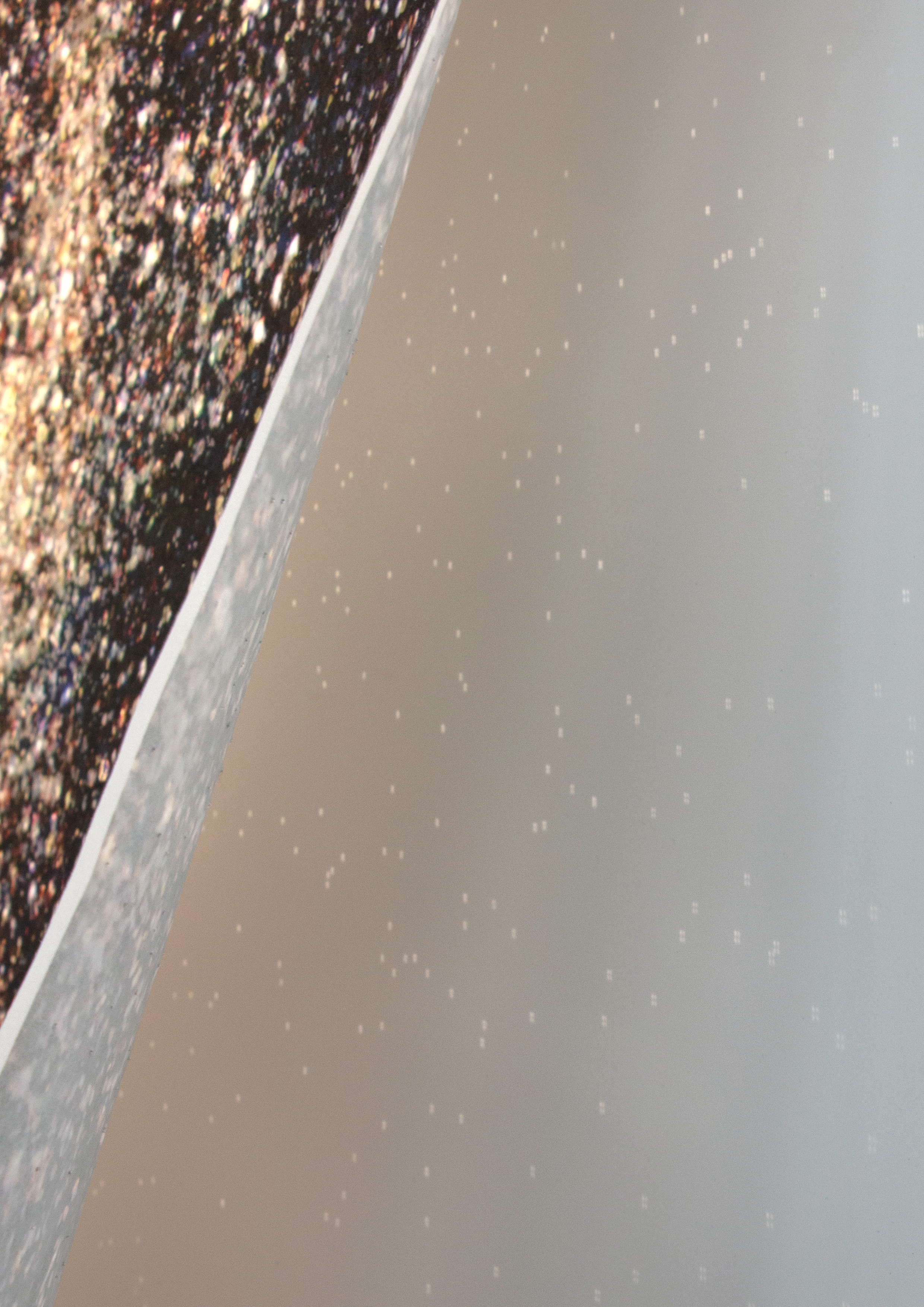
While studying Strindberg’s manuscripts in the archives, I noticed tiny perforations in the paper. At first, I did not know what they were. Only when I held the page against the light did the pattern reveal itself: constellations traced with a needle, including Orion. In that moment, it felt as though the boundary of time dissolved — as if I were seeing what Strindberg had once seen, crossing more than a century through the smallest of marks.
In Stars, I continue this gesture.
The image is composed of one hundred astronomical illustrations and photographs published before 1894, superimposed into a single layered surface and printed on thin Japanese paper, reminiscent of Strindberg’s manuscript paper from Lessebo.
Using the exact date of his pierced page — 14 February 1894 — I reconstructed the sky he would have seen using astronomical software, and pierced the same constellations with a needle, extending the drawing he had begun.
From the front, the work appears as a dense nineteenth-century star map. From behind, light passes through the punctures, projecting constellations into space — a collaboration across time.
3rd Letter: Simulacrum
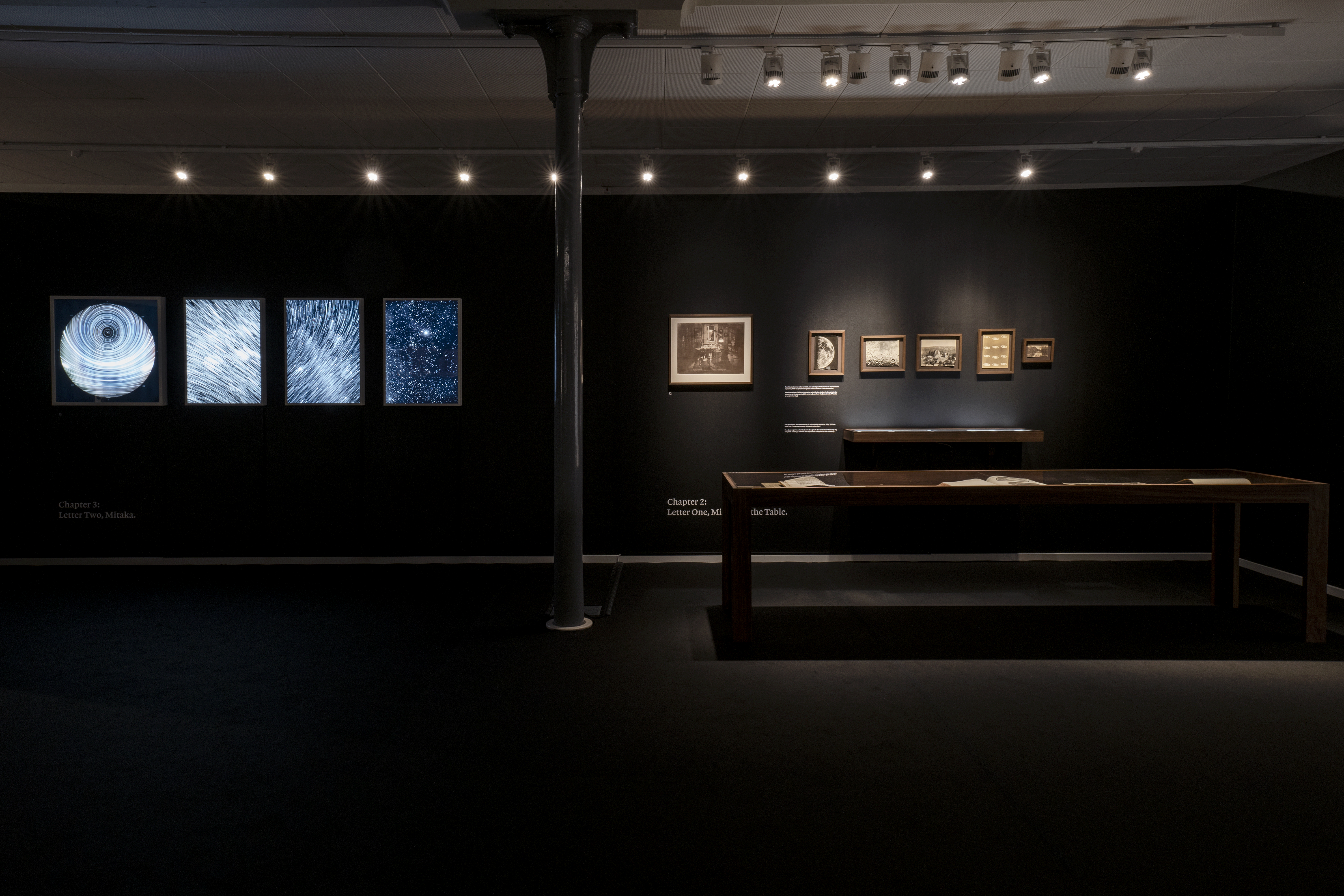
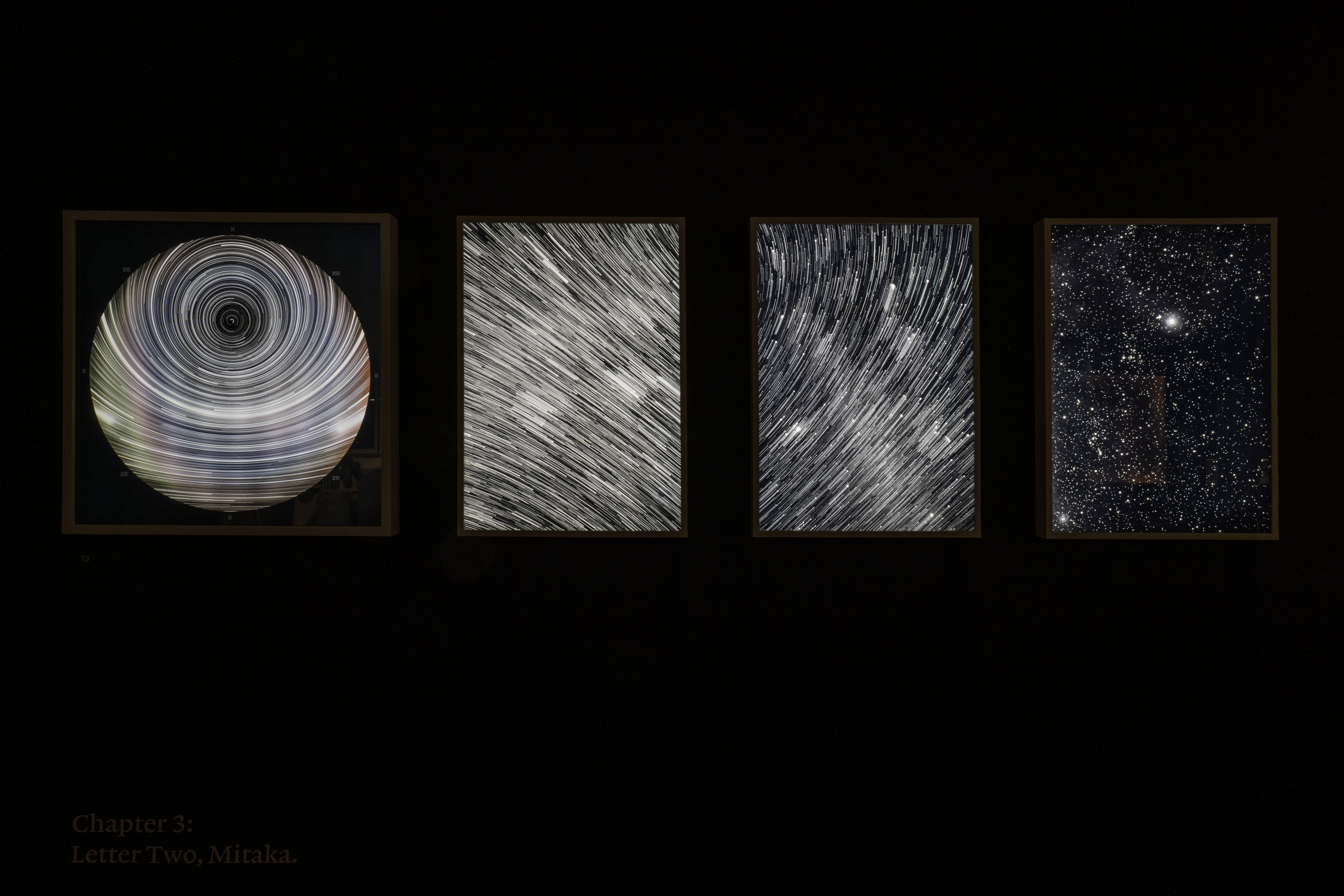
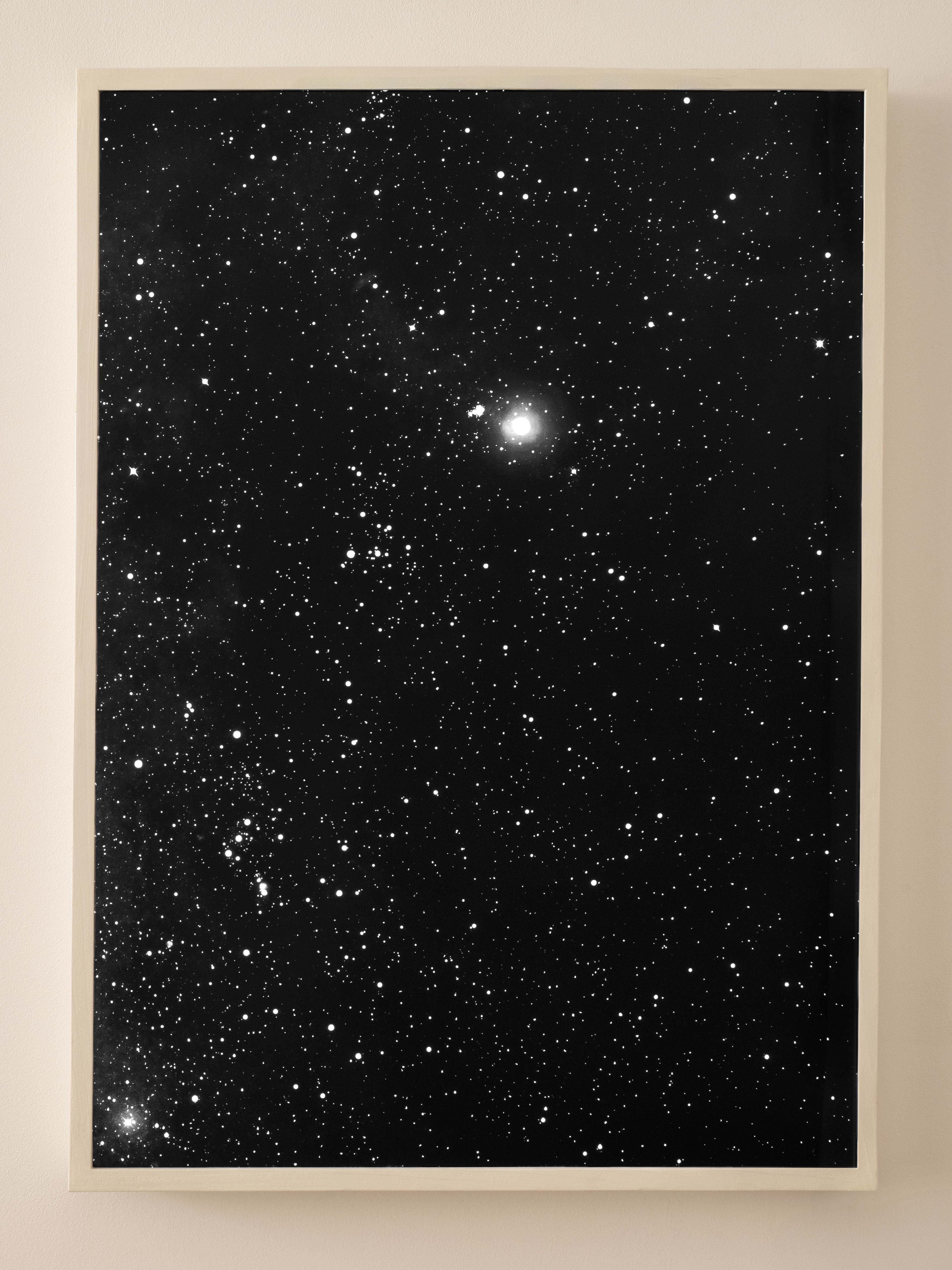
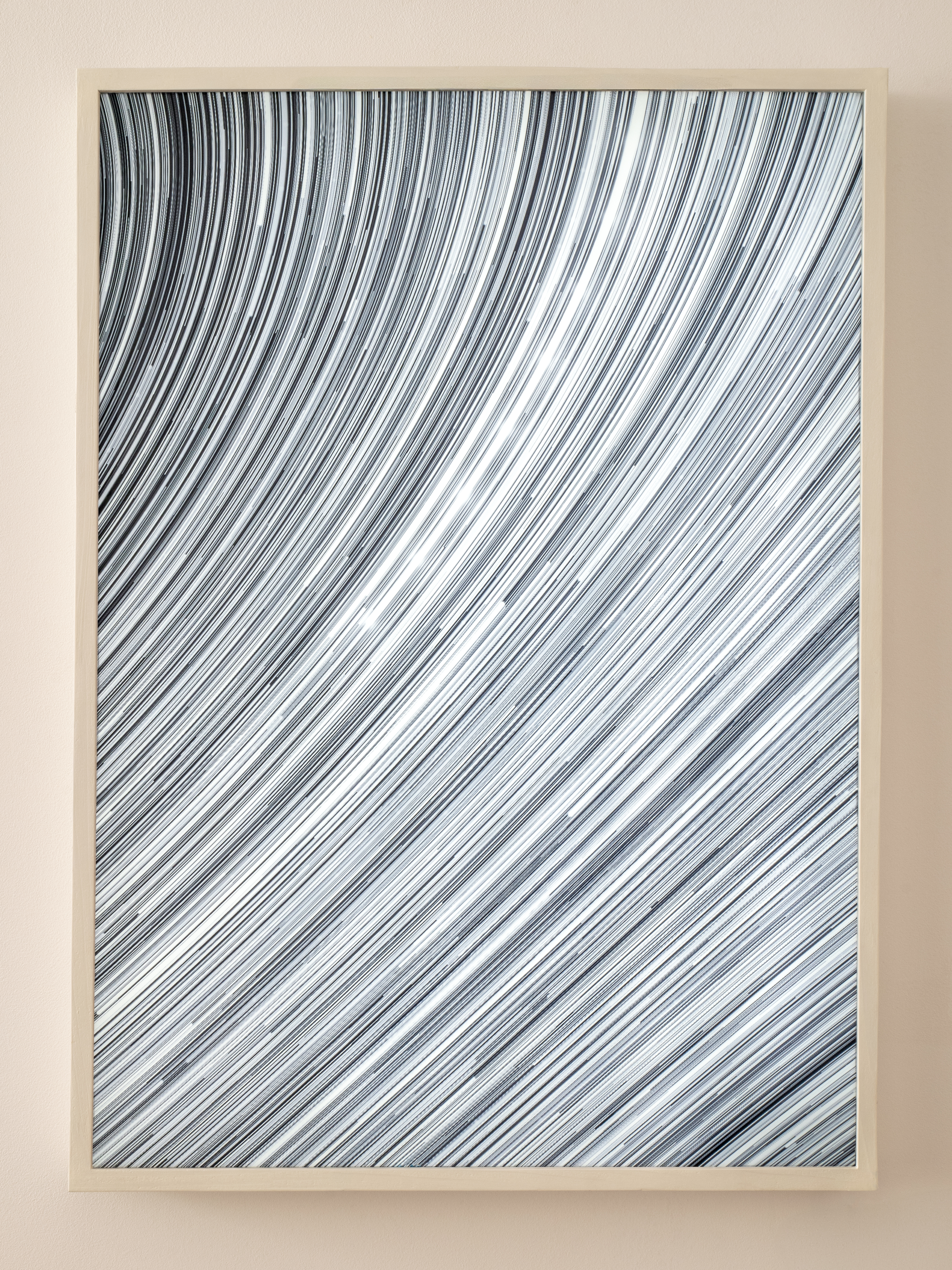
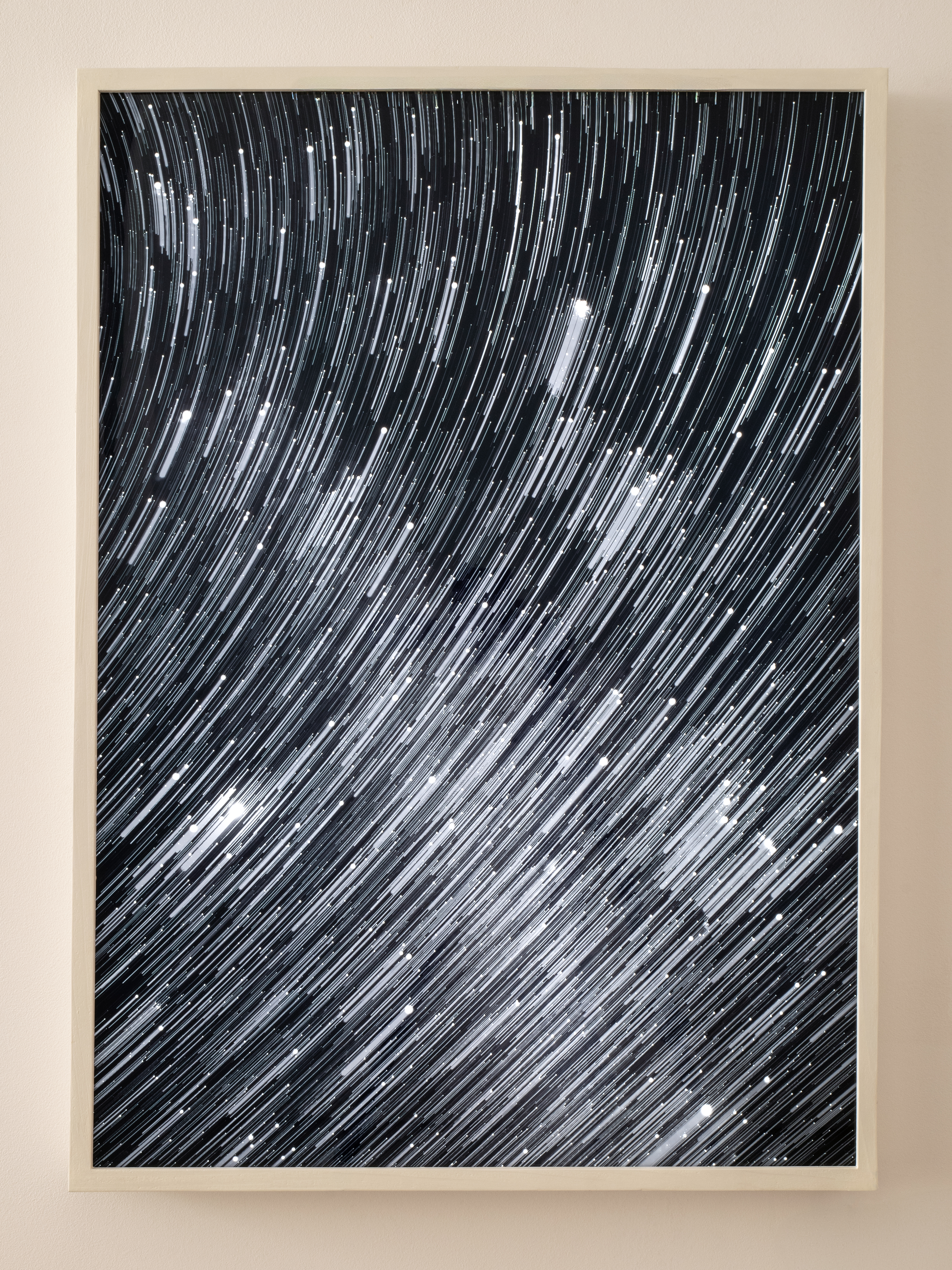
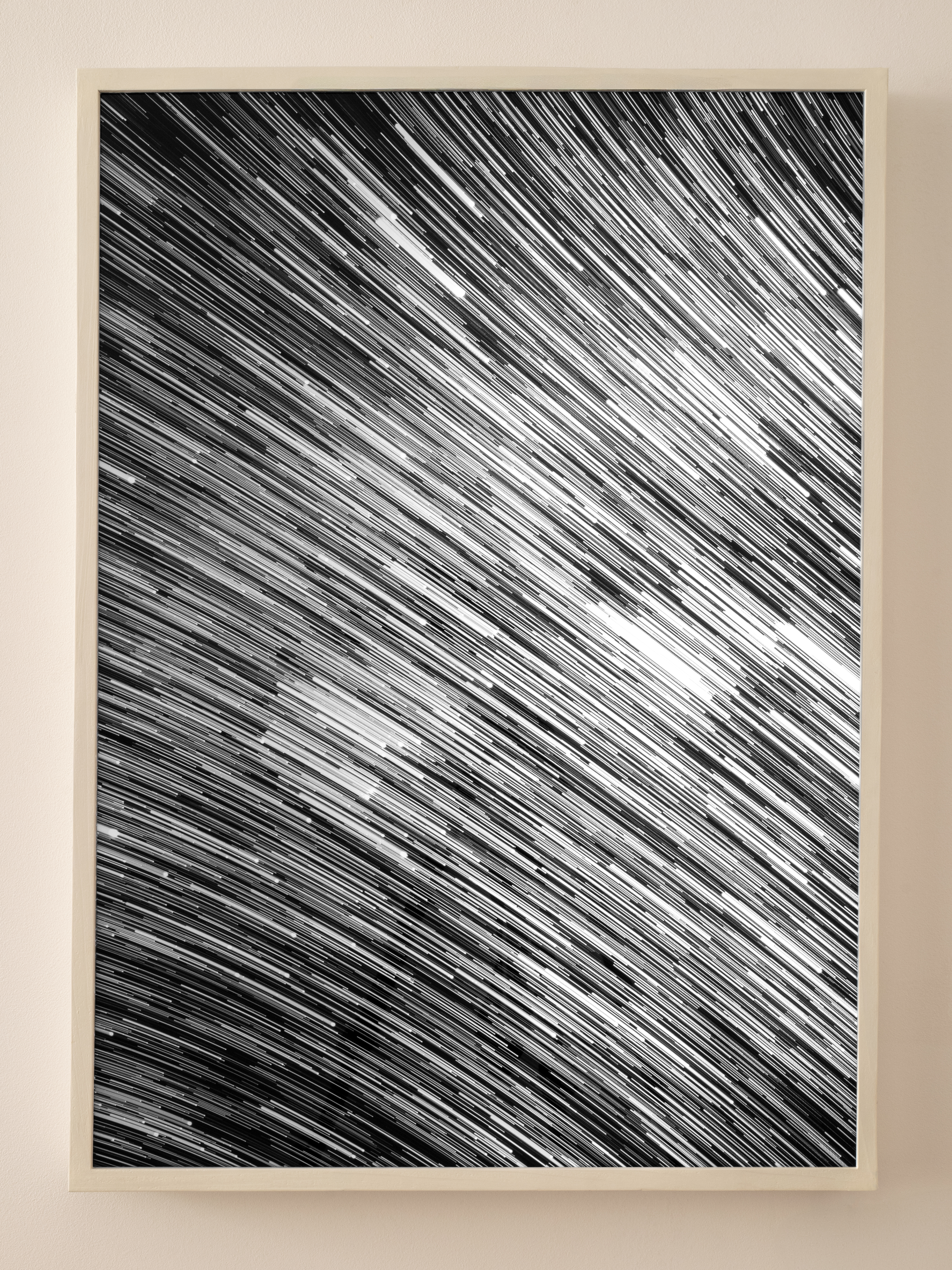
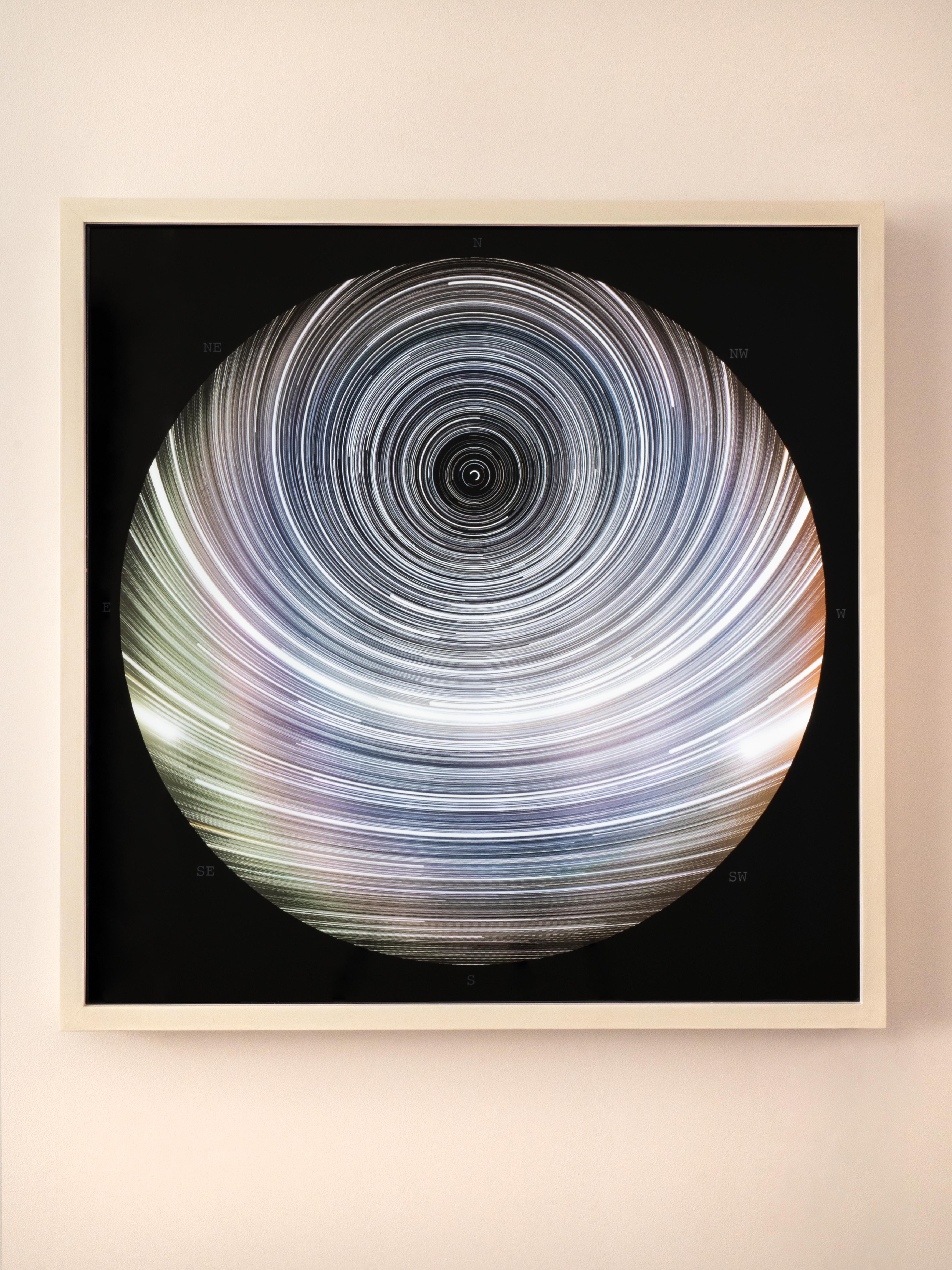
This chapter begins with a simple question: what might the sky have looked like when August Strindberg created his Celestographs?
In attempting to retrace the conditions of these experiments, I examined both his published writings and unpublished notes in order to determine the possible dates and moments during which they took place. Using astronomical software developed at the National Astronomical Observatory of Japan in Japan, I reconstructed the positions and movements of the stars, the moon, and the sun above Dornach Castle between December 1893 and February 1894.
These reconstructions suggest what the sky might have looked like if it had been captured through a precise optical system. Yet even with exact calculations, reconstruction can never fully restore what was actually seen. Within this fragile space between precision and uncertainty, a question of authenticity emerges.
To produce these images, I photographed the computer screen directly using a 4 × 5 inch large-format camera. The image, initially generated as a digital positive, is translated into a silver gelatin negative. During this process, the material properties of the film and its development alter and diminish part of the recorded information. The negative is then digitized and printed as a positive on Fujitrans (Lambda print).
The images of the sky are presented in light boxes whose dimensions correspond to those of my computer screen. These reconstructions include stars that are no longer visible today because of light pollution.
Each stage — from virtual simulation to film, from negative to positive — introduces a distance. What appears in the light box is already no longer identical to what was visible on the screen. The closer the reconstruction attempts to approach reality, the further it moves from its origin.


4th Letter: Stardust
The original photographic plates of August Strindberg’s Celestographs have disappeared. Only fragments remain: digitized traces, notes, descriptions, and the writings of Frida Uhl. From these elements, I attempt to imagine what he may have seen on the original plates.
The Celestographs preserved in archives exist only through positive images, inaccessible because of their extreme fragility. Circulating online, they appear in multiple forms — resized, reframed, or contrast-adjusted — sometimes transformed to the point of resembling galaxies. The more one searches for the original image, the further it seems to recede. In the absence of direct access, the authenticity of these reproductions becomes unstable, oscillating between different interpretations.
What emerges from this research is a contrast between Strindberg’s precise descriptions — these dust-like imprints, compared to lunar surfaces or solar coronas — and Frida’s attempt to perceive what remains invisible, approached through belief.
It is within this uncertainty, and within this act of belief, that the work takes shape.
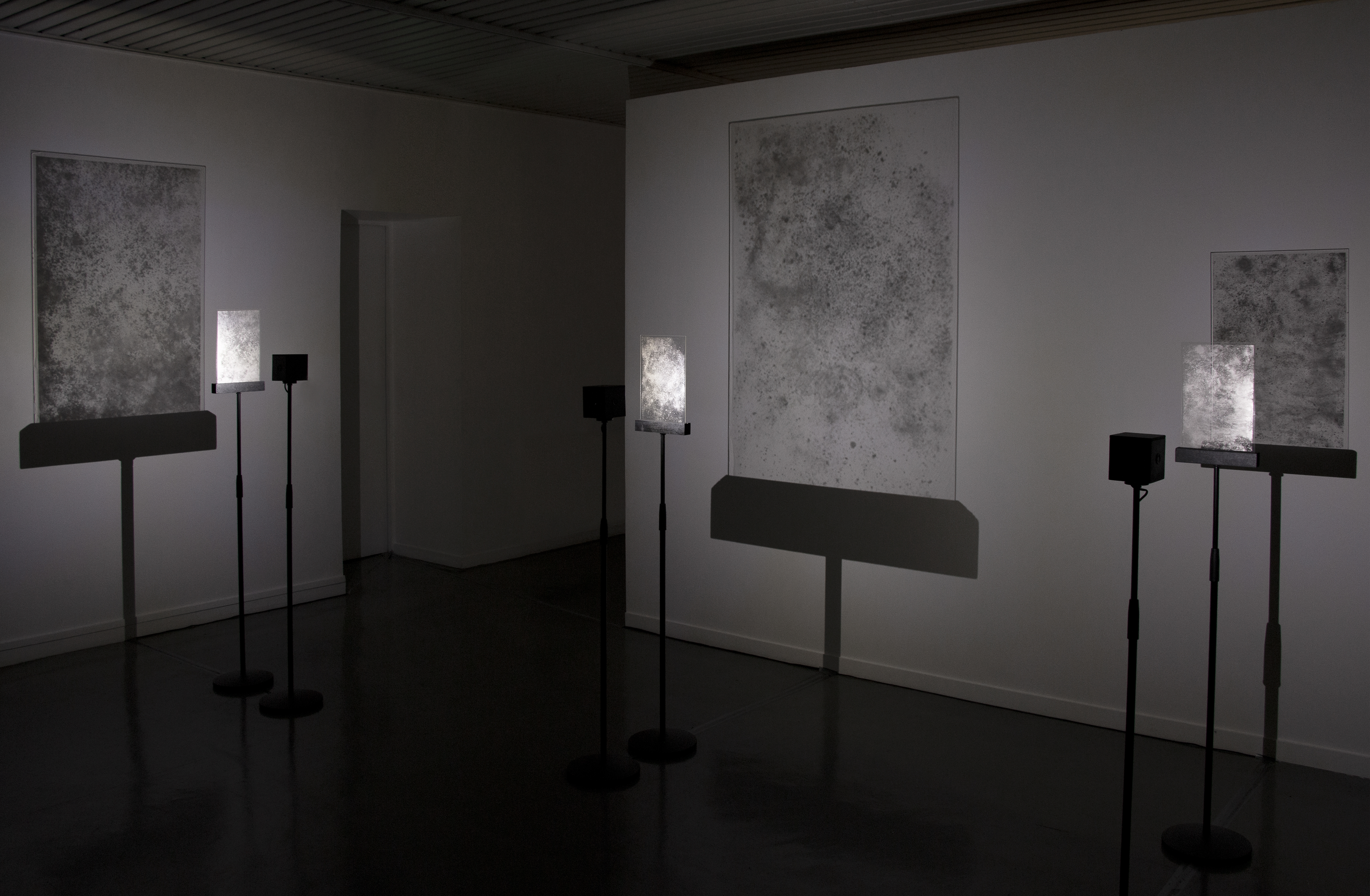
Each photogram is constructed from dust and chemical reactions, thereby extending the material logic of the Celestographs. Using the wet collodion process on glass — in which the developed image appears as a positive while projection restores it as a negative — these images are projected into the exhibition space. An LED light, activated by the movements of visitors through ultrasonic sensors, causes them to appear and disappear.
This unstable visibility echoes the condition of the Celestographs: never fully accessible, present only through imagination.
The image no longer belongs to its origin, but to the conditions through which it appears. What we see depends as much on belief as on the image itself.

5th Letter: Lumière
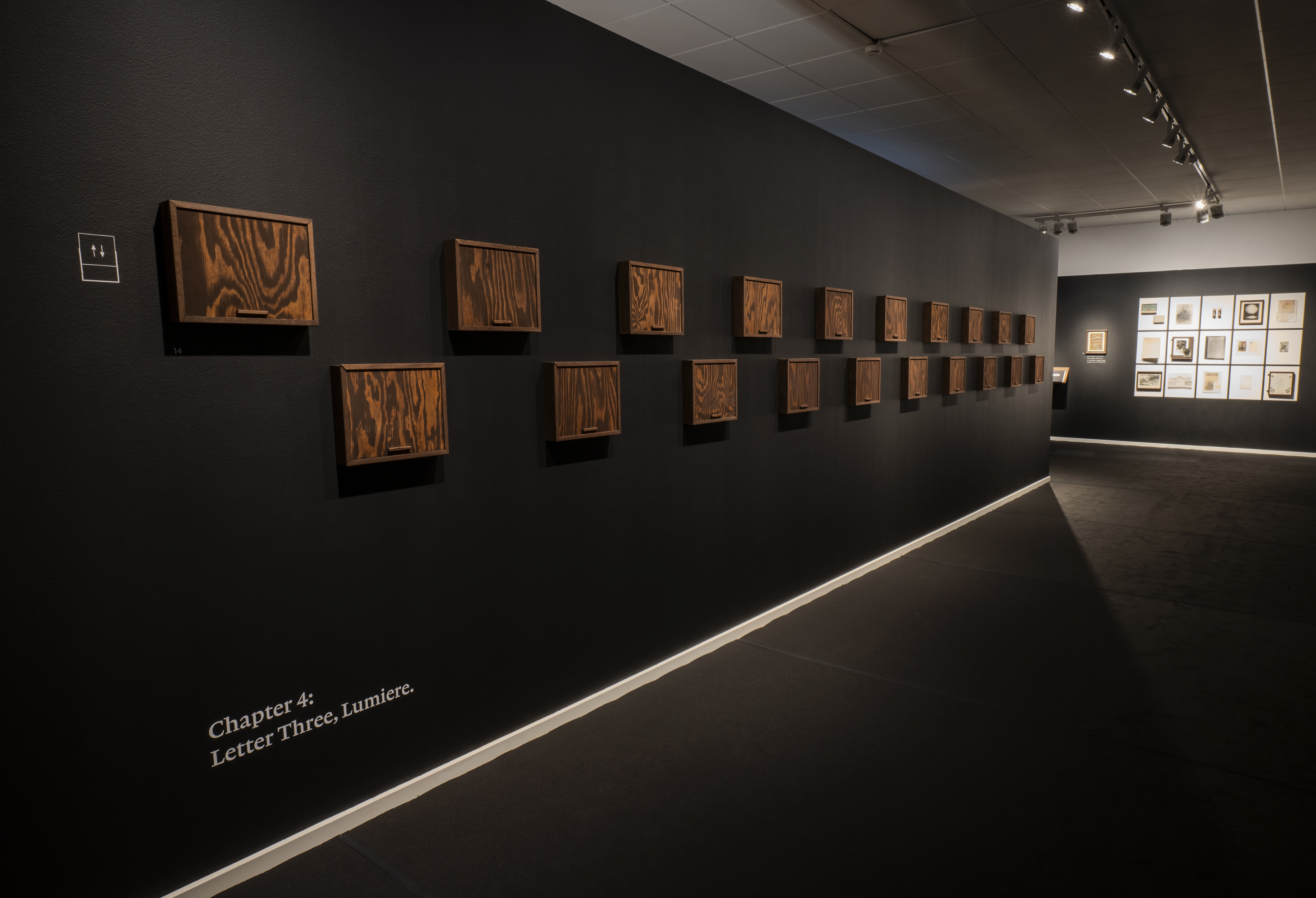
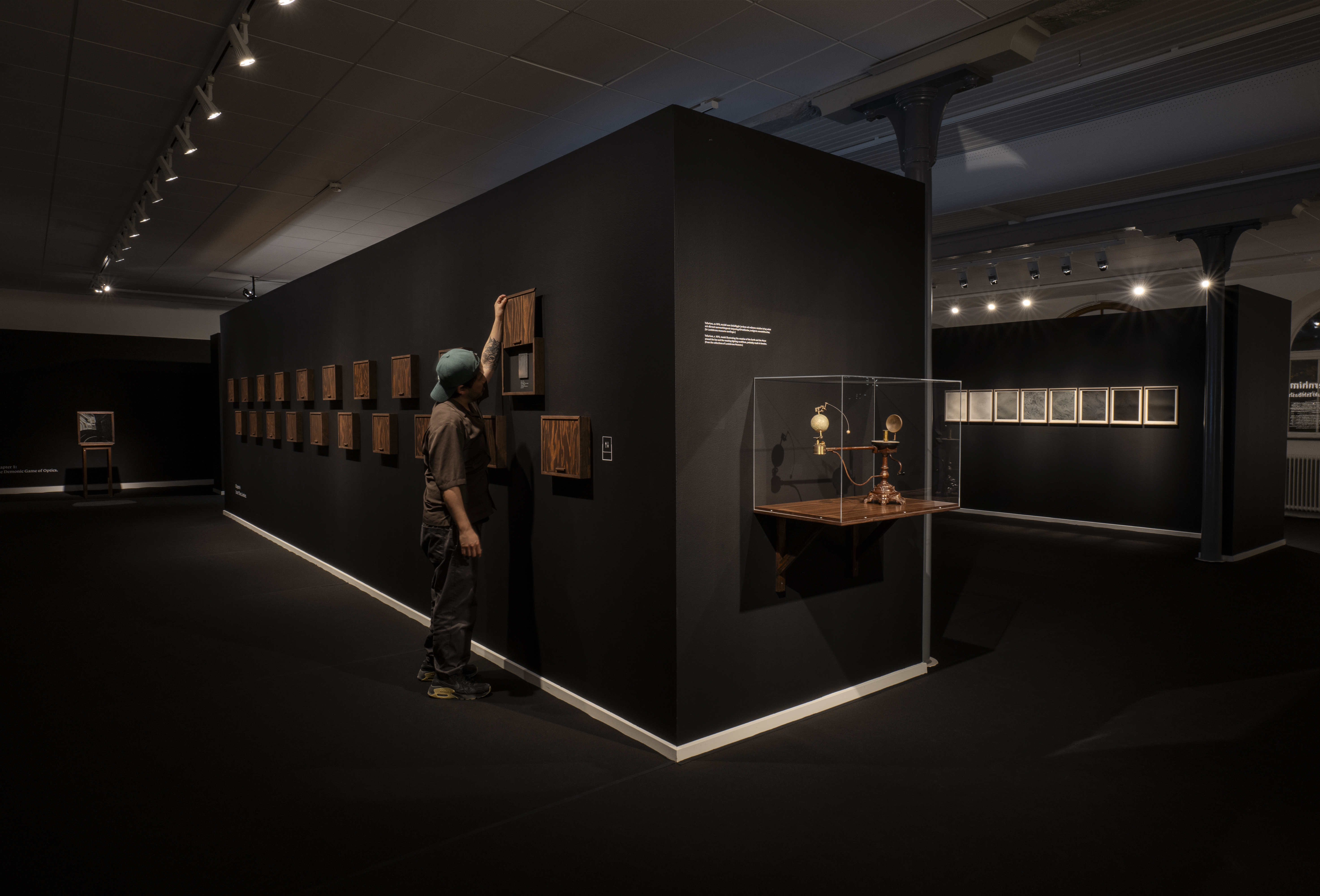
The original negatives no longer exist; only fragile positive prints remain, preserved in the darkness of the National Library of Sweden, rarely visible. This final chapter begins with an attempt to recreate that vanished material.
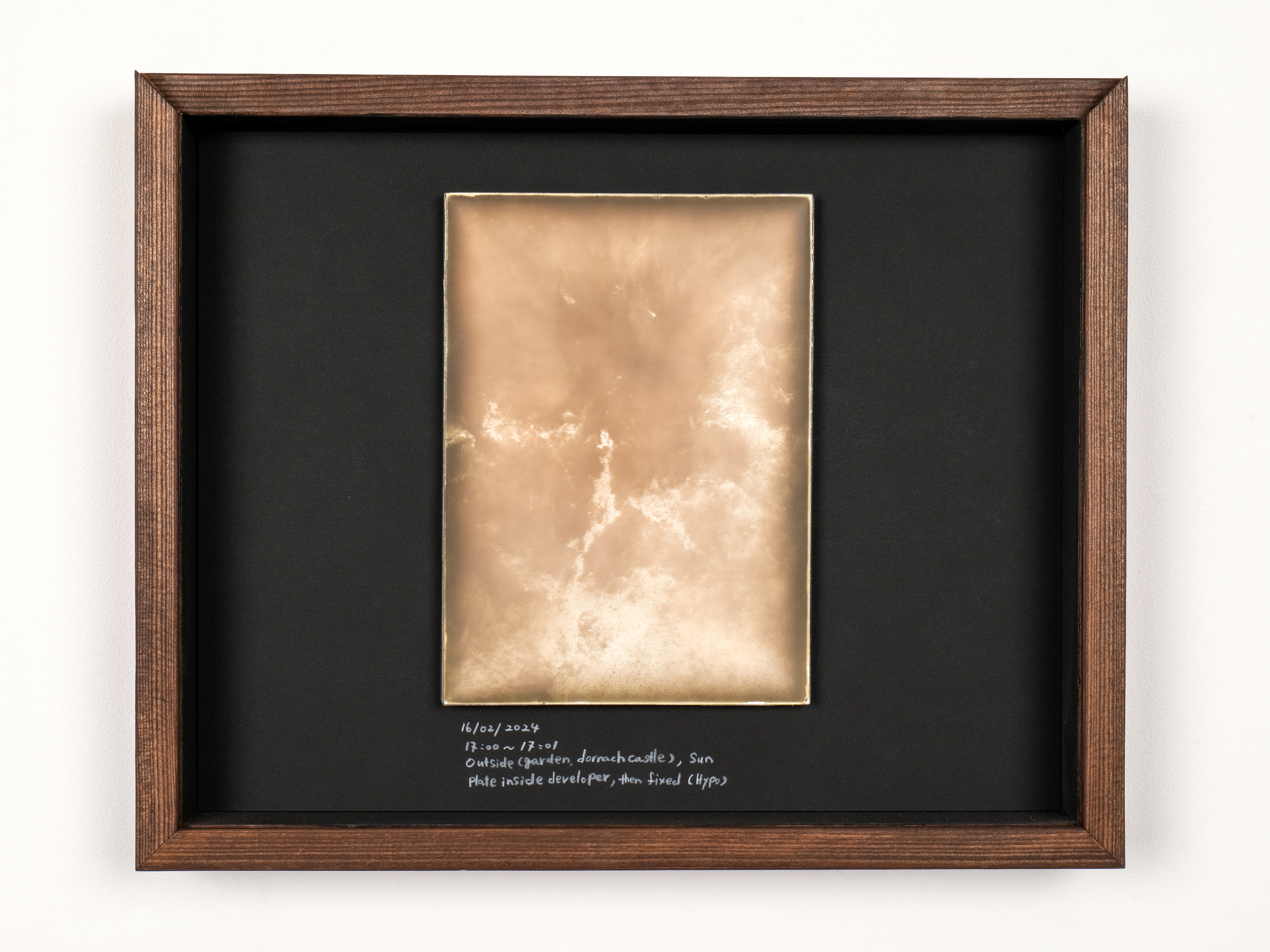
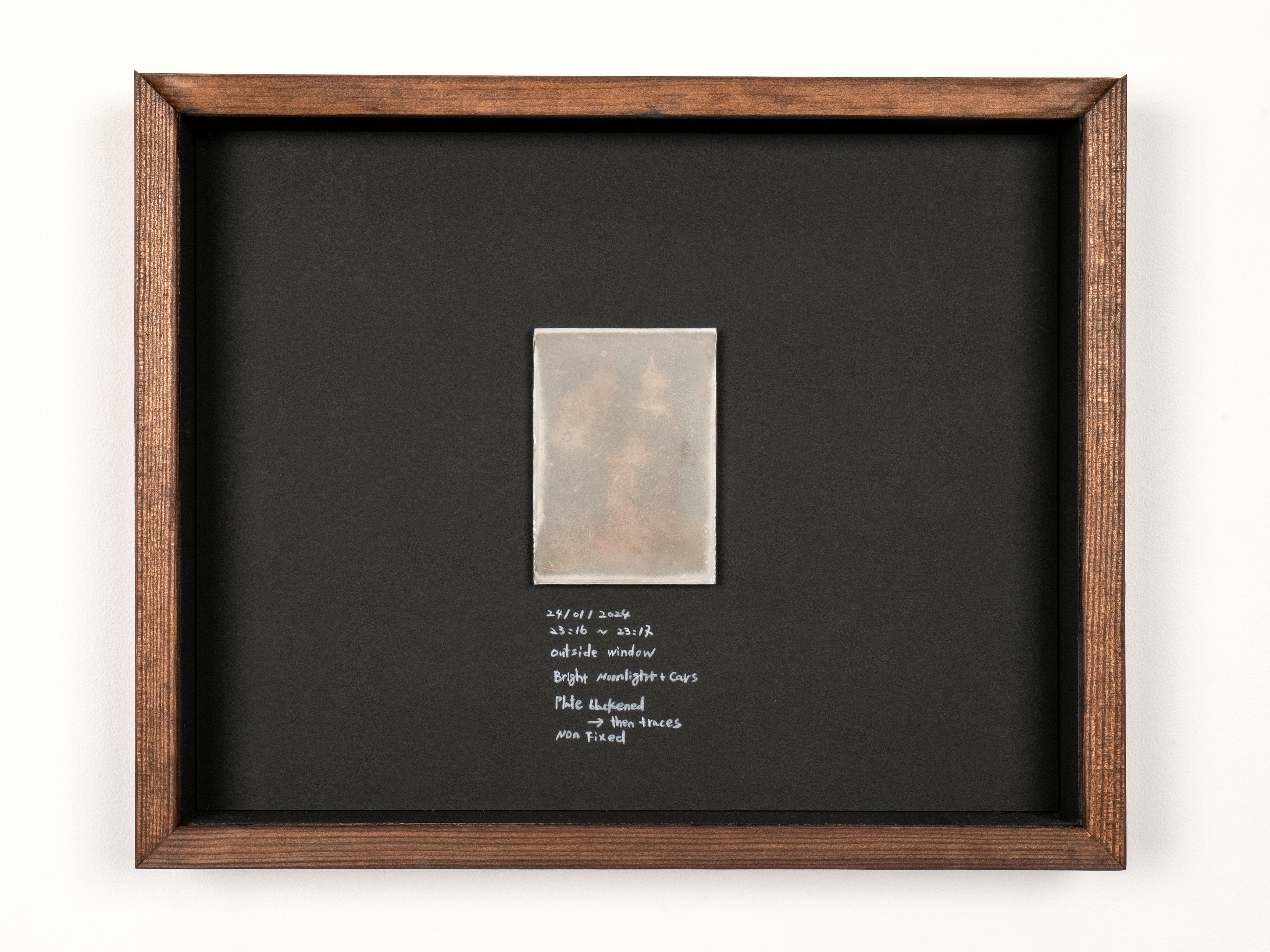
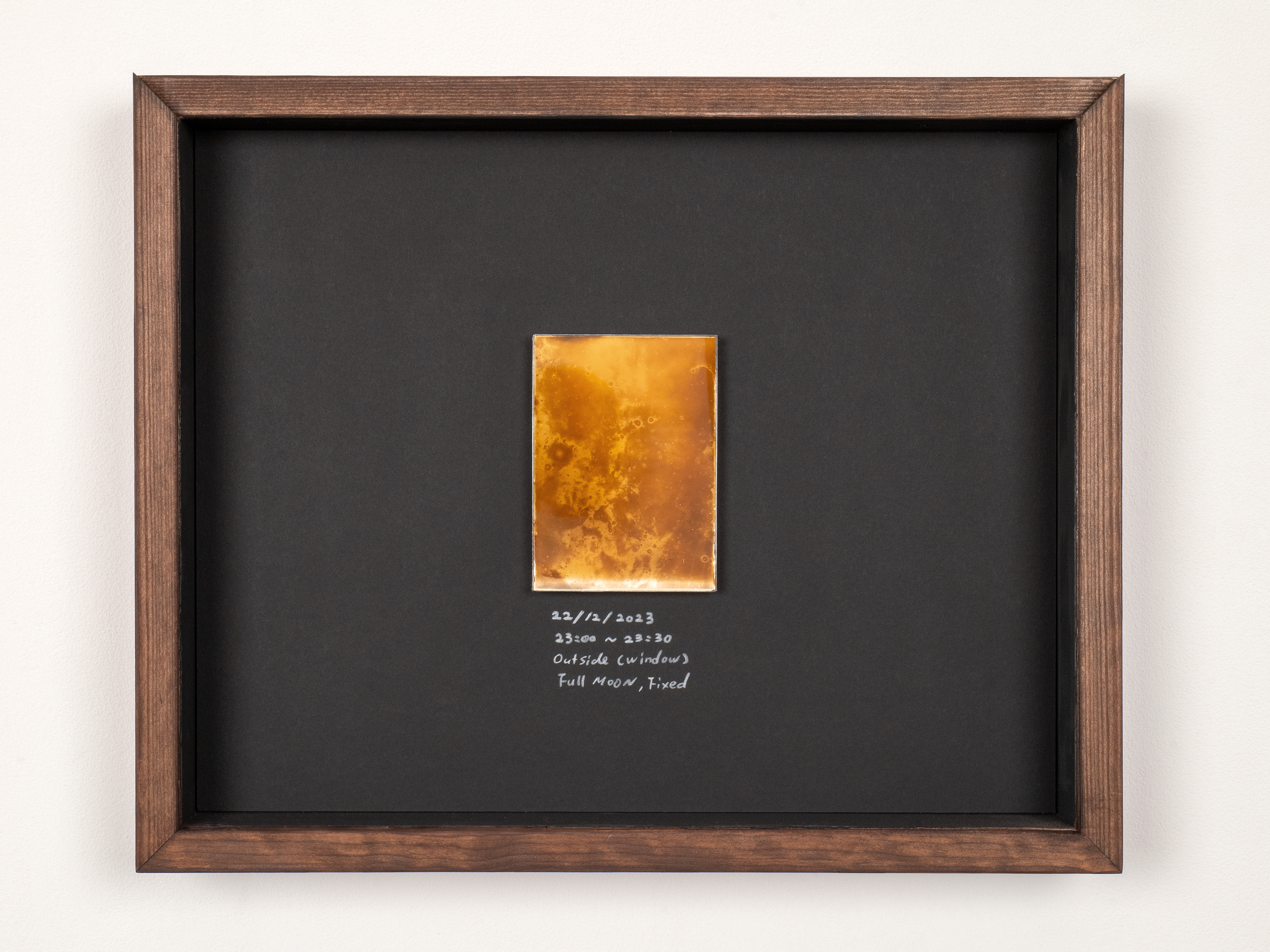
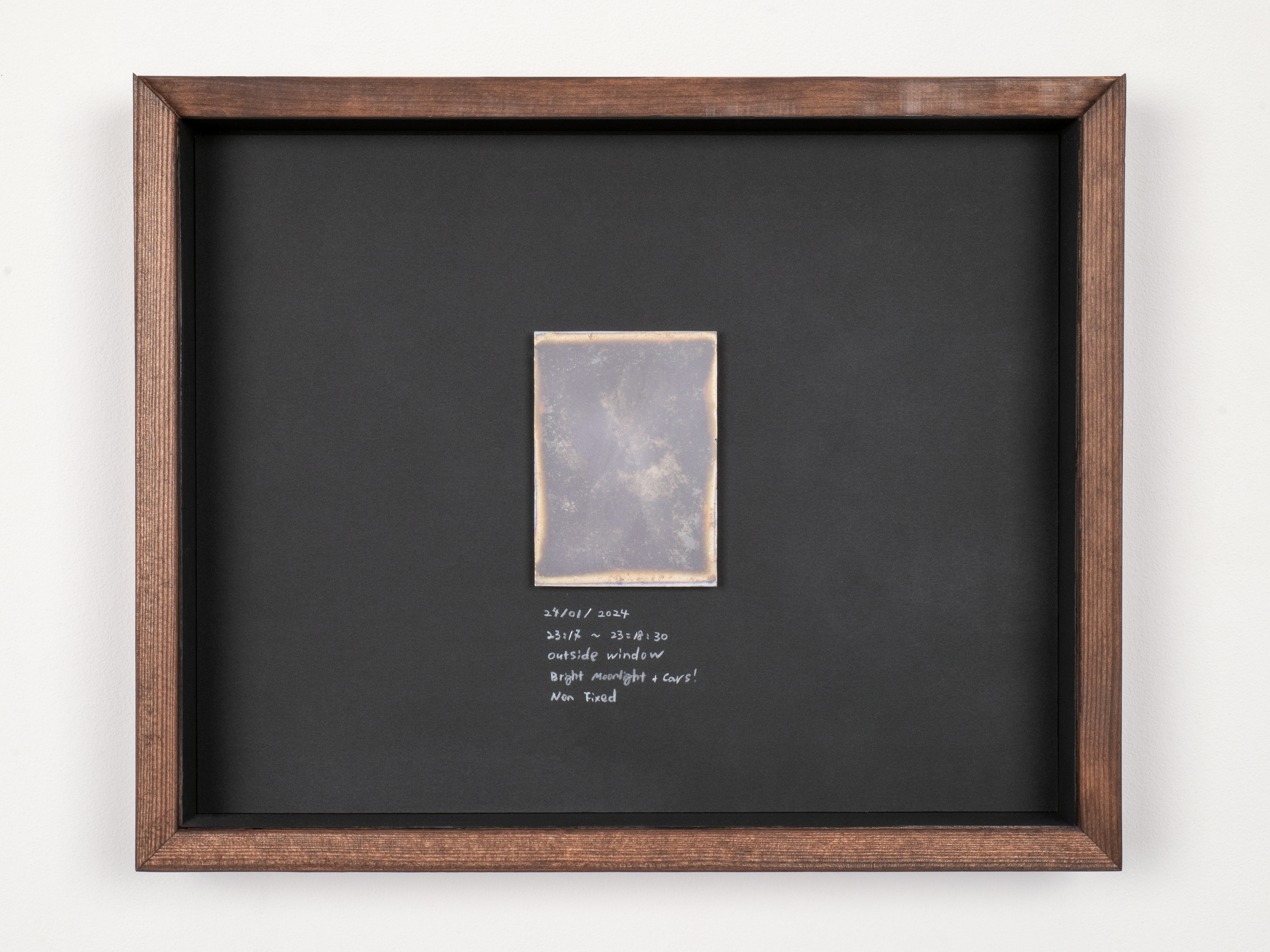
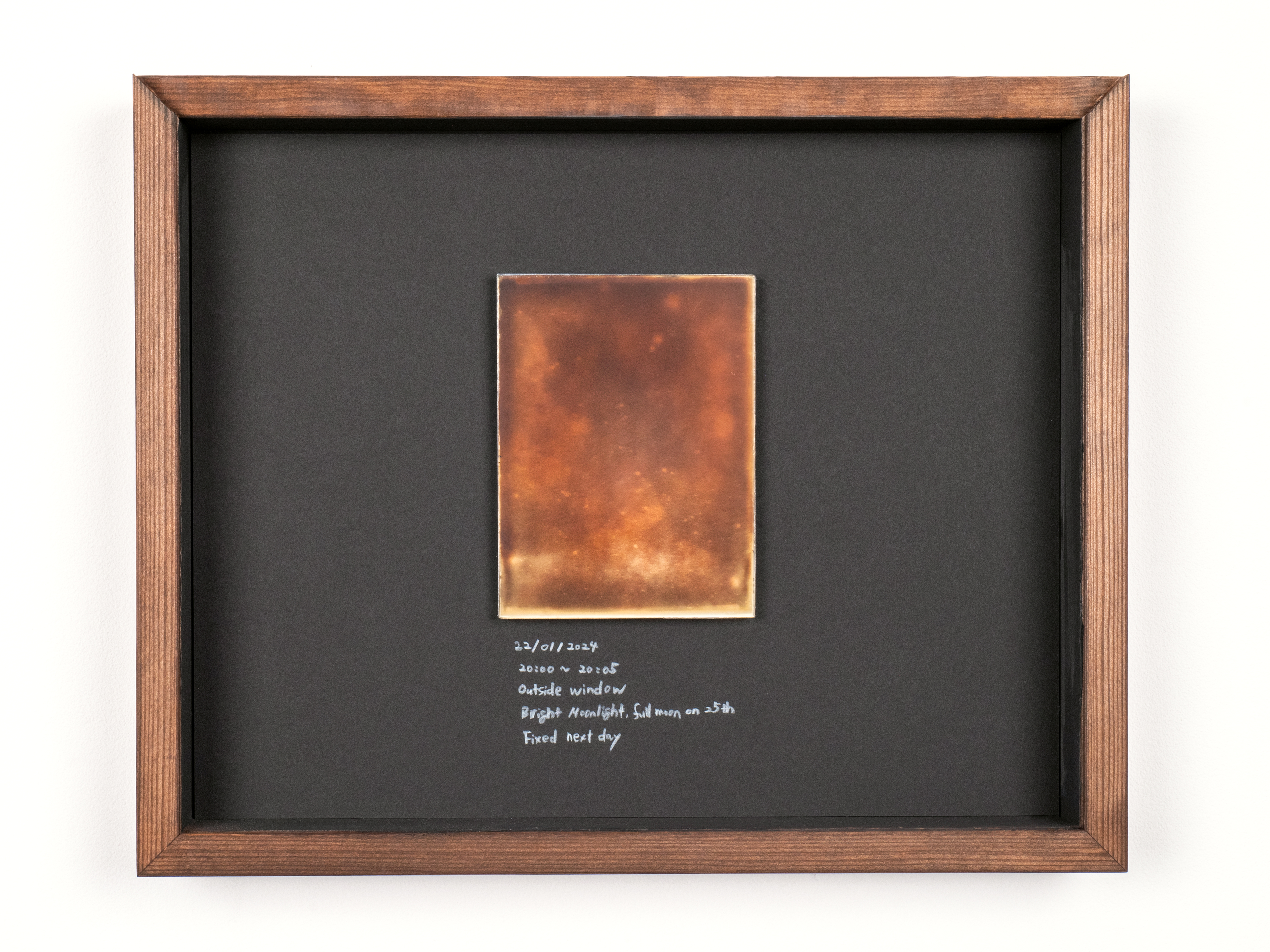
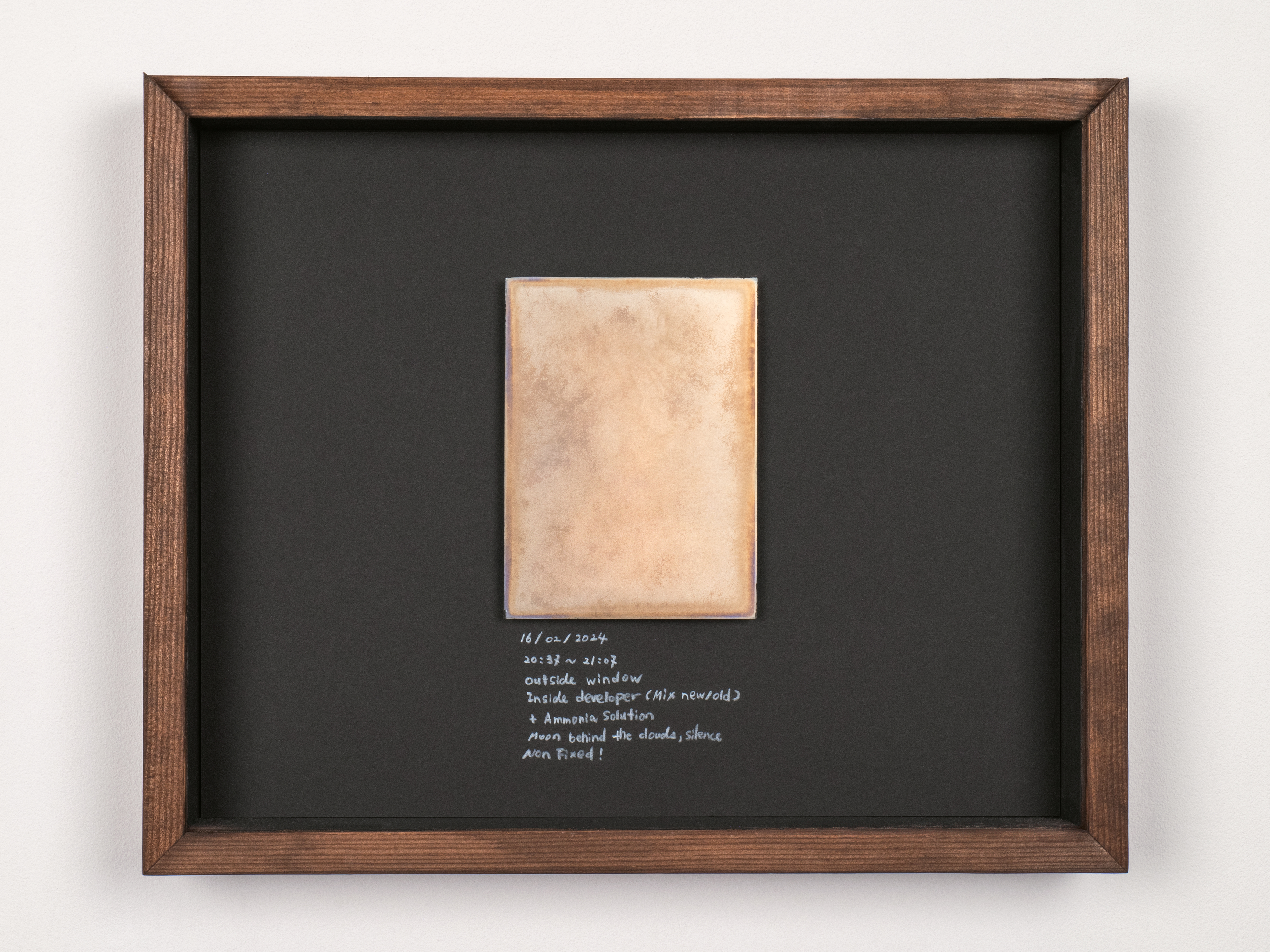
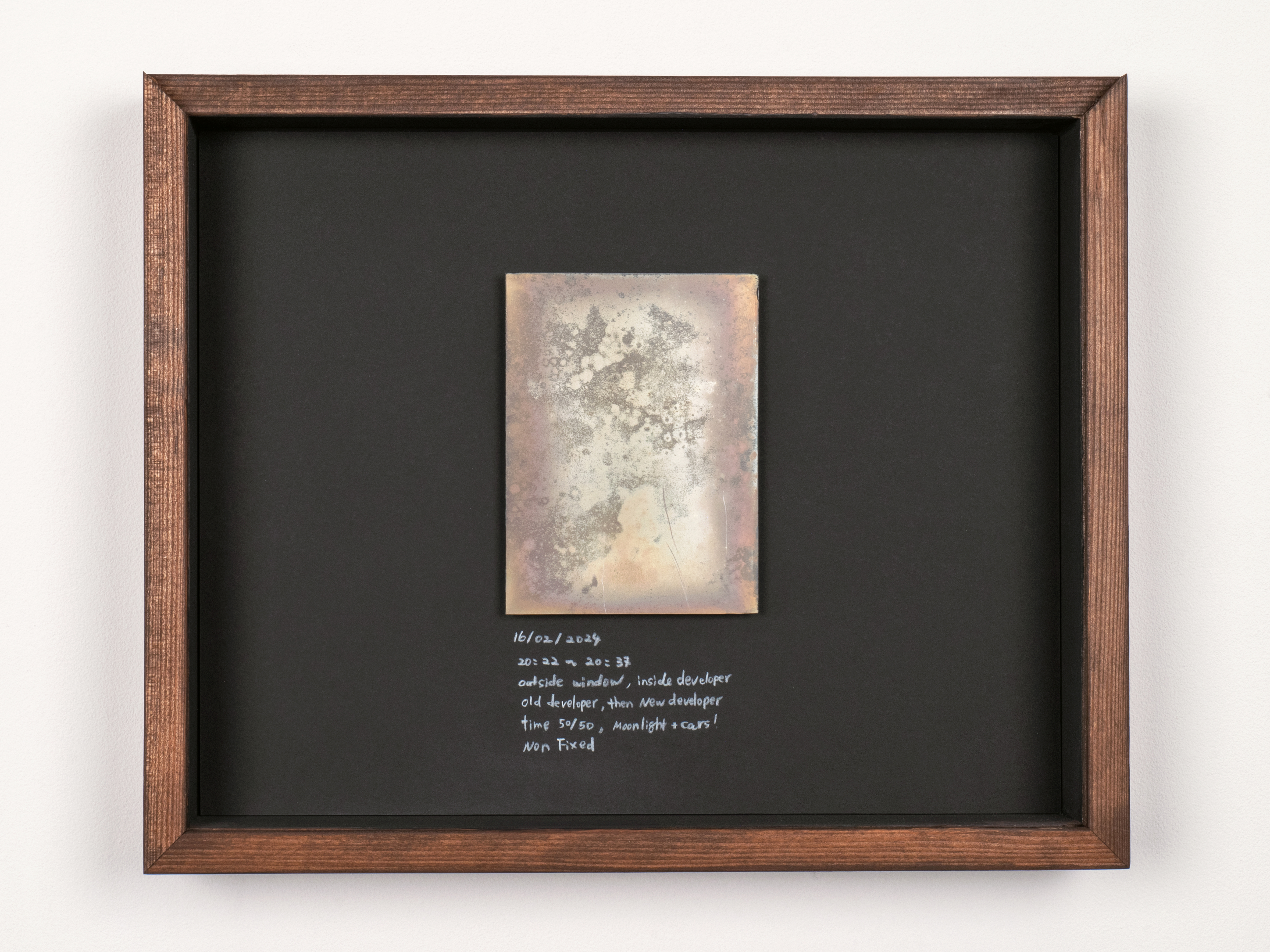
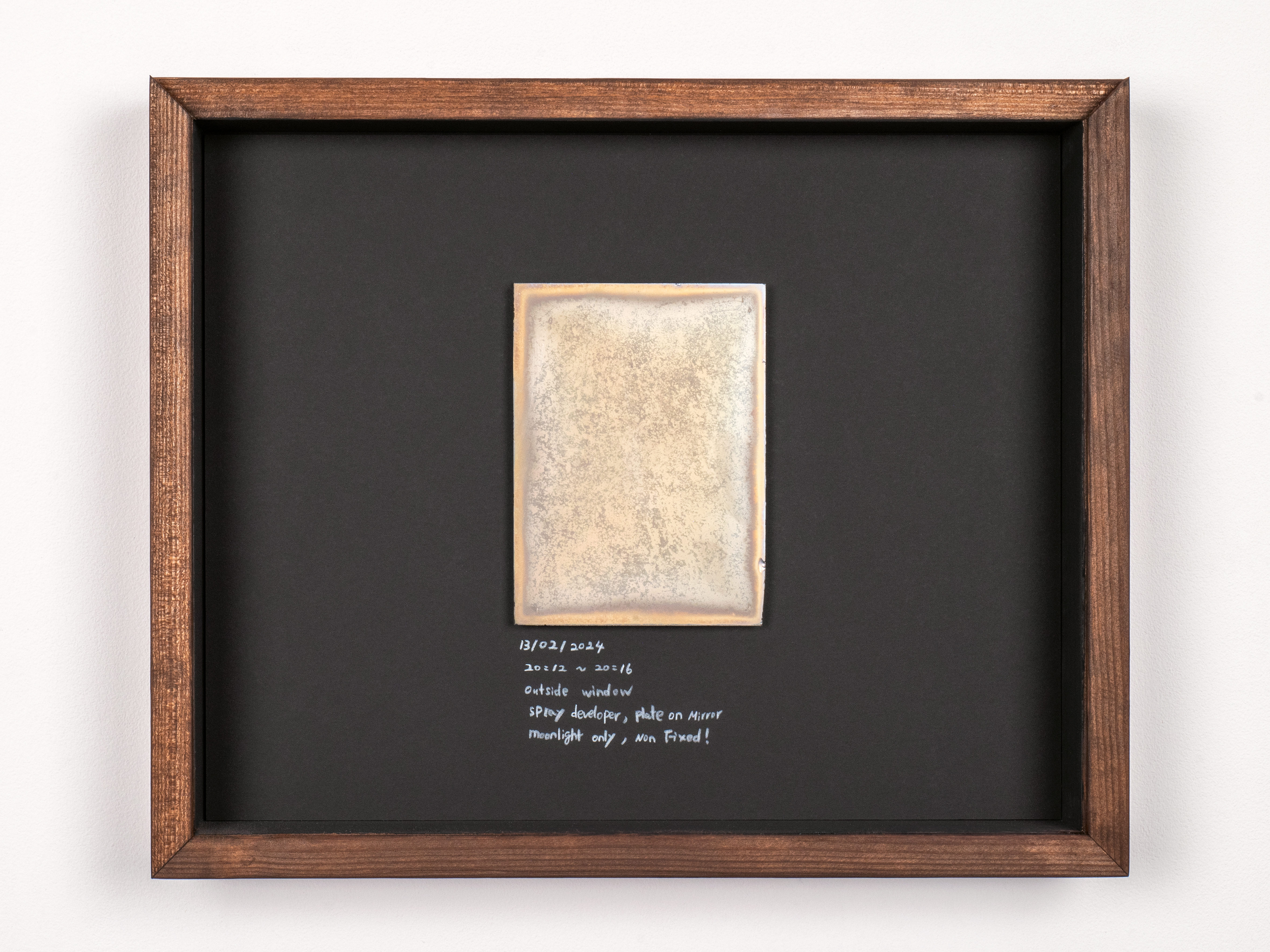
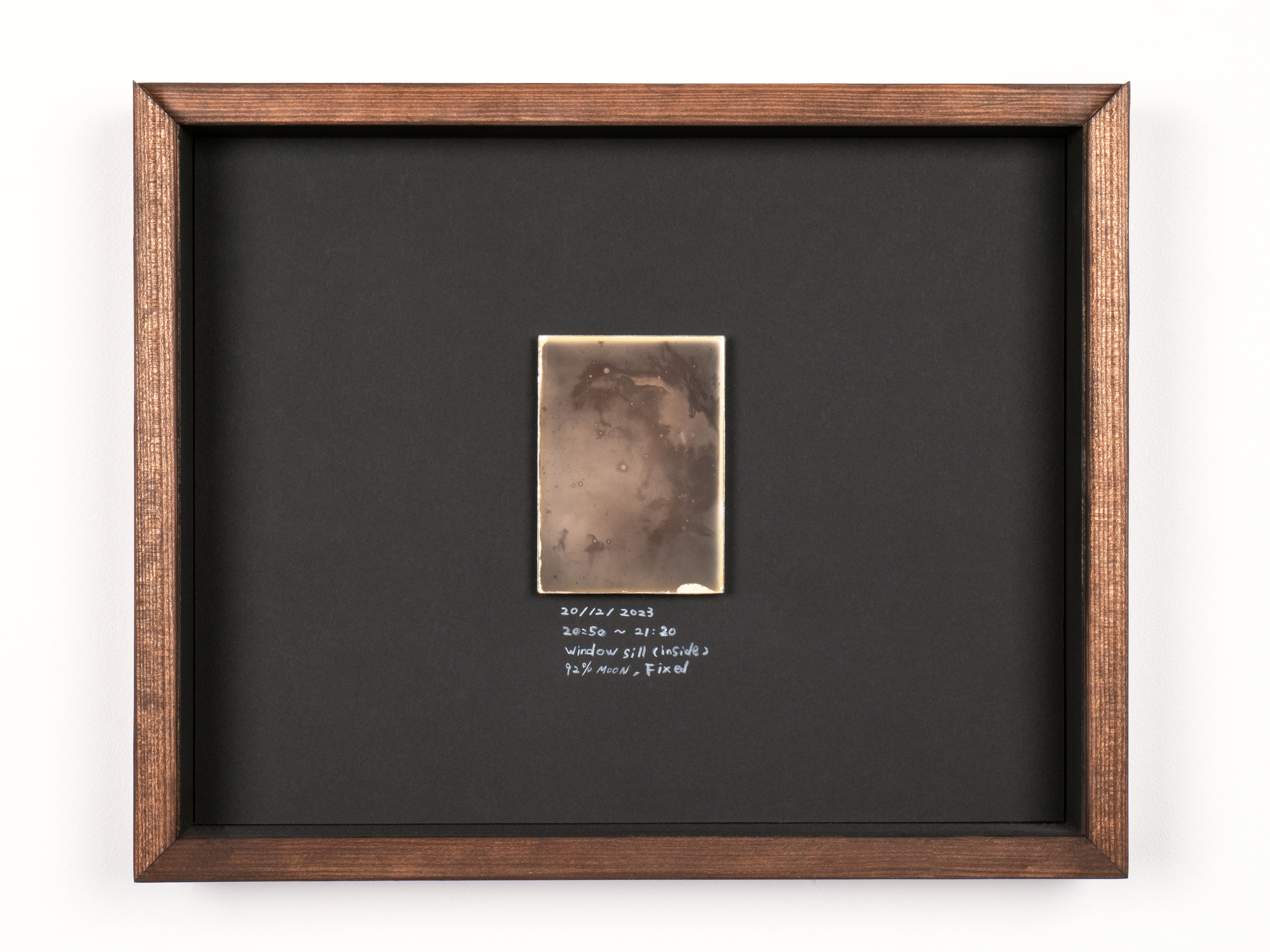
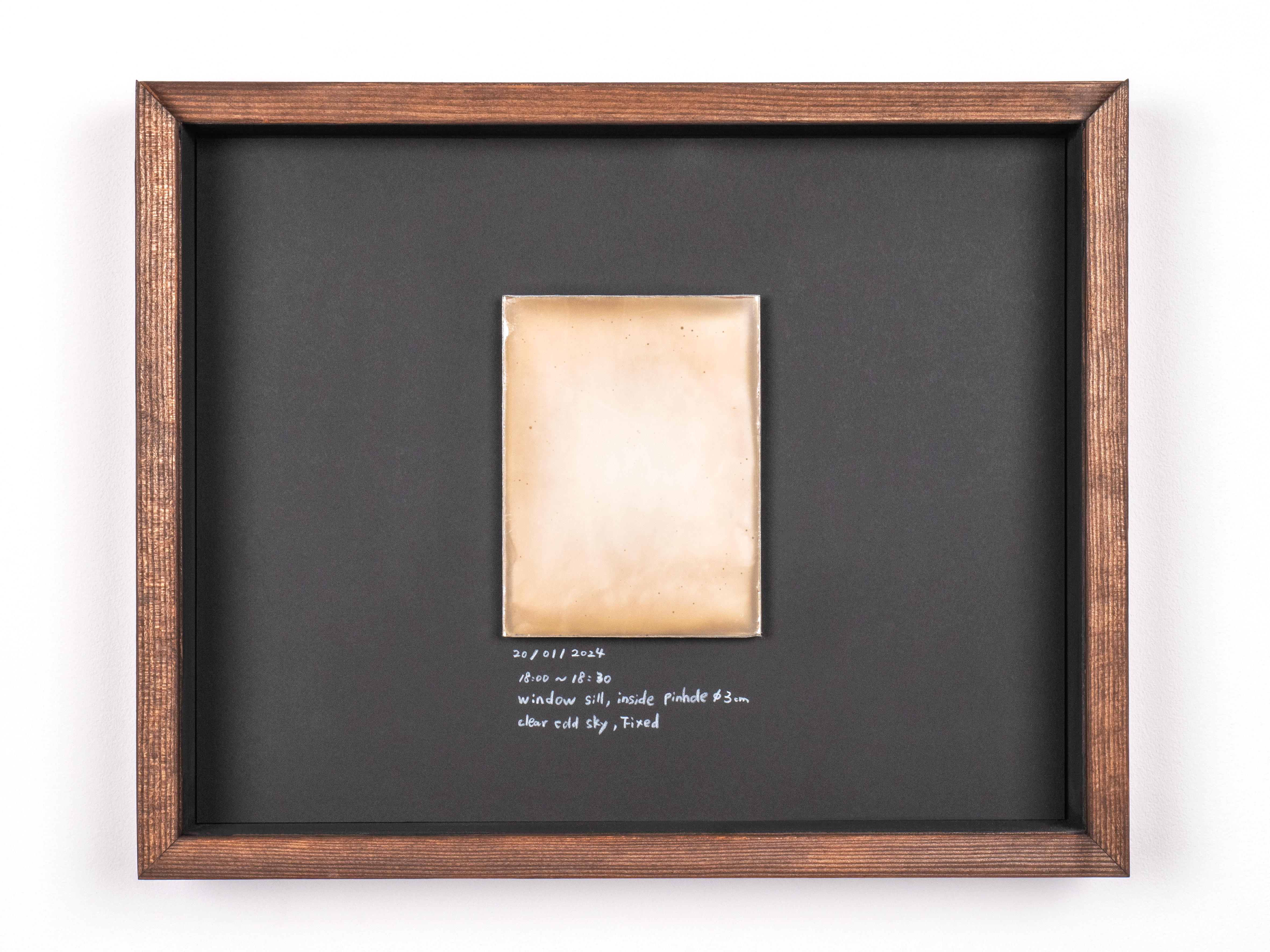
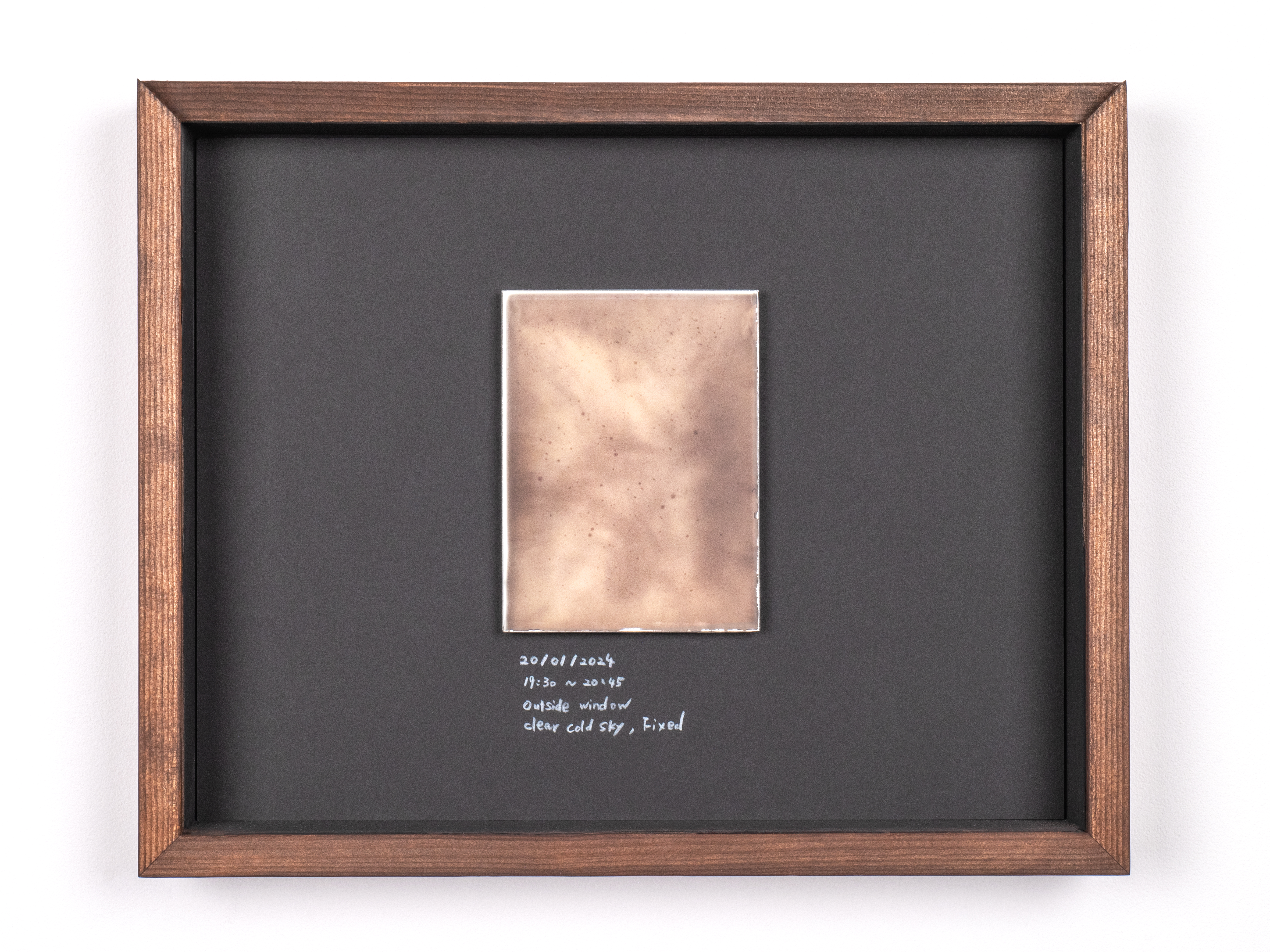
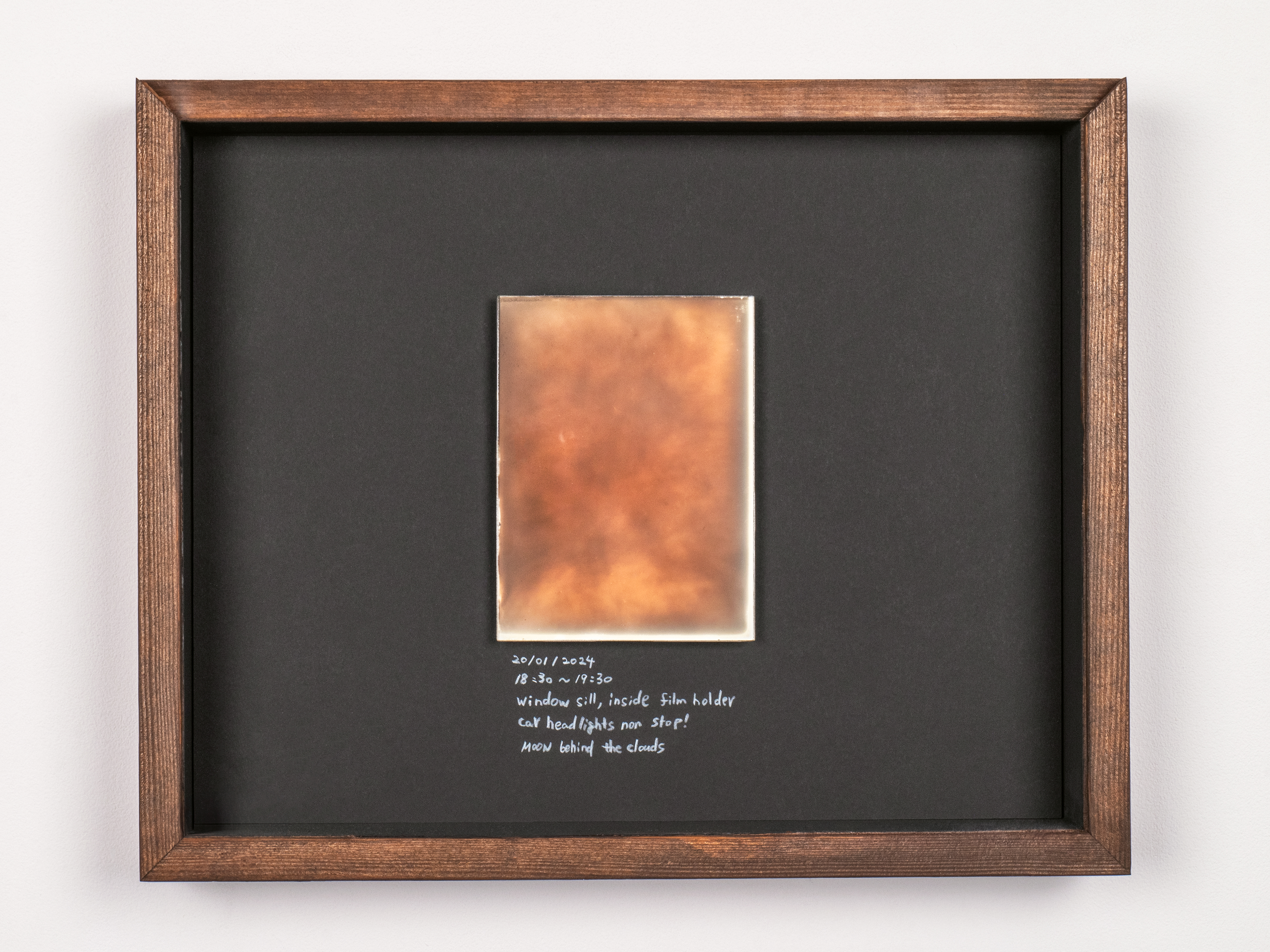
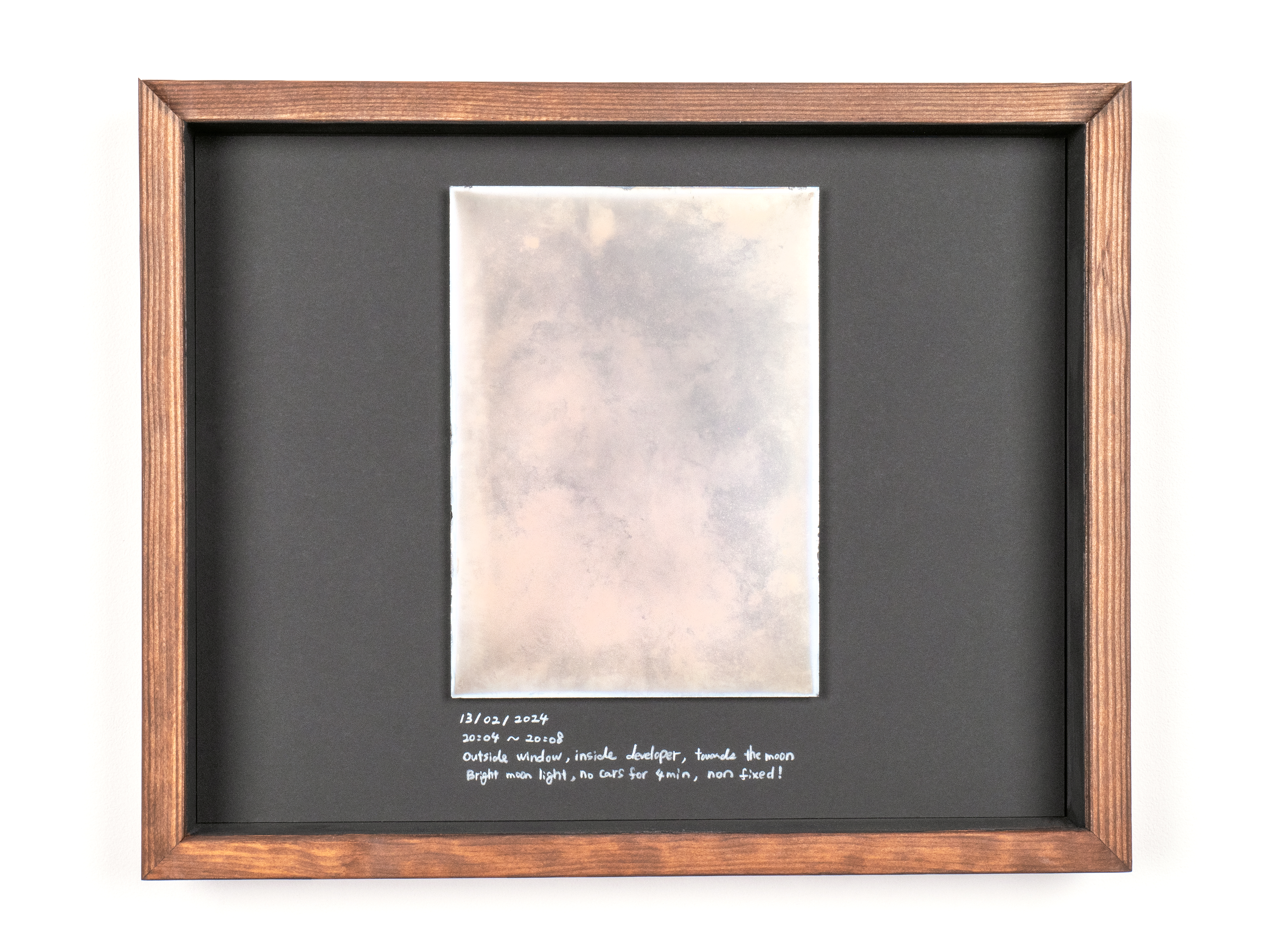
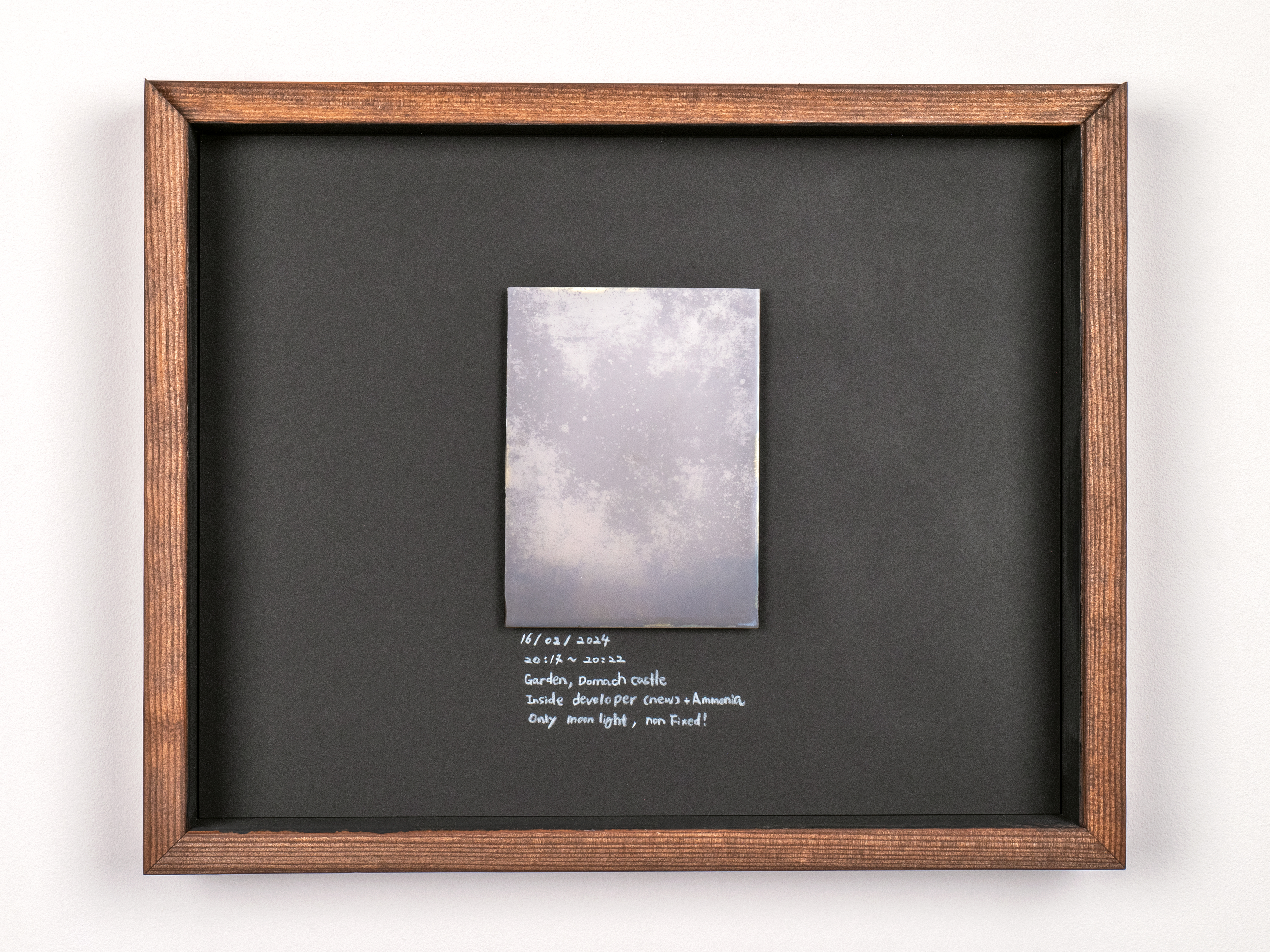
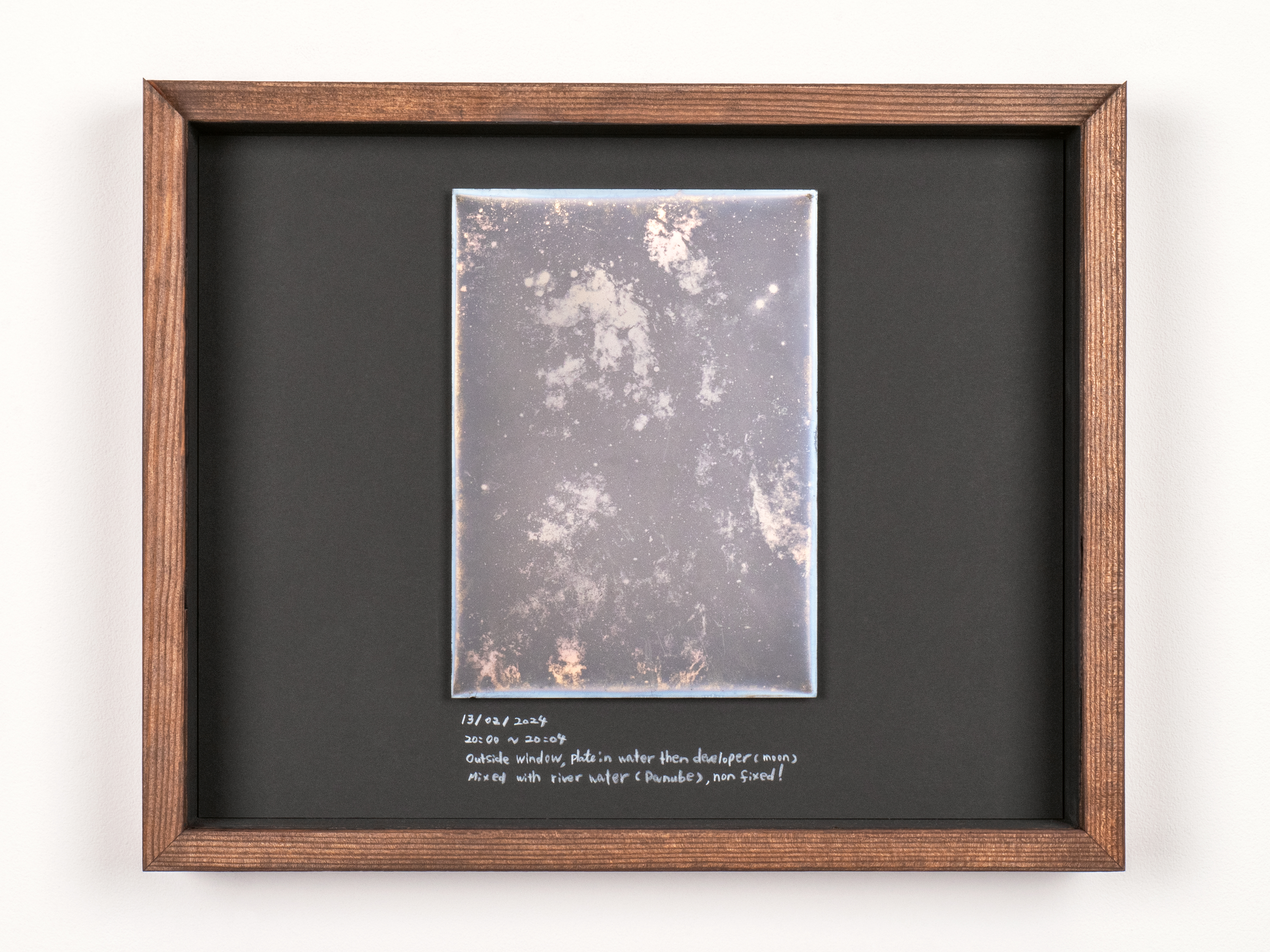
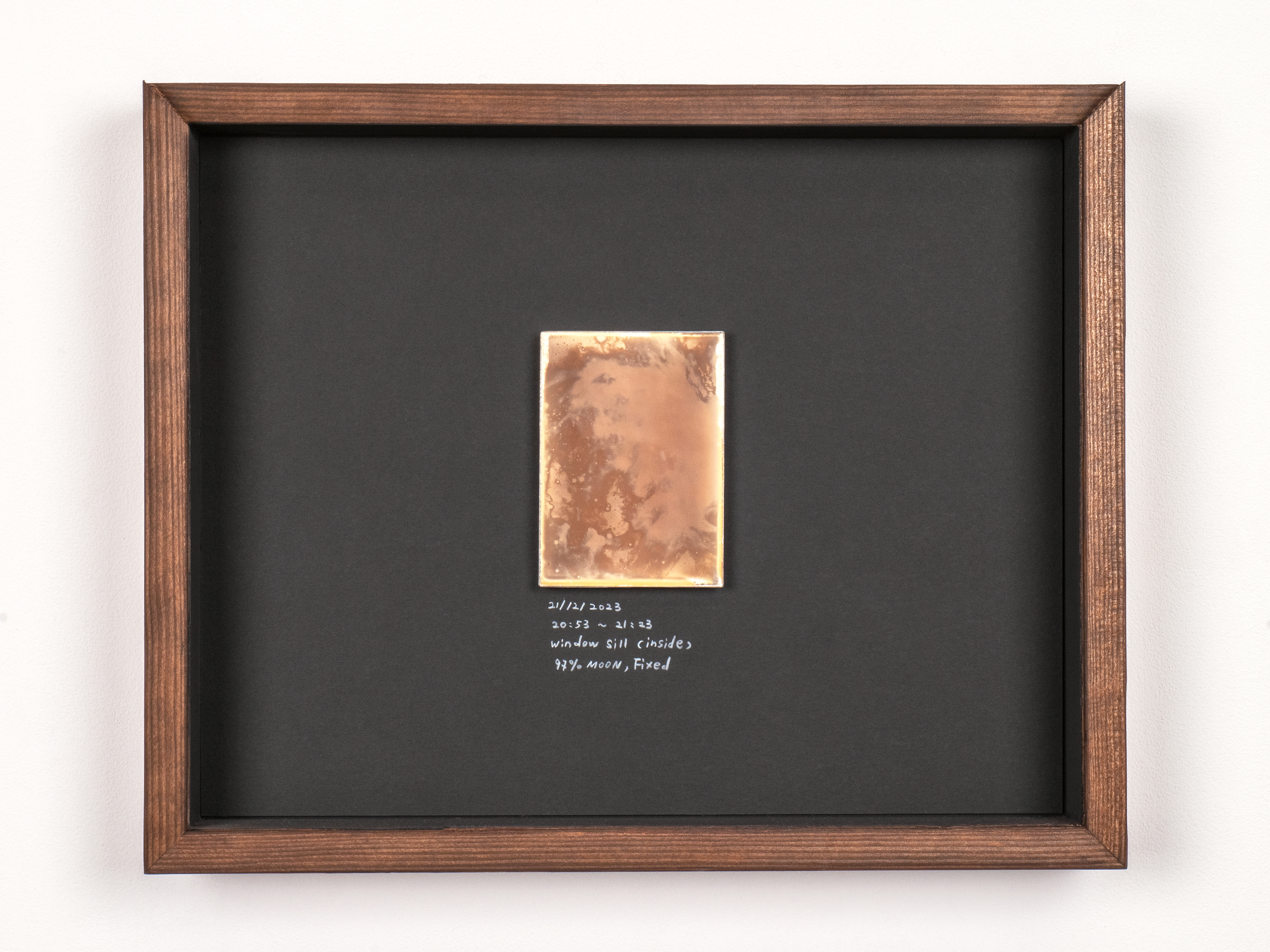
In 2023–24, I visited Dornach Castle in Austria, where August Strindberg produced his Celestographs. Using unopened Lumière silver bromide gelatin plates dating from the late nineteenth century — identical to those he used — I made new exposures on the same dates and at the same hours.
These new Celestographs do not reproduce the missing plates, but respond instead to present conditions, rewriting their original context: light, environment, and time. After more than 130 years, the plates themselves record traces of their own duration — mold, heat, alterations — becoming active elements in their production.
Some plates remain unfixed, as Strindberg described. Preserved in a sliding wooden box, they appear only in the presence of light, and to see them is already to begin making them disappear. Like the original prints in the archive, they persist by escaping the gaze. An image, made to be seen, is preserved by remaining unseen.
This chapter returns to the origins of photography, when light fixed the image while simultaneously erasing it. One day, these images too will completely disappear. What remains is not the image itself, but its possibility — preserved in memory, shaped by imagination.