What Remains
2026
The project began during a visit to the Isabelle Mège’s home from 4 to 6 February 2026, where a series of digital portraits was produced. Initially conceived as a photographic collage, the project gradually shifted toward a process rooted in material transformation and temporal alteration.
One portrait was selected and transferred onto Le Berger PrintFilm to create an internegative. This passage from digital image to analogue grain marked the first transformation of the portrait: replacing the immaterial structure of pixels with a physical photographic texture.
The internegative was then buried in the ground for two months, from 1 March to 30 April 2026. Subjected to humidity, microorganisms, and weather conditions, the image entered a process of slow decomposition and interaction with the earth. The burial became both a gesture of disappearance and preservation, echoing one of the earliest ambitions of photography itself: to “secure the shadow, ere the substance fades.”
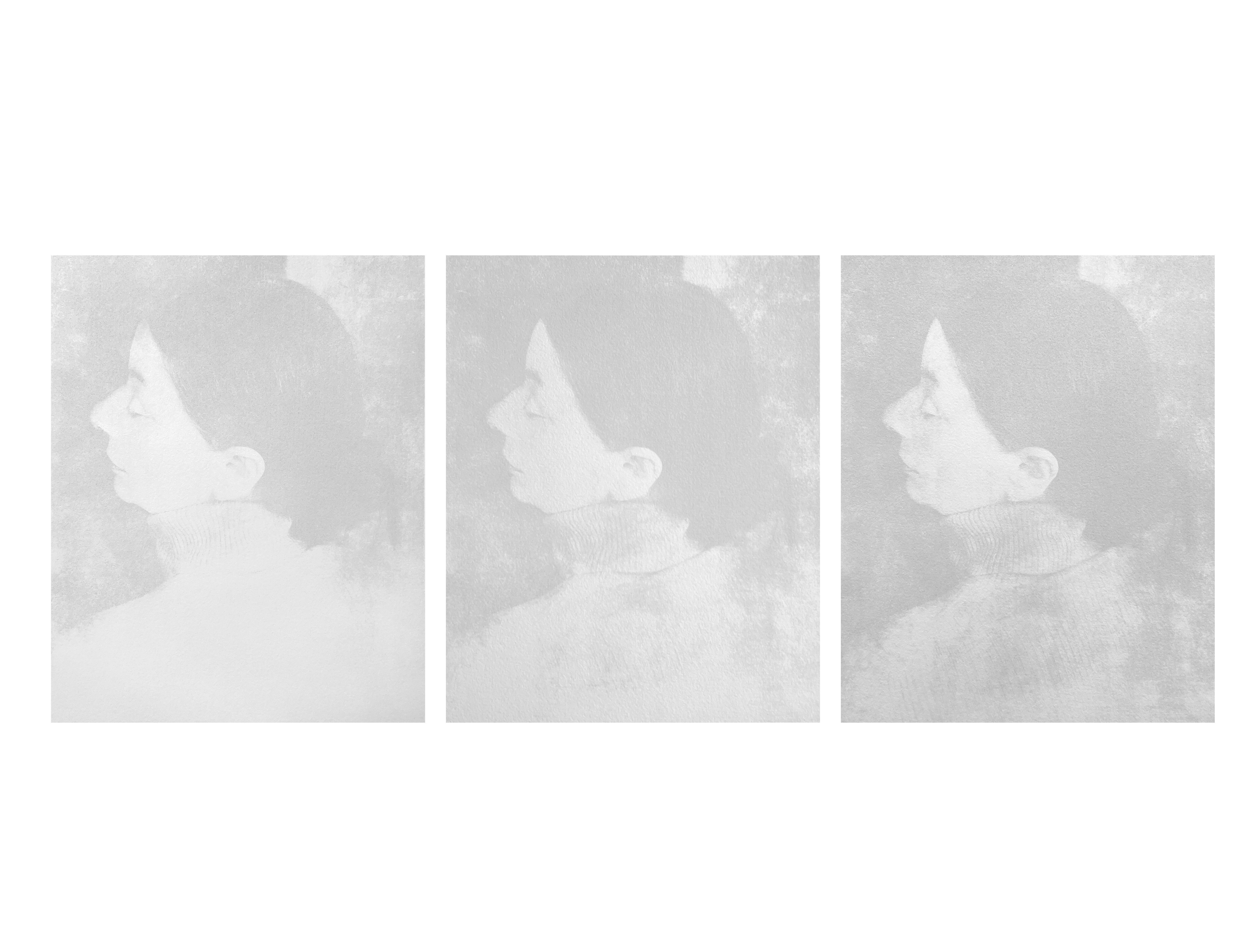
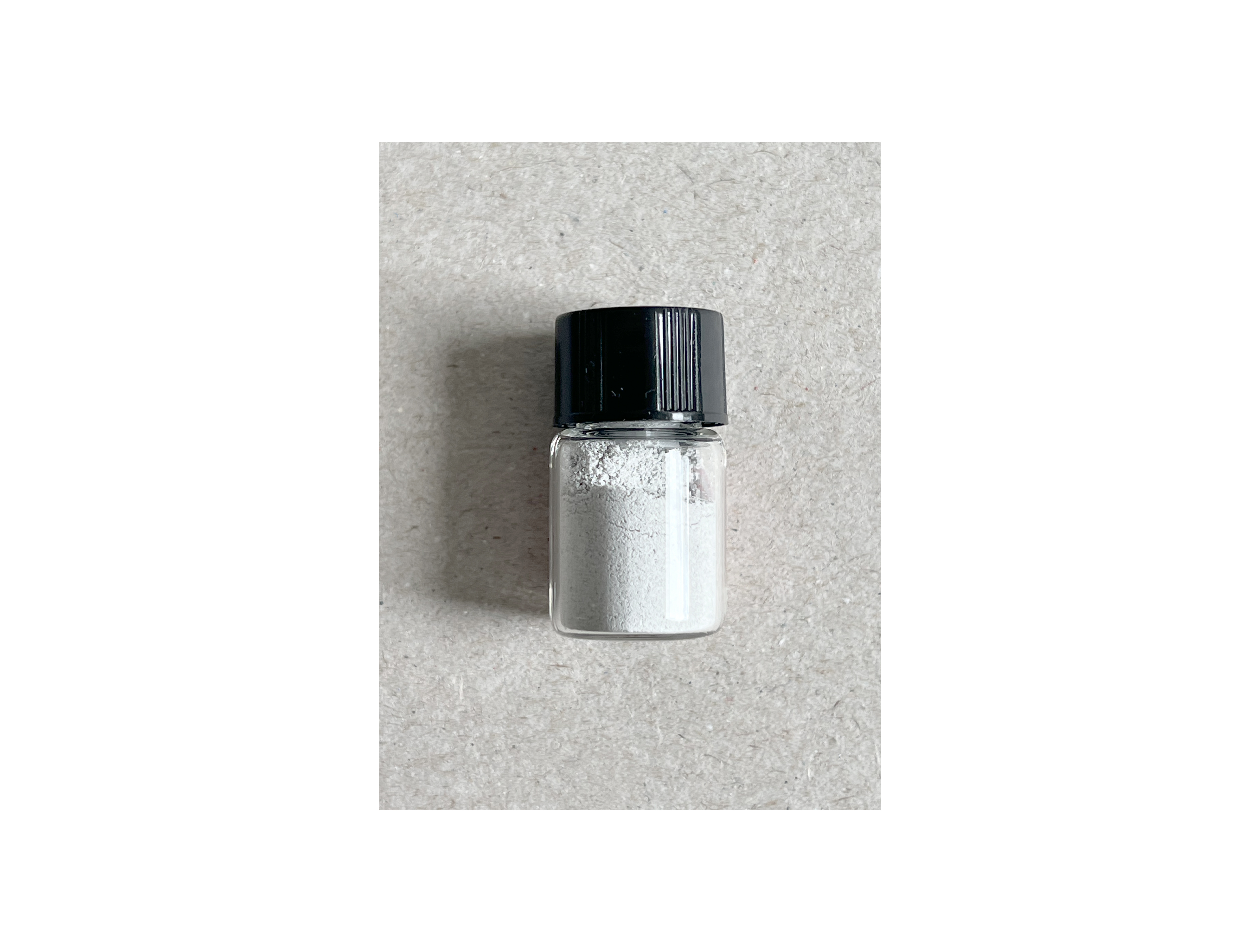
After excavation, pigments were produced from burned chicken bones and plant ashes, transformed through high-temperature combustion and mixed to create a unique pigment specifically for this portrait. Using these pigments, three gum bichromate prints were made from the same negative under different UV light conditions. Each exposure, dependent on the light of a different day, generated subtle variations within the image.
At the center of this work is a question that continues to inhabit my practice: what remains after all? Perhaps only fragments — an image, ashes, a memory, or a trace of light and time, preserved for a moment before transforming once again.
—————————————————————————————————
Series of 3 gum bichromate prints with artist made ash pigment on Arches Aquarelle Grain Satiné Blanc Naturel 300 g/m²
Commissioned portrait realized between February and Mai 2026
20 × 25 cm (image)
31 × 41 cm (paper)
Unique
Collection Isabelle Mège